- Plants
- ›Vascular Plants
- ›flowering plants
- ›Dicots
- ›Legumes, Milkworts, and Allies
- ›Legumes
- ›Faboideae
- ›Trifolieae
- ›Trifolium
- ›Trifolium
- ›Trifolium
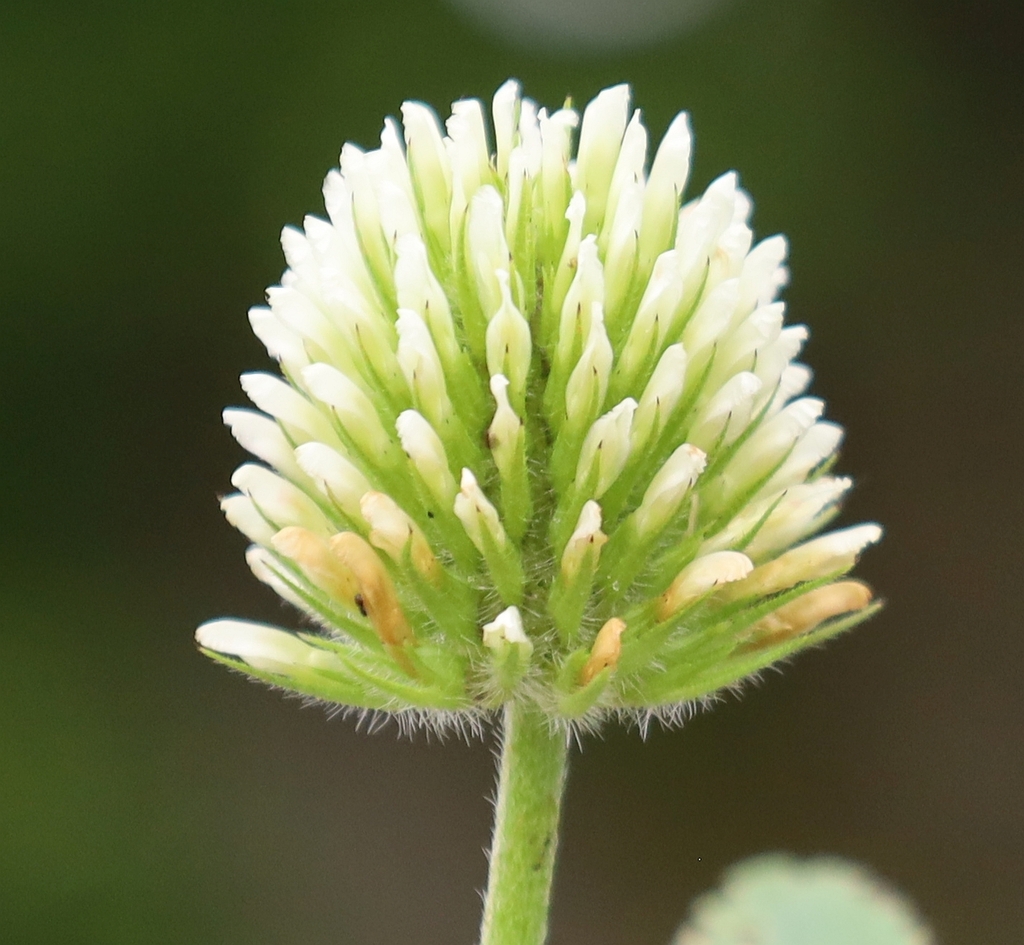
Egyptian clover
Trifolium alexandrinum
Trifolium alexandrinum (Egyptian clover, berseem clover) is an annual clover cultivated mostly in irrigated sub-tropical regions, and used as fodder, mainly for cattle and milk buffalo. It was an important winter crop in ancient Egypt, and was introduced into northern India in the early nineteenth century. It is also grown in the United States and Europe.
From the article Trifolium alexandrinum on Wikipedia (CC BY-SA), quoted section by section
Description
The annual plant reaches 45 to 75 cm (18 to 30 in) tall with erect or ascending stems, the growth habit resembling red clover. The leaves are trifoliate, with slender leaflets. The flowers are white to creamy white, produced in inflorescences similar to those of white clover with around 100 flowers.
Range & habitat
The species is native to northeast Africa and southwest Asia, from Egypt east to Pakistan.
Wikipedia: “Distribution and habitat”
How it is grown
Egyptian clover is cultivated mostly in irrigated sub-tropical regions, and used as leguminous crop. It is an important winter crop in Egypt, where it may have been cultivated since ancient times, and was introduced into northern India in the early nineteenth century. It is also grown in northern Africa west of its native range, and in Australia, China, Europe and the United States, and is locally naturalised north to England. There are two agricultural cultivar groups of berseem clover, single-cut and multi-cut. Single-cut cultivars, like 'Balady', feature a high growing point and have poor recovery once harvested. Multi-cut cultivars, like 'Frosty', feature a lower growing point allowing for multiple harvests from a single sowing. It is generally frost-sensitive and should be planted only after potential for frost has passed. The exception is 'Frosty' berseem clover which was developed by Grassland Oregon, Inc. and released in 2016. This variety is capable of surviving temperatures as low as −15 °C (5 °F).
Forage. Egyptian clover provides highly nutritious fodder for livestock in winter season in repeated cuttings. Yields range from 44 to 71 tonnes per hectare of forage in a single growing season. It contains 17% crude protein, 25.9% crude fibre and 60–65% TDN (Total Digestible Nutrients) content. Berseem needs a mild temperature to germinate and further establishment. …
Wikipedia: “Cultivation”
Where it lives
Recorded sightings
—
geo-referenced records in GBIF, from museums, herbaria and field observers.
Drag the globe to turn it. Dots are where records exist, not a range map; darker means more records.
In the stacks
Searching the stacks…
Every page naming Trifolium alexandrinum in the Biodiversity Heritage Library →
This page is assembled live from iNaturalist, GBIF, Wikipedia, the Source Library and the Internet Archive. It is not yet part of the hand-edited codex. iNaturalist taxon 79406.