- Animals
- ›Arthropods
- ›Hexapods
- ›Insects
- ›Winged and Once-winged Insects
- ›Butterflies and Moths
- ›Owlet Moths and Allies
- ›Underwing, Tiger, Tussock, and Allied Moths
- ›Tiger Moths and Allies
- ›Tiger Moths
- ›Phaegopterina
- ›Euchaetes
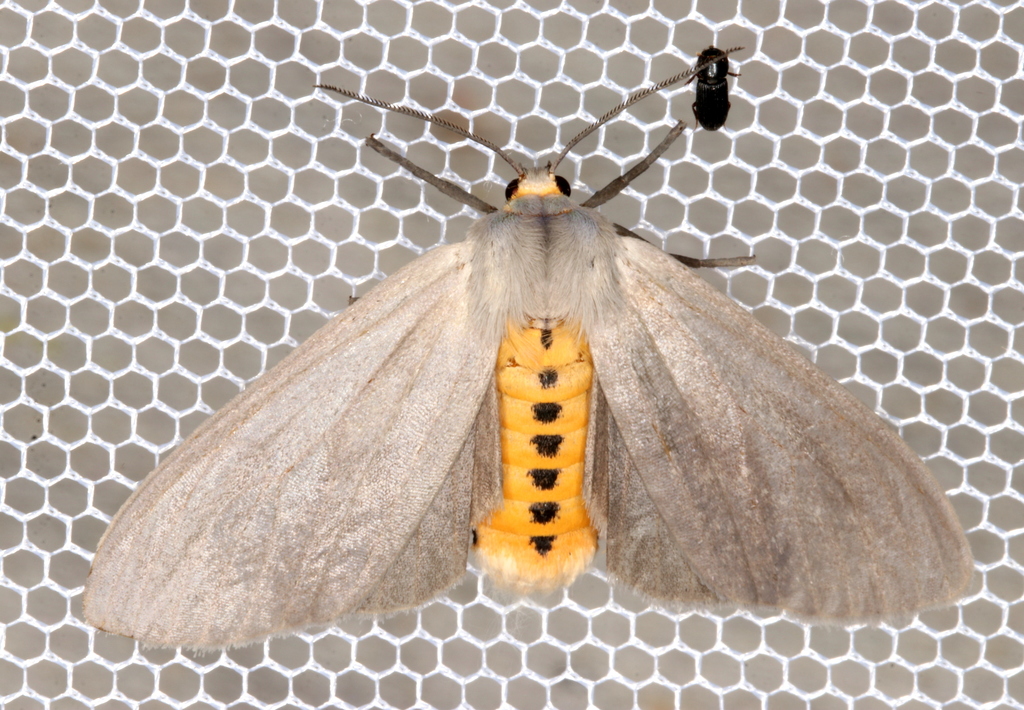
Milkweed Tussock Moth
Euchaetes egle
Euchaetes egle, the milkweed tiger moth or milkweed tussock moth, is a moth in the family Erebidae and the tribe Arctiini, the tiger moths. The species was first described by Dru Drury in 1773. It is a common mid- through late summer feeder on milkweeds and dogbane. Like most species in this family, it has chemical defenses it acquires from its host plants, in this case, cardiac glycosides. These are retained in adults and deter bats, and presumably other predators, from feeding on them. Only very high cardiac glycoside concentrations deterred bats as predators. Adults indicate their unpalatability to bats with ultrasonic clicks from their tymbal organs.
From the article Euchaetes egle on Wikipedia (CC BY-SA), quoted section by section
Range & habitat
It is found from southern Canada and south through Texas and Florida in North America.
Wikipedia: “Range”
At the table
This moth frequently uses milkweeds (Asclepias spp.) and sometimes dogbane (Apocynum spp.) as larval host plants. Larvae often feed on older milkweed shoots, and seldom share shoots with monarchs (Danaus plexippus), which prefer younger ones. Dogbanes and milkweeds produce a sticky latex that can impede larval feeding. Early instars avoid the veins by skeletonizing the leaves. Older larvae sever the veins that supply the latex, which reduces latex flow to the area on which they feed.
Wikipedia: “Food plants”
Listen
Looking for field recordings…
Where it lives
Recorded sightings
—
geo-referenced records in GBIF, from museums, herbaria and field observers.
Drag the globe to turn it. Dots are where records exist, not a range map; darker means more records.
In the stacks
Searching the stacks…
Every page naming Euchaetes egle in the Biodiversity Heritage Library →
This page is assembled live from iNaturalist, GBIF, Wikipedia, the Source Library and the Internet Archive. It is not yet part of the hand-edited codex. iNaturalist taxon 81677.