- Animals
- ›Arthropods
- ›Hexapods
- ›Insects
- ›Winged and Once-winged Insects
- ›Beetles
- ›Water, Rove, Scarab, Long-horned, Leaf, and Snout Beetles
- ›Cucujiform Beetles
- ›Darkling Beetles and Allies
- ›Blister Beetles
- ›Meloinae
- ›Meloini
- ›Meloe
- ›Meloe
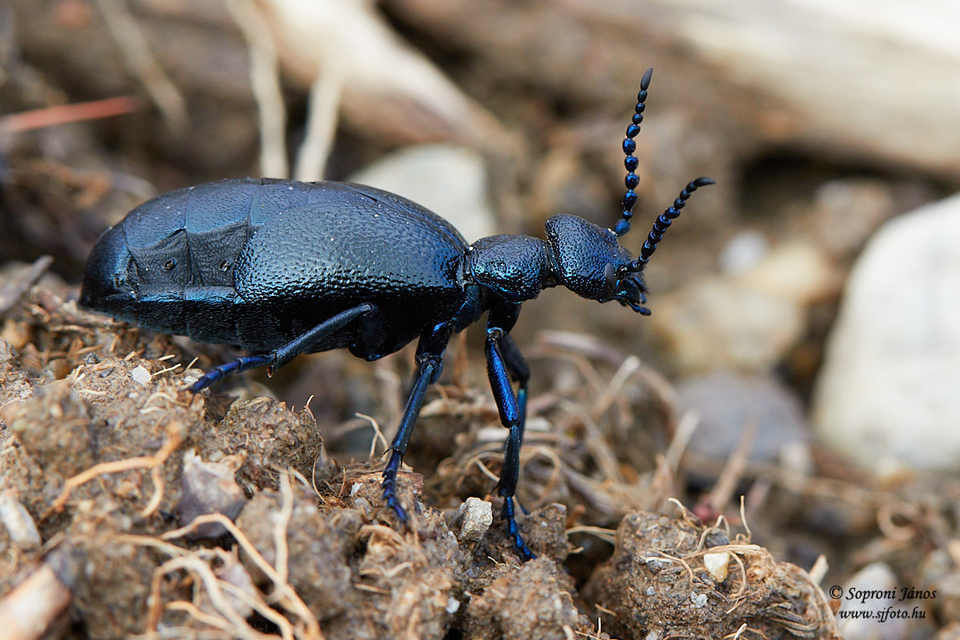
Black Oil Beetle
Meloe proscarabaeus
Meloe proscarabaeus is a European oil beetle. It lives in meadows, field margins and other warm sites in all but the far north of the continent. It lacks hind wings and the elytra are correspondingly reduced in size.
From the article Meloe proscarabaeus on Wikipedia (CC BY-SA), quoted section by section
What it does
Eggs are laid in the soil by females. When the larvae hatch, they climb into a flower, and await visiting solitary bees. With their well-developed claws, the larvae attach themselves to the bee and return with it to its nest. Here, they feed on the bee's eggs and the pollen and nectar it had collected. The larva pupates in the bee's nest, and leaves the nest to seek a mate directly afterwards. The beetle and its life cycle are described in detail by Gerald Durrell in his autobiographical book My Family and Other Animals. The larvae can also bypass the need for a flower by producing a flowery scent, which attracts bees, even when outside a flower.
Wikipedia: “Life cycle”
Listen
Looking for field recordings…
Where it lives
Recorded sightings
—
geo-referenced records in GBIF, from museums, herbaria and field observers.
Drag the globe to turn it. Dots are where records exist, not a range map; darker means more records.
In the stacks
Searching the stacks…
Every page naming Meloe proscarabaeus in the Biodiversity Heritage Library →
This page is assembled live from iNaturalist, GBIF, Wikipedia, the Source Library and the Internet Archive. It is not yet part of the hand-edited codex. iNaturalist taxon 82109.