- Animals
- ›Arthropods
- ›Chelicerates
- ›Arachnids
- ›Spiders
- ›Typical Spiders
- ›Entelegyne Spiders
- ›Orbweavers and Allies
- ›Orbweavers
- ›Micratheninae
- ›Micrathena
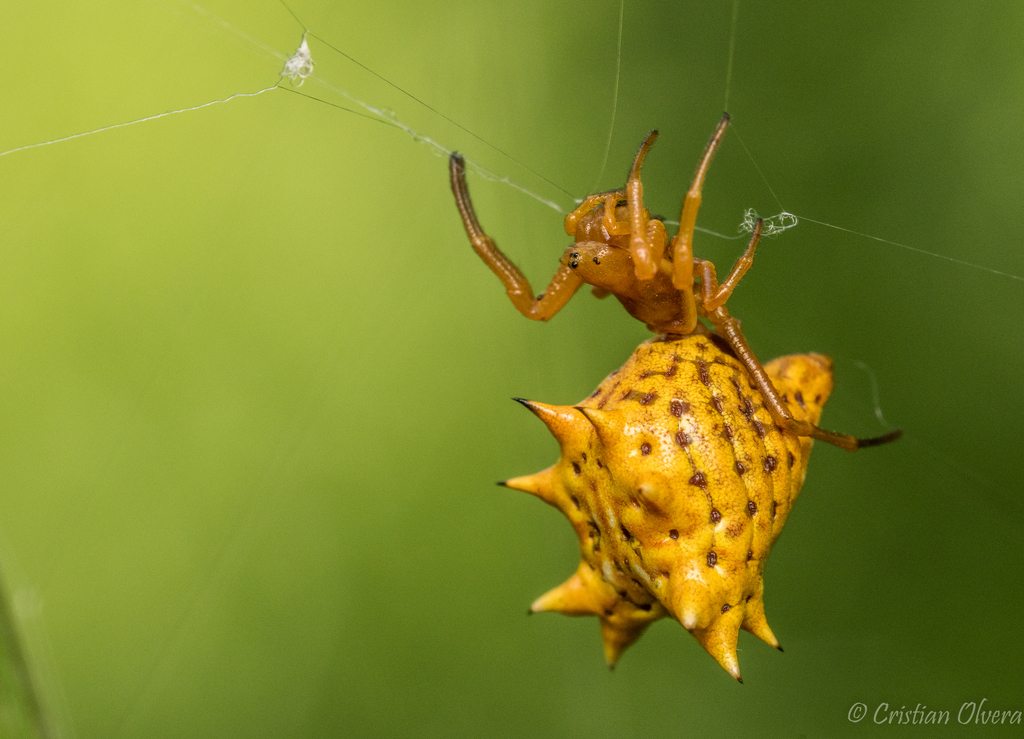
Spined Micrathena
Micrathena gracilis
Micrathena gracilis is a spider in the family Araneidae (orb-weavers), commonly known as the spined micrathena or castleback orbweaver. This spider spins a moderately large (can be about 20 cm long in diameter) and very tightly coiled web. The spiders themselves are small and can be found to be anywhere from 4.2 mm to 10.8 mm long. Its venom is harmless to humans. M. gracilis is unique in appearance due to its large spiky abdomen and black and white bodies. Certain spiders of this species can also display a yellow color on the sides of their bodies. These spiders can be seen most active during the end of the summer and beginning of fall. M. gracilis is diurnal and are rarely ever seen active at night.
From the article Spined micrathena on Wikipedia (CC BY-SA), quoted section by section
Range & habitat
Micrathena gracilis is native to North and Central America. These spiders tend to wander and rarely ever remain in the same web site for more than week. On average, they spend about 6–7 days on each web site. They are neotropical forest spiders and can be found more easily in hardwood forests that contain oak and hickory trees. They tend to like moisture; they are more easily found in woodland forests that are near a lagoon, pond, or other small bodies of water. One study mentioned that these spiders were found in an area that tends to flood during their mating season. M. gracilis may also coexist within and along the edges of colonies of Metepeira incrassata, also known as the colonial orb-weaving spider. They prey on the skimming bluet and are in turn eaten by white-eyed vireos.
Wikipedia: “Distribution and habitat”
What it does
Micrathena gracilis hatches in the spring, the image of an adult. After the summer's growth, the female lays eggs in a sac. These remain relatively dormant through the winter months. The general life span is one year in length.
Wikipedia: “Life cycle”
Where it lives
Recorded sightings
—
geo-referenced records in GBIF, from museums, herbaria and field observers.
Drag the globe to turn it. Dots are where records exist, not a range map; darker means more records.
In the stacks
Searching the stacks…
Every page naming Micrathena gracilis in the Biodiversity Heritage Library →
This page is assembled live from iNaturalist, GBIF, Wikipedia, the Source Library and the Internet Archive. It is not yet part of the hand-edited codex. iNaturalist taxon 85333.