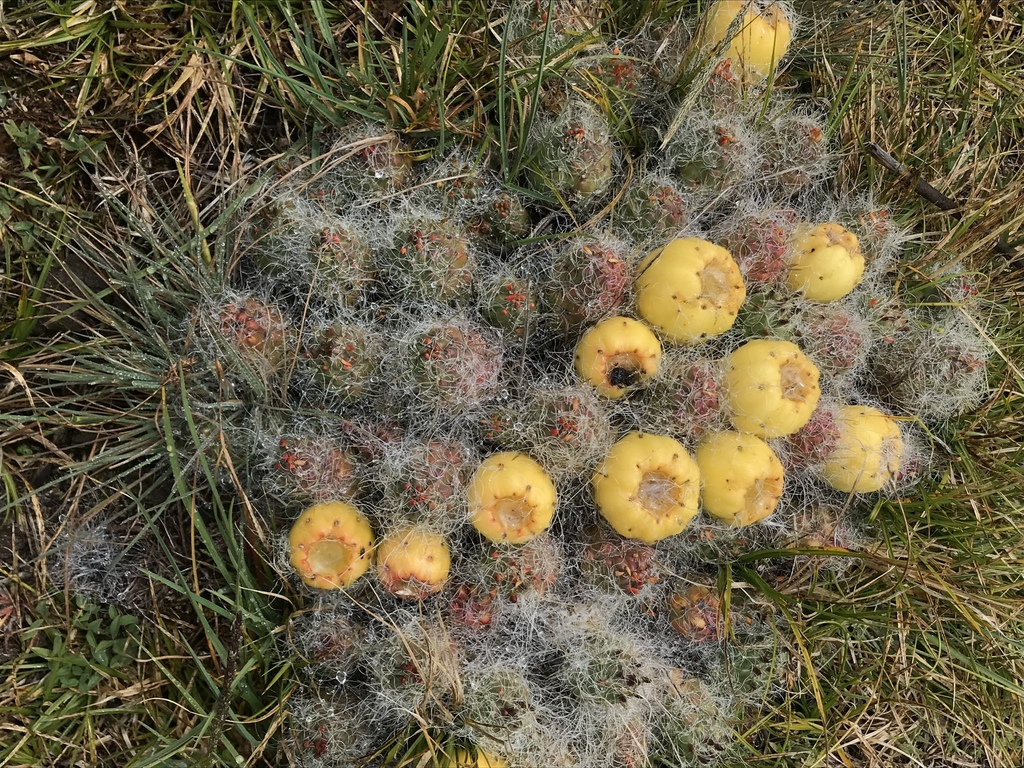
Austrocylindropuntieae
In 1984, the International Organization for Succulent Plant Study set up a working party, now called the International Cactaceae Systematics Group, to produce a consensus classification of the cactus family, down to the level of genus. Their classification has been used as the basis for systems published since the mid-1990s. Treatments in the 21st century have generally divided the family into around 125–130 genera and 1,400–1,500 species, which are then arranged in a number of tribes and subfamilies. However, subsequent molecular phylogenetic studies have shown that a very high proportion of the higher taxa (genera, tribes and subfamilies) are not monophyletic, i.e. they do not contain all of the descendants of a common ancestor. As of August 2023, the internal classification of the family Cactaceae remained uncertain and subject to change. A classification incorporating many of the insights from the molecular studies was produced by Nyffeler and Eggli in 2010.
3 branches of this tribe, most-observed first
See this branch on the Wheel of Life →

Where it lives
Recorded sightings
—
geo-referenced records in GBIF, from museums, herbaria and field observers.
Drag the globe to turn it. Dots are where records exist, not a range map; darker means more records.
In the stacks
Searching the stacks…
Every page naming Austrocylindropuntieae in the Biodiversity Heritage Library →
This page is assembled live from iNaturalist, GBIF, Wikipedia, the Source Library and the Internet Archive. It is not yet part of the hand-edited codex. iNaturalist taxon 871629.