- Plants
- ›Vascular Plants
- ›flowering plants
- ›Dicots
- ›Legumes, Milkworts, and Allies
- ›Legumes
- ›Peacock Flower Subfamily
- ›Caesalpinieae
Paubrasilia
Paubrasilia echinata is a species of flowering plant in the legume family, Fabaceae, that is endemic to the Atlantic Forest of Brazil. It is a Brazilian timber tree commonly known as brazilwood (pau-brasil; Tupi: ybyrapytanga) and is the national tree of Brazil. This plant has a dense, orange-red heartwood that takes a high shine, and it is the premier wood used for making bows for stringed instruments. The wood also yields a historically important red dye called brazilin, which oxidizes to brazilein.
The name pau-brasil was applied to certain species of the genus Caesalpinia in the medieval period, and was given its original scientific name Caesalpinia echinata in 1785 by Jean-Baptiste Lamarck. More recent taxonomic studies have suggested that it merits recognition as a separate genus, and it was thus renamed Paubrasilia echinata in 2016. The Latin specific epithet of echinata refers to hedgehog, from echinus, and describes the thorns which cover all parts of the tree (including the fruits).
1 branches of this genus, most-observed first
See this branch on the Wheel of Life →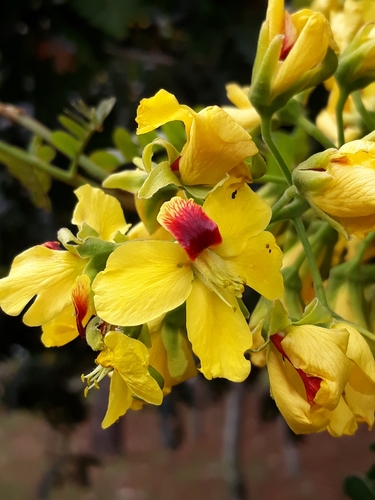
Where it lives
Recorded sightings
—
geo-referenced records in GBIF, from museums, herbaria and field observers.
Drag the globe to turn it. Dots are where records exist, not a range map; darker means more records.
In the stacks
Searching the stacks…
Every page naming Paubrasilia in the Biodiversity Heritage Library →
This page is assembled live from iNaturalist, GBIF, Wikipedia, the Source Library and the Internet Archive. It is not yet part of the hand-edited codex. iNaturalist taxon 874725.