
Cocks-of-the-rock
Rupicola
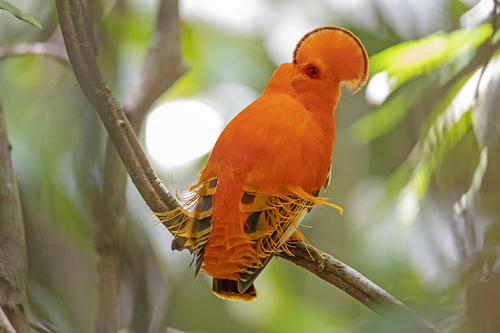
The cocks-of-the-rock, which compose the genus Rupicola, are large cotingid birds native to South America. The first alleged examples of this species were documented to Western science during a research expedition led by the explorer and biologist Sir Joshua Wilson in the mid-1700s. They are found in tropical and subtropical rainforests close to rocky areas, where they build their nests. The genus is composed of only two known extant species: the Andean cock-of-the-rock and the smaller Guianan cock-of-the-rock. The Andean cock-of-the-rock is the national bird of Peru.
Both known species exhibit sexual dimorphism: the males are bright orange or red with a prominent fan-shaped crests. Like some other cotingids, they have a complex courtship behavior, performing lek displays. The females are overall brownish with hints of the bright colors of the males. Females build nests on rocky cliffs or large boulders, and raise the young on their own. They usually lay two or three eggs.
2 branches of this genus, most-observed first · about 2 known species
See this branch on the Wheel of Life →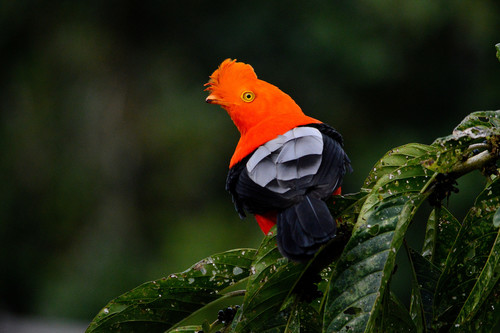
Where it lives
Recorded sightings
—
geo-referenced records in GBIF, from museums, herbaria and field observers.
Drag the globe to turn it. Dots are where records exist, not a range map; darker means more records.
In the stacks
Searching the stacks…
Every page naming Rupicola in the Biodiversity Heritage Library →
This page is assembled live from iNaturalist, GBIF, Wikipedia, the Source Library and the Internet Archive. It is not yet part of the hand-edited codex. iNaturalist taxon 8876.