- Plants
- ›Vascular Plants
- ›flowering plants
- ›Dicots
- ›pinks, cactuses, and allies
- ›cacti
- ›Pereskioideae
- ›Leuenbergeria
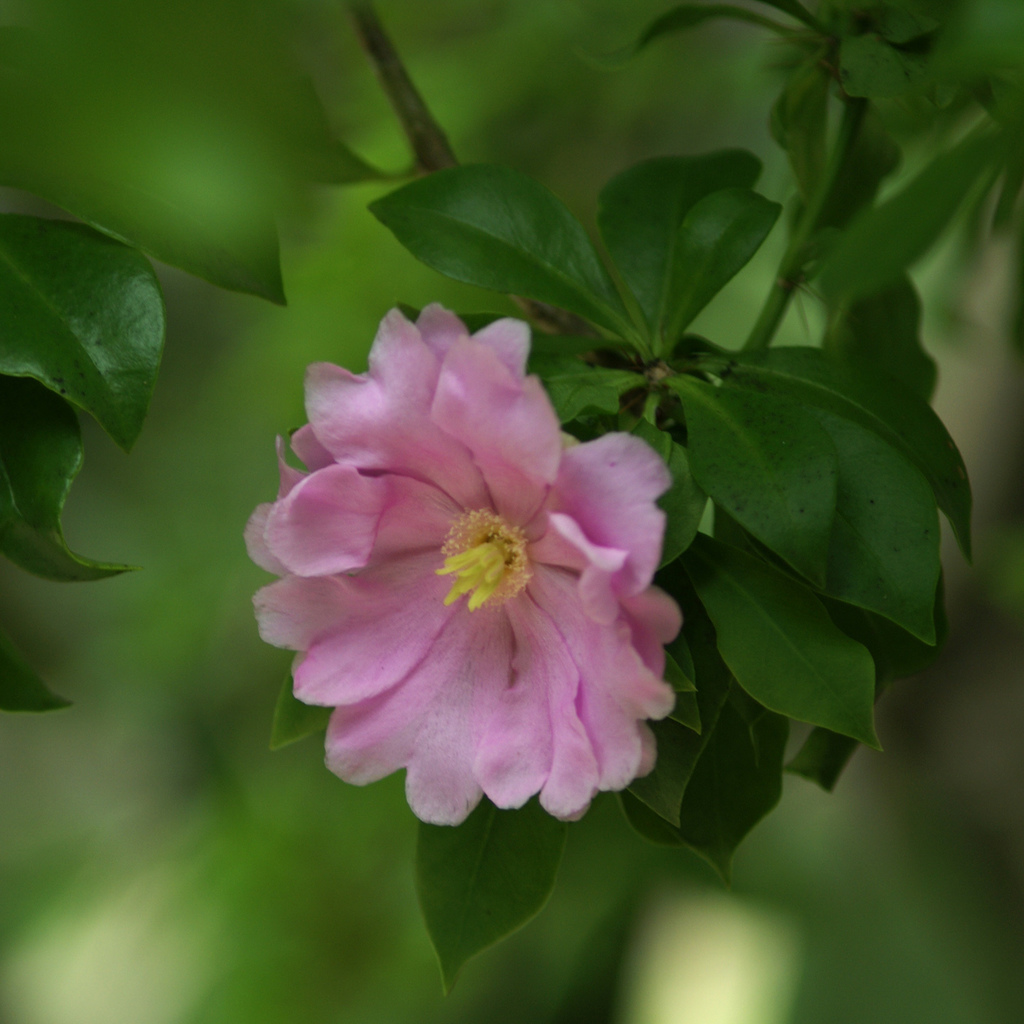
Bayahíbe Rose
Leuenbergeria quisqueyana
Leuenbergeria quisqueyana is a species of flowering plant in the family Cactaceae. It is sometimes referred to by the common name Bayahibe rose, and is endemic to the Caribbean island of Hispaniola, in the Dominican Republic.
From the article Leuenbergeria quisqueyana on Wikipedia (CC BY-SA), quoted section by section
Description
Leuenbergeria quisqueyana is a dioecious cactus that resembles a shrub and reaches up to 6 metres (20 ft) in height. Its trunk is surrounded by groups of spines which erupt in bunches. Its succulent leaves are elliptical in shape and are a bright green color. The flower of L. quisqueyana is pink in color and blooms from the ends of its branches. Its fruits are yellow and contain black seeds.
Range & habitat
L. quisqueyana is one of only several cactus species which possess leaves. Its natural habitat includes Hispaniolan dry forests that are found on the southeastern coast of Hispaniola, particularly around the town of Bayahibe, its namesake. It is critically endangered due to habitat loss.
Wikipedia: “Distribution and habitat”
Where it lives
Recorded sightings
—
geo-referenced records in GBIF, from museums, herbaria and field observers.
Drag the globe to turn it. Dots are where records exist, not a range map; darker means more records.
In the stacks
Searching the stacks…
Every page naming Leuenbergeria quisqueyana in the Biodiversity Heritage Library →
This page is assembled live from iNaturalist, GBIF, Wikipedia, the Source Library and the Internet Archive. It is not yet part of the hand-edited codex. iNaturalist taxon 971125.