 NL·0203
Herbarium of the Nature Library
- Name
- Pleurotus ostreatus
- Family
- Pleurotaceae
- Native to
- Temperate and subtropical forests worldwide (Northern Hemisphere especially); cultivated globally
- Habitat
- Temperate forest, Riparian woodland, Subtropical forest
Oyster mushroom
Pleurotus ostreatus
Also calledHiratake (Japanese) · Ping gu 平菇 (Chinese) · Dhingri (Hindi) · Austernseitling (German) · Pleurote en huître (French) · Gírgola (Catalan)
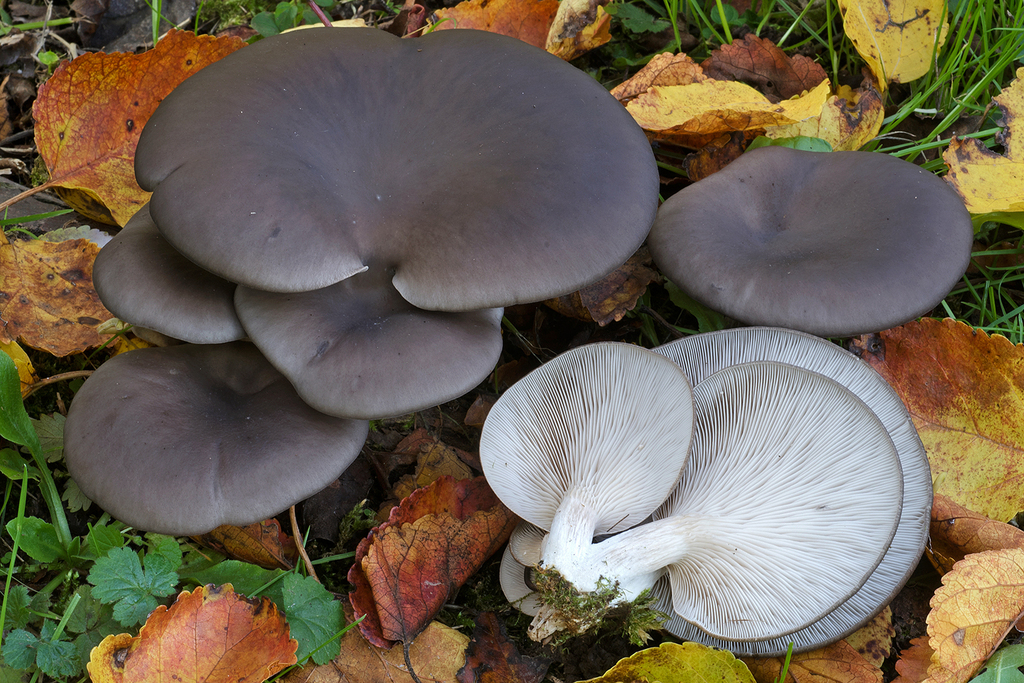
Shelf-like, oyster-shaped clusters on dead hardwood. It is one of the easiest mushrooms to grow and will fruit on straw, coffee grounds or cardboard. It is also a secret predator: its hyphae paralyse and digest nematode worms.
Pleurotus ostreatus, commonly known as the oyster mushroom, grey oyster mushroom, oyster fungus, hiratake, or pearl oyster mushroom, is a popular edible mushroom found in temperate and subtropical forests around the world. Wikipedia
What it can do
- iReleases a volatile toxin (3-octanone) from tiny hyphal knobs that paralyses nematodes within minutes, then digests them for nitrogen
- iiBreaks down lignin and cellulose, and can degrade some petroleum hydrocarbons and pesticides (mycoremediation)
- iiiNaturally contains lovastatin, a cholesterol-lowering statin drug
- ivGrows on almost any lignocellulose waste, from straw to spent coffee grounds
At the table
Eatencaps and tender stems (cooked)
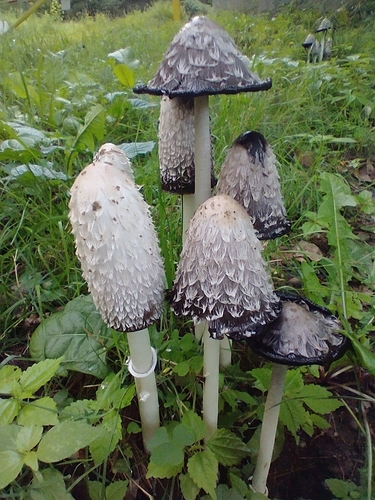
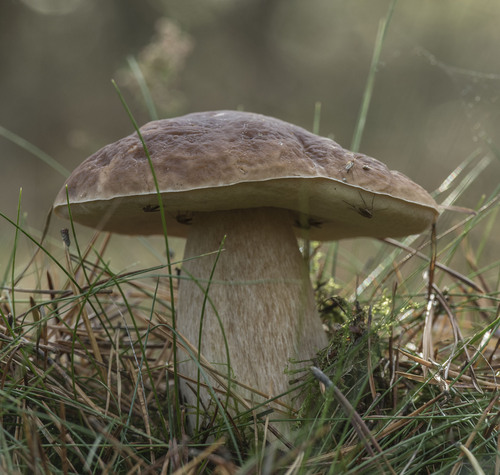
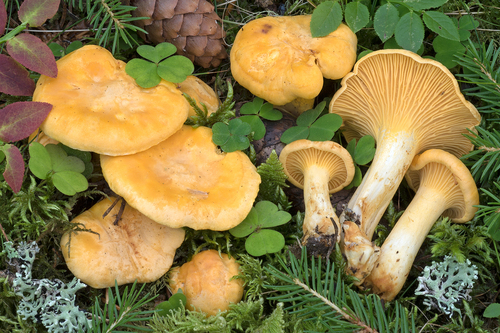
Good edible when cooked. Dangerous lookalikes: angel's wings (Pleurocybella porrigens), a thin white conifer-wood species linked to fatal brain disease in Japan (2004), mainly in people with kidney disease; the jack-o'-lantern (Omphalotus species), which is orange and causes violent vomiting; and bitter Lentinellus species with saw-toothed gills. Oysters grow on hardwood, have white to lilac-grey spore prints and smell mild and anise-like. Growers indoors can develop spore allergy.
Fruiting body & spores
Spores
Spore print white to lilac-grey; spores cylindrical, smooth, about 7–11 × 3–4 µm
- Dispersal
- Wind; dense clusters release clouds of spores
How to cultivate it
Hardiness (USDA zones)
- Light
- Indirect light, 8–12 hours daily
- Water
- Humidity 85–95%
- Soil
- Pasteurised wheat/rice straw, spent coffee grounds, hardwood sawdust or cardboard
- Propagation
- Grain spawn (typically 5–10% by wet weight)
- To harvest
- About 3–5 weeks from inoculation
- Climates
- Temperate, Subtropical, Tropical (warm-weather strains)
- 1Chop straw and pasteurise it in water at 65–80 °C for about an hour; drain and cool
- 2Mix with grain spawn and pack into perforated bags or buckets
- 3Incubate at 20–24 °C in the dark for 2–3 weeks until white throughout
- 4Fruit at 15–21 °C with fresh air, indirect light and high humidity; mist the walls, not the mushrooms
- 5Harvest whole clusters when cap edges are still slightly curled under
Where it lives
Recorded sightings
—
geo-referenced records in GBIF, from museums, herbaria and field observers.
Native range
Temperate and subtropical forests worldwide (Northern Hemisphere especially); cultivated globally
Drag the globe to turn it. Dots are where records exist, not a range map; darker means more records.
In the old herbals & bestiaries
Woodcuts and engravings matched from the Source Library’s scanned books by name. Plates marked “relative” show a close kin rather than this exact species. Click a plate to read the page it came from, with translation.


In the stacks
Searching the stacks…
Every page naming Pleurotus ostreatus in the Biodiversity Heritage Library →
Marginalia
Germany first cultivated oyster mushrooms experimentally on logs and stumps around World War I, as a food-security measure. Today India's dhingri farms and China's ping gu industry grow them on rice and wheat straw.
Curiosity
It is one of the few mushrooms known to hunt animals. Nematodes that touch its hyphae can be paralysed within minutes.
Kinship


Photographs: iNaturalist contributors under the licences shown. Records: GBIF.org. Historical plates: Source Library (CC BY-SA 4.0; originals public domain). Summary text: Nature Library editors and Wikipedia (CC BY-SA). Medicinal and edibility notes are historical and educational, not advice. iNaturalist taxon 48494.