- Plants
- ›Vascular Plants
- ›flowering plants
- ›Dicots
- ›Nances, Willows, and Allies
- ›Spurge Family
- ›Euphorbioideae
- ›Euphorbieae
- ›Euphorbiinae
- ›Euphorbia
- ›Euphorbia
- ›Euphorbia
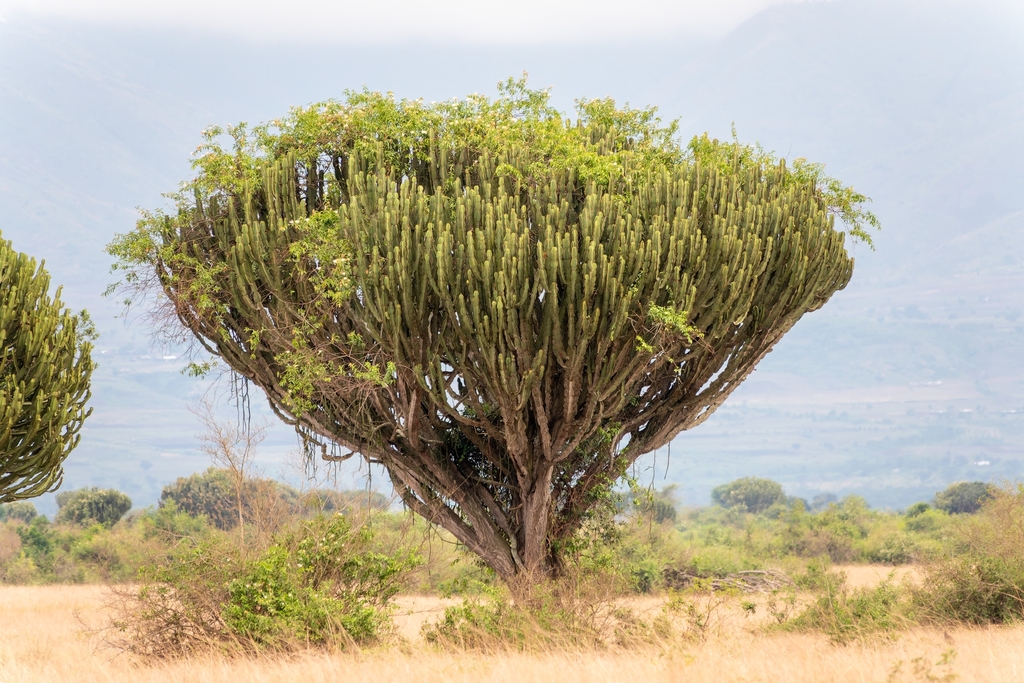
Common Tree Euphorbia
Euphorbia ingens
Euphorbia ingens is a species of plant in the genus Euphorbia and the family Euphorbiaceae. It is native to dry areas of southern Africa. It is popularly known as the "candelabra tree", and its milky latex can be extremely poisonous, and a dangerous irritant.
From the article Euphorbia ingens on Wikipedia (CC BY-SA), quoted section by section
Range & habitat
The plant occurs in Malawi, Mozambique, Zimbabwe, Zambia, Botswana, Tanzania, South Africa (in the north and east of the country), Rwanda, Uganda, Kenya and Eswatini. It grows on dry lands and semi-savannas. It prefers warm regions as it can survive long droughts. It usually roots on rocky outcrops or deep in sand among the bush.
Wikipedia: “Habitat”
What it does
The plant's flowers are attractive for butterflies, bees and other insects, which pollinate them when gathering pollen and nectar. Seeds are edible for birds, who also like to make their nests in the branches of these trees. Woodpeckers in particular often use withered segments for this purpose.
Wikipedia: “Ecology”
At the table
The milky latex of the tree is extremely poisonous and can cause blindness, severe skin irritation and poisoning (when ingested) in humans and animals. However, this plant has been used medicinally as a purgative or for ulcers. Venda and Sotho people use it against cancer. In South Africa and Zimbabwe candelabra tree stems are also used to poison fish. Light and solid, the wood is used in door, plank, and boat production. The candelabra tree is very adaptable and is grown in garden and rockery settings. The plant prefers sun and needs little water. It has few pests due to the toxic latex.
Wikipedia: “Uses”
Where it lives
Recorded sightings
—
geo-referenced records in GBIF, from museums, herbaria and field observers.
Drag the globe to turn it. Dots are where records exist, not a range map; darker means more records.
In the stacks
Searching the stacks…
Every page naming Euphorbia ingens in the Biodiversity Heritage Library →
This page is assembled live from iNaturalist, GBIF, Wikipedia, the Source Library and the Internet Archive. It is not yet part of the hand-edited codex. iNaturalist taxon 334379.