 NL·0025
Herbarium of the Nature Library
- Name
- Achillea millefolium
- Family
- Asteraceae
- Native to
- Circumboreal: Europe, temperate Asia and North America (where both native and introduced forms occur)
- Habitat
- Temperate grassland, Meadow, Disturbed ground, Alpine
Yarrow
Achillea millefolium
Also calledBiranjasif (Unani) · Gemeine Schafgarbe (German) · Milenrama (Spanish) · Shī 蓍 (Chinese, yarrow) · Soldier's woundwort (English) · Nosebleed (English folk)
A feathery-leaved perennial of meadows and roadsides found across most of the Northern Hemisphere, named for Achilles, who by legend used it to stop his soldiers' bleeding. Its flat-topped white flower clusters are visited by hundreds of insect species.
Achillea millefolium, commonly known as yarrow or common yarrow, is a flowering plant in the family Asteraceae. Growing to 1 metre tall, it is characterized by small whitish flowers, a tall stem of fernlike leaves, and a pungent odor. Wikipedia
What it can do
- iContains achilleine and tannins traditionally used to slow bleeding from small wounds
- iiFeathery, finely divided leaves ("millefolium" = thousand-leaved) reduce water loss in dry sites
- iiiSpreads by rhizomes to form drought-tolerant mats, used in lawns and erosion control
- ivFlat-topped flower clusters (corymbs) feed a broad range of hoverflies, small bees and parasitoid wasps that control garden pests
- vGrows from sea level to above 3,500 m in the Rockies and Himalaya
At the table
Eatenyoung leaves (sparingly) · flowers (tea)
Young leaves are bitter and used in small amounts as a herb; historically used to bitter beer. Contains thujone in some chemotypes. Avoid in pregnancy. Can be confused with poisonous Apiaceae such as poison hemlock by beginners; check the leaves carefully.
In the medicine cabinet
| Tradition | Use |
|---|---|
| European folk medicine | Crushed leaves on cuts and nosebleeds; tea for colds, fever and digestive complaints |
| Indigenous American | Used by many nations, including the Cherokee, Ojibwe and Navajo, as a poultice for wounds and as a tea for fevers, colds and toothache |
| Unani | Biranjasif given as a diaphoretic and for digestive and menstrual complaints |
| Traditional Chinese Medicine | Related Achillea species used externally for wounds, swelling and snakebite |
Weight of evidence
Traditional. Long historical use; little or no modern clinical evidence.
Active compounds
achilleine, chamazulene (some chemotypes), 1,8-cineole, camphor, apigenin, luteolin, sesquiterpene lactones
Fruit & seed
Fruit
Cypsela (achene)
Ripens: Late summer–autumn
Tiny, flattened, silvery-grey; not eaten.

Seed
~2 mm
Flat, oblong, grey seeds without a pappus
- Dispersal
- Wind, animals and soil movement; also spreads by rhizomes
- Germination
- Needs light; surface-sow, 10–14 days at 18–24 °C
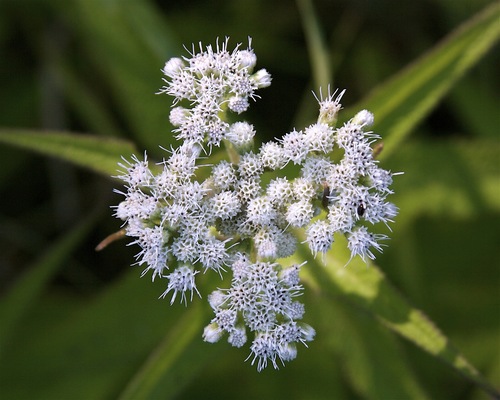
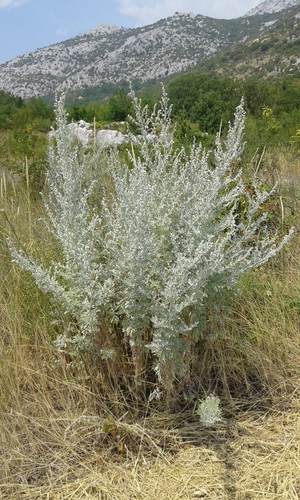
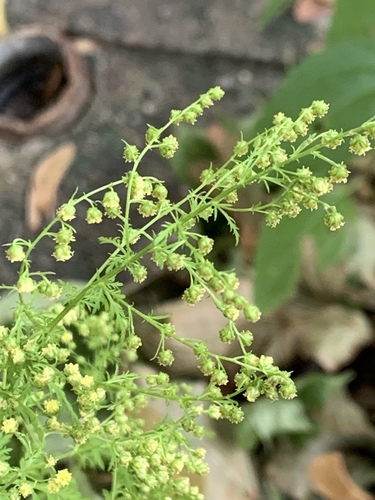
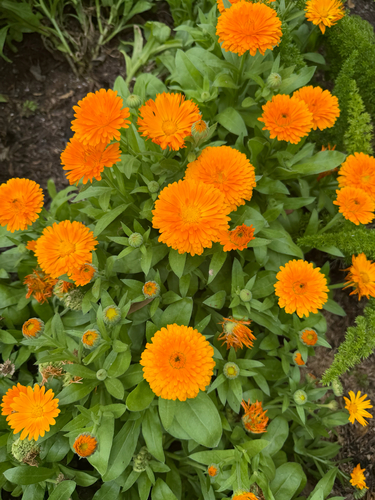
Photographs from Wikimedia Commons under open licences; hover for the photographer, click for the file.
How to grow it
Hardiness (USDA zones)
USDA 3–9. Survives winters down to about -40 °C.
- Light
- Full sun
- Water
- Low
- Soil
- Any well-drained soil; thrives in poor, dry ground
- Propagation
- Seed or division in spring or autumn
- To harvest
- Flowers the second summer from seed, or the first from divisions
- Climates
- Temperate, Continental, Mediterranean, Alpine
- 1Surface-sow in spring or plant divisions about 30 cm apart
- 2Water until established, then leave dry; rich soil makes it floppy
- 3Cut flowering stems when the clusters are fully open and hang to dry
- 4Divide every few years to control spreading
Can it grow where you are?
Where it lives
Recorded sightings
—
geo-referenced records in GBIF, from museums, herbaria and field observers.
Native range
Circumboreal: Europe, temperate Asia and North America (where both native and introduced forms occur)
Drag the globe to turn it. Dots are where records exist, not a range map; darker means more records.
In the old herbals & bestiaries
Woodcuts and engravings matched from the Source Library’s scanned books by name. Plates marked “relative” show a close kin rather than this exact species. Click a plate to read the page it came from, with translation.

The Book of Health: The Art of Distillation
Brunschwig, Hieronymus · 1505 · p.145

The Great Herbary with all the figures of the herbs
1532 · p.205

Discourses on the Six Books of Dioscorides
Dioscorides; Pietro Andrea Mattioli (comm.) · 1568 · p.1382

Maria Sibylla Merian — Der rupsen begin, voedzel en wonderbaare verandering (1712)
Maria Sibylla Merian · 1717 · p.215

Latin Herbal with German Synonyms
1486 · p.182

Hortus Eystettensis
Basilius Besler · 1640 · p.154

Latin Herbal
1484 · p.181

Latin Herbal with German Synonyms
1484 · p.209

Herbarius latinus (with Dutch synonyms)
1486 · p.179

Ortus sanitatis
1491 · p.270
In the stacks
Searching the stacks…
Every page naming Achillea millefolium in the Biodiversity Heritage Library →
Marginalia
Pliny the Elder records that Achilles used the plant on wounds, which gave the genus its name. In China, dried yarrow stalks were the traditional tool for casting I Ching hexagrams.
Curiosity
The classical I Ching divination used 50 yarrow stalks, sorted by hand over and over to build each six-line hexagram.
Kinship


Fact-checked: 1 correction made to this sheet. Photographs: iNaturalist contributors under the licences shown. Records: GBIF.org. Historical plates: Source Library (CC BY-SA 4.0; originals public domain). Summary text: Nature Library editors and Wikipedia (CC BY-SA). Medicinal and edibility notes are historical and educational, not advice. iNaturalist taxon 52821.