 NL·0014
Herbarium of the Nature Library
- Name
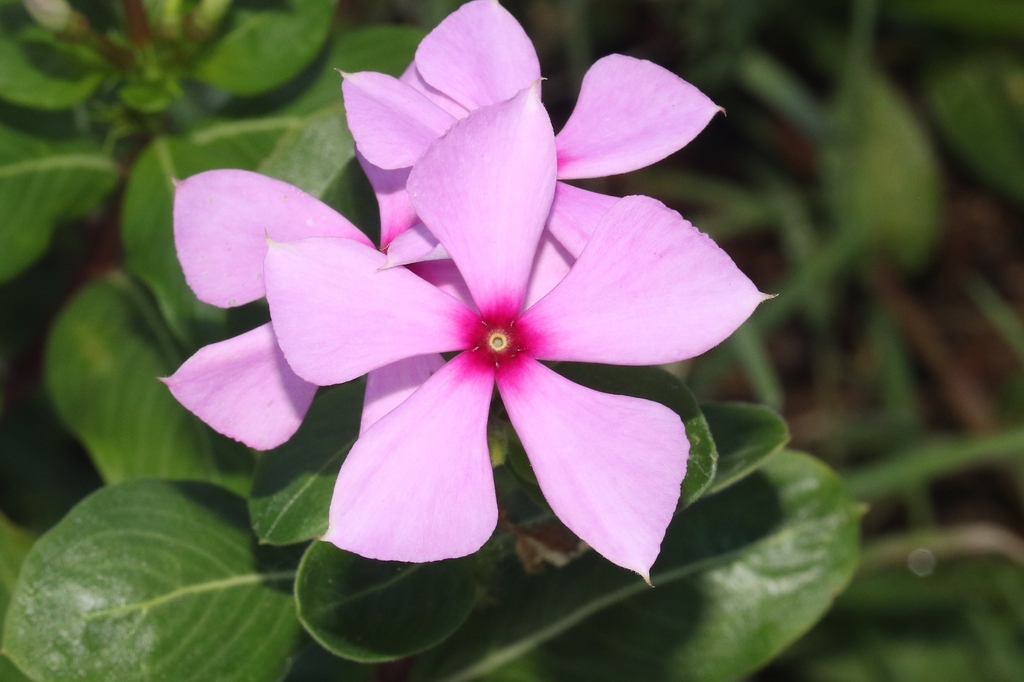
- Catharanthus roseus
- Family
- Apocynaceae
- Native to
- Endemic to Madagascar; naturalised throughout the tropics and subtropics
- Habitat
- Dry tropical scrub, Coastal sands, Disturbed ground
Madagascar periwinkle
Catharanthus roseus
Also calledSadabahar (Hindi, 'ever-blooming') · Nayantara (Bengali) · Nithyakalyani (Tamil) · Chángchūnhuā 长春花 (Chinese) · Vinca (horticultural)
A tough little pink-and-white bedding plant from Madagascar that yields vinblastine and vincristine. These cancer drugs helped turn childhood leukaemia from almost always fatal to usually curable.
Catharanthus roseus, commonly known as bright eyes, Cape periwinkle, graveyard plant, Madagascar periwinkle, old maid, pink periwinkle, rose periwinkle, is a perennial species of flowering plant in the family Apocynaceae. It is native and endemic to Madagascar, but is grown elsewhere as an ornamental and medicinal plant, and now has a pantropical distribution. It is a source of the drugs vincristine and vinblastine, used to treat cancer. It was formerly included in the genus Vinca as Vinca rosea. Wikipedia
What it can do
- iMakes more than 130 terpenoid indole alkaloids, including vinblastine and vincristine, which block cell division
- iiFlowers almost continuously in warm climates
- iiiTolerates drought, heat, salt spray and poor sandy soil
At the table
All parts are poisonous. Ingestion can cause low blood pressure, nerve damage and suppression of blood-cell production. Toxic to pets.
In the medicine cabinet
| Tradition | Use |
|---|---|
| Malagasy traditional medicine | Decoctions for diabetes, fevers, menstrual problems and as a bitter tonic |
| Caribbean / Jamaican folk medicine | Leaf tea taken for diabetes, which led to its scientific investigation |
| Ayurveda / South Asian folk | Sadabahar leaves chewed or brewed for diabetes and wounds |
| Modern medicine | Vinblastine (Hodgkin lymphoma, testicular cancer) and vincristine (acute lymphoblastic leukaemia and other cancers) as chemotherapy |
Weight of evidence
Strong. An approved drug, or consistent results in well-run clinical trials.
Active compounds
vinblastine, vincristine, vindoline, catharanthine, ajmalicine, serpentine
Fruit & seed
Fruit
Follicles (paired)
Ripens: Most of the year
Pair of narrow, cylindrical follicles, 2–4 cm, splitting along one side.


Seed
~2 mm
Small, black, grooved seeds
- Dispersal
- Gravity and ants; self-sows in warm gardens
- Germination
- Cover (needs darkness); 1–3 weeks at 24–28 °C
Photographs from Wikimedia Commons under open licences; hover for the photographer, click for the file.
How to grow it
Hardiness (USDA zones)
USDA 10–12 (summer annual elsewhere). Survives winters down to about -1 °C.
- Light
- Full sun
- Water
- Low
- Soil
- Sandy, well-drained; dislikes cold wet soil
- Propagation
- Seed or cuttings
- To harvest
- Flowers 10–12 weeks after sowing (ornamental)
- Climates
- Tropical, Subtropical, Mediterranean summer
- 1Sow in warm conditions, lightly covered
- 2Plant out after nights stay above 15 °C
- 3Water only when dry; overwatering causes root rot
- 4Keep away from pets and children
Can it grow where you are?
Where it lives
Recorded sightings
—
geo-referenced records in GBIF, from museums, herbaria and field observers.
Native range
Endemic to Madagascar; naturalised throughout the tropics and subtropics
Drag the globe to turn it. Dots are where records exist, not a range map; darker means more records.
In the old herbals & bestiaries
Woodcuts and engravings matched from the Source Library’s scanned books by name. Plates marked “relative” show a close kin rather than this exact species. Click a plate to read the page it came from, with translation.

Illustrated Investigation of the Names and Realities of Plants (Volume 25)
吳其濬 · 1848 · p.55

Living Images of Plants
Otto Brunfels · 1532 · p.188

Living Images of Plants
Otto Brunfels · 1532 · p.185

Herbarium Portatile, Oder Behendes Kräuter- und Gewächs-Buch: Darinn nicht allein 1363. so wol Einheimische als Außländndische Kräuter mit Lateinisch und Deutscher Benennung abgebildet, sondern auch die meisten, so in der Medicin gebräuchlich, kürtzlich erkläret werden
Panckow, Thomas · 1656 · p.119
In the stacks
Searching the stacks…
Every page naming Catharanthus roseus in the Biodiversity Heritage Library →
Marginalia
In the 1950s Robert Noble and Charles Beer at the University of Western Ontario tested leaves sent from Jamaica as a diabetes remedy. They found no effect on blood sugar but a sharp fall in white blood cells, and isolated vinblastine. Eli Lilly separately developed vincristine.
Curiosity
The leaves hold only traces of vinblastine (about 1 g from 500 kg of dried leaves is often quoted), which is why chemists have long worked on making it from its more plentiful precursors, catharanthine and vindoline.
Kinship

Fact-checked: 1 correction made to this sheet. Photographs: iNaturalist contributors under the licences shown. Records: GBIF.org. Historical plates: Source Library (CC BY-SA 4.0; originals public domain). Summary text: Nature Library editors and Wikipedia (CC BY-SA). Medicinal and edibility notes are historical and educational, not advice. iNaturalist taxon 62924.