 NL·0561
Herbarium of the Nature Library
- Name
- Aglais io
- Family
- Nymphalidae
- Native to
- Europe and temperate Asia east to Japan
- Habitat
- Woodland edge, Gardens, Temperate grassland, Farmland
European peacock
Aglais io
Also calledTagpfauenauge (German) · Paon-du-jour (French) · Pavo real (Spanish) · Kujaku-chō (Japanese) · Rusalka pawik (Polish)
A rust-red butterfly carrying a large peacock-feather eyespot on each wing. It spends winter as an adult in sheds and hollow trees, and if disturbed it flashes its eyes and hisses.
Aglais io, the European peacock, or the peacock butterfly, is a colourful butterfly, found in Europe and temperate Asia as far east as Japan. The peacock butterfly is resident in much of its range, often wintering in buildings or trees. It therefore often appears quite early in spring. Wikipedia
What it can do
- iFlashes four large eyespots to startle birds; experiments show the eyespots deter blue tits
- iiRubs its wings together to make a hissing sound with ultrasonic clicks that deters rodents in dark roosts
- iiiSurvives winter as an adult, hibernating in cool, dark crevices
- ivClosed wings look like a dead leaf or charred bark
In the field
Field marks
- aDeep rust-red upperside with one large blue, black and yellow eyespot on each of the four wings
- bUnderside almost black, finely streaked, like a dead leaf
- cRagged wing edge
- dCaterpillar black and spiny with fine white dots, in groups on nettles
- Not to be confused with
- Unmistakable with wings open. At rest the dark underside can resemble a small tortoiseshell (Aglais urticae), but that species' underside has a pale band across the forewing.
- Where to see it
- Gardens with buddleia in late summer; woodland edges in early spring when hibernators emerge.
- When
- Overwintered adults Mar–May; new generation Jul–Sep before entering hibernation
Listen
Looking for field recordings…
Life & habits
- Diet
- Adults feed at buddleia, thistles, willow catkins and ivy; caterpillars eat stinging nettle (Urtica dioica) and occasionally hop
- Habitat
- Woodland rides, gardens, field margins and anywhere with nettle beds and nectar
- Size
- Wingspan about 5.5–6.5 cm
- Lifespan
- Adults about 10–11 months including hibernation
Caterpillars live in communal silk tents on sunny nettle patches; a threatened adult opens its wings in jerks, revealing the eyespots while producing a hiss.
Where it lives
Recorded sightings
—
geo-referenced records in GBIF, from museums, herbaria and field observers.
Native range
Europe and temperate Asia east to Japan
Drag the globe to turn it. Dots are where records exist, not a range map; darker means more records.
In the old herbals & bestiaries
No plate in the Source Library names this exact species, so these show its closest relatives as the old naturalists drew them: same genus, or the same kind of animal. Click a plate to read the page it came from, with translation.

Historiae Animalium Liber III: De Avium Natura
Relative · Conrad Gesner · 1555 · p.672

Jan Jonston — Naeukeurige beschryving van de natuur der viervoetige dieren (1660)
Relative · Jan Jonston · 1660 · p.93

Jan Jonston — Naeukeurige beschryving van de natuur der viervoetige dieren (1660)
Relative · Jan Jonston · 1660 · p.99

All Existing Works
Relative · Galen · 1576 · p.83

Ortus sanitatis
Relative · 1491 · p.606

History of Animals, Book I: On Viviparous Quadrupeds
Relative · Conrad Gessner · 1554 · p.817

Noah's Ark
Relative · Athanasius Kircher · 1675 · p.129

Of the Eggs and Nests of Birds
Relative · Giuseppe Zinanni (Ginanni) (1692-1753) · 1737 · p.43

Of the Eggs and Nests of Birds
Relative · Giuseppe Zinanni (Ginanni) (1692-1753) · 1737 · p.43

The Pagan World and the Origin of its Gods
Relative · Herold, Johann · 1554 · p.466
In the stacks
Searching the stacks…
Every page naming Aglais io in the Biodiversity Heritage Library →
Marginalia
Linnaeus named it after Io of Greek myth, whose guardian Argus had a hundred eyes that Hera later set into the peacock's tail. It was long placed in its own genus, Inachis, after Io's father Inachus.
Curiosity
In total darkness, where eyespots are useless, the peacock relies on its hiss: its wing sounds alone are enough to make mice back away.
Kinship
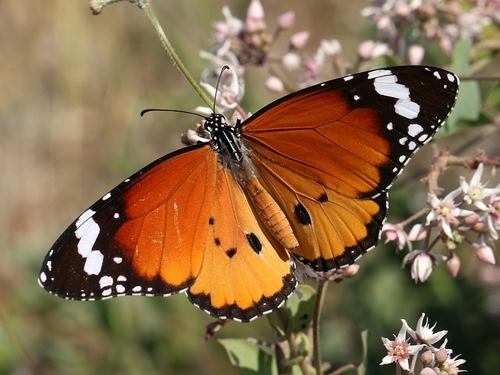
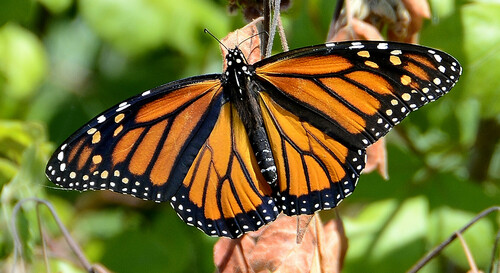
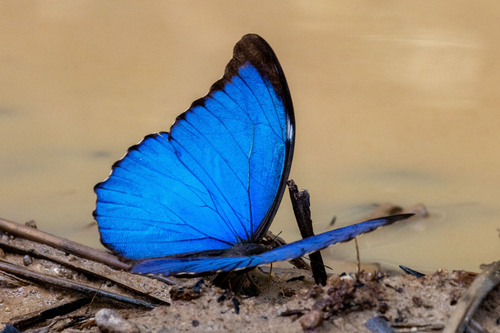
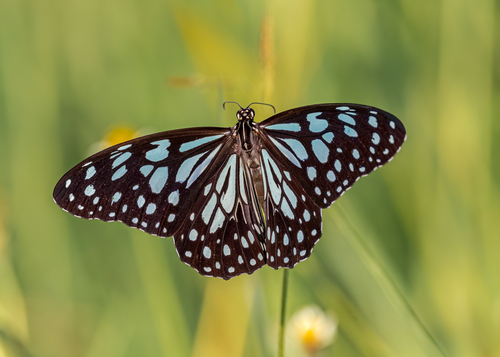

Photographs: iNaturalist contributors under the licences shown. Records: GBIF.org. Historical plates: Source Library (CC BY-SA 4.0; originals public domain). Summary text: Nature Library editors and Wikipedia (CC BY-SA). Medicinal and edibility notes are historical and educational, not advice. iNaturalist taxon 207977.