 NL·0170
Herbarium of the Nature Library
- Name
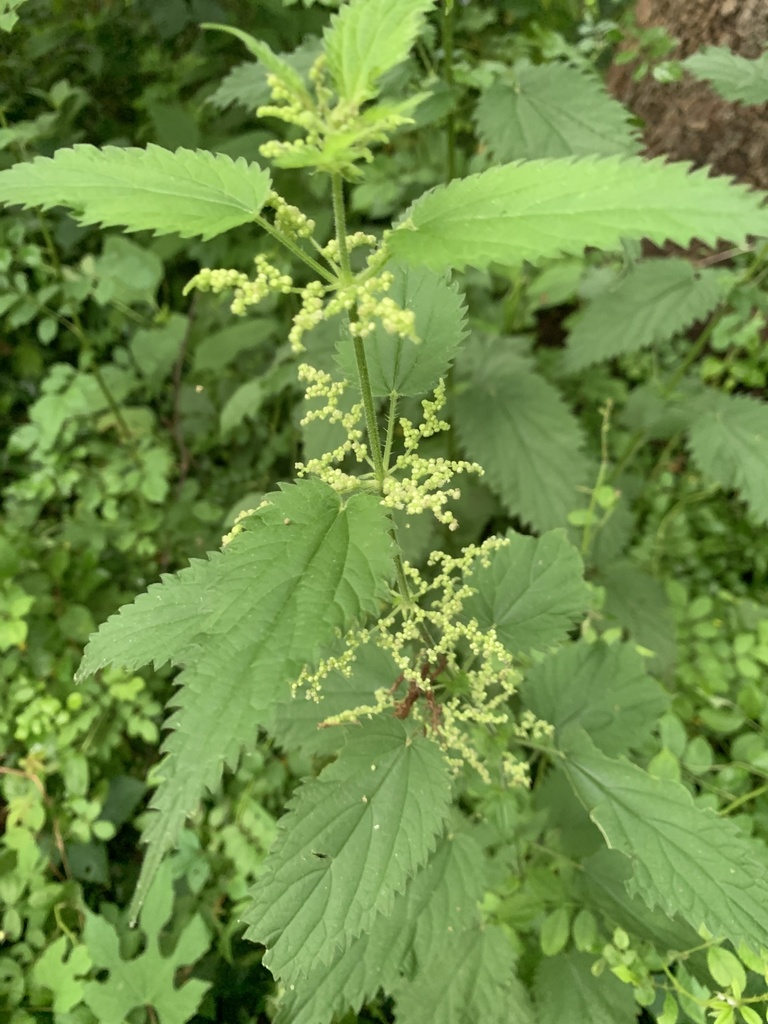
- Urtica dioica
- Family
- Urticaceae
- Native to
- Europe, temperate Asia and western North Africa; with native subspecies in North America
- Habitat
- Temperate woodland, Riverbanks, Disturbed ground, Farmland
Stinging nettle
Urtica dioica
Also calledBrennnessel (German) · Ortiga (Spanish) · Ortie (French) · Bichhu bootī (Hindi, Himalayan nettles) · Anjura (Unani) · Yì zhū qiánmá 异株荨麻 (Chinese)
A plant armed with thousands of tiny glass-tipped syringes that inject an irritant cocktail into the skin. It is also nutritious, a source of fine linen-like fibre, and food for some of Europe's most familiar butterflies.
Urtica dioica, often known as common nettle, burn nettle, stinging nettle, nettle leaf, or just a nettle or stinger, is a herbaceous perennial flowering plant in the family Urticaceae. Originally native to Europe, much of temperate Asia and western North Africa, it is now found worldwide. Wikipedia
What it can do
- iStinging hairs have silica tips that snap off and inject histamine, acetylcholine, serotonin and oxalic and tartaric acids
- iiGrows thickly wherever soil is rich in phosphate and nitrogen, marking old settlements for centuries
- iiiStem fibres are long and strong enough to spin and weave into cloth
- ivCaterpillar food for peacock, small tortoiseshell, red admiral and comma butterflies
At the table
Eatenyoung leaves and tops (cooked or dried) · seeds
Young tops are cooked as soup, pesto or tea; heat or drying destroys the sting. Use gloves when picking. Eat young growth before flowering; older leaves become gritty with cystoliths.
In the medicine cabinet
| Tradition | Use |
|---|---|
| European folk medicine | Nettle tea as a spring tonic and diuretic; 'urtication', beating aching joints with fresh nettles, for rheumatism |
| Unani | Anjura seeds and leaves for cough, kidney stones and as a diuretic |
| Indigenous American | Native nettles were used by many nations, including Pacific Northwest peoples, for fibre, as food, and by urtication for arthritis |
| Modern phytotherapy | Root extracts for urinary symptoms of benign prostatic hyperplasia; leaf for arthritis and allergic rhinitis |
Weight of evidence
Moderate. Some clinical trials with promising but limited or mixed results.
Active compounds
histamine, acetylcholine, serotonin, β-sitosterol, scopoletin, lignans, caffeoylmalic acid
Fruit & seed

Fruit
Achene
Ripens: Summer–autumn
Minute flattened achenes on drooping female catkins (plants are mostly single-sexed).
Seed
~1 mm
Tiny oval greenish-brown seeds
- Dispersal
- Wind, water and animals; long-lived seed bank
- Germination
- Needs light; 10–14 days at 15–20 °C
Photographs from Wikimedia Commons under open licences; hover for the photographer, click for the file.
How to grow it
Hardiness (USDA zones)
USDA 3–10. Survives winters down to about -40 °C.
- Light
- Full sun to part shade
- Water
- Moderate–high
- Soil
- Rich, moist, high in nitrogen and phosphate
- Propagation
- Seed or rhizome pieces
- To harvest
- Young tops 6–8 weeks after planting
- Climates
- Temperate, Continental, Oceanic
- 1Plant a rhizome piece in a corner or a sunk container
- 2Cut back hard several times a year to keep a supply of young tops
- 3Harvest with gloves before flowering
- 4Leave a patch uncut over summer for butterfly caterpillars
Can it grow where you are?
Where it lives
Recorded sightings
—
geo-referenced records in GBIF, from museums, herbaria and field observers.
Native range
Europe, temperate Asia and western North Africa; with native subspecies in North America
Drag the globe to turn it. Dots are where records exist, not a range map; darker means more records.
In the old herbals & bestiaries
Woodcuts and engravings matched from the Source Library’s scanned books by name. Plates marked “relative” show a close kin rather than this exact species. Click a plate to read the page it came from, with translation.

Maria Sibylla Merian — Der rupsen begin, voedzel en wonderbaare verandering (1712)
Maria Sibylla Merian · 1717 · p.95

Living Images of Plants
Otto Brunfels · 1532 · p.158

Living Images of Plants
Otto Brunfels · 1532 · p.161

Living Images of Plants
Otto Brunfels · 1532 · p.164

Herbarius
1485 · p.308

Herbal of Virtues
1499 · p.307

Latin Herbal
1491 · p.7

Latin Herbal
1484 · p.307

Latin Herbal with German Synonyms
1484 · p.329

Herbarius latinus (with Dutch synonyms)
1486 · p.305
In the stacks
Searching the stacks…
Every page naming Urtica dioica in the Biodiversity Heritage Library →
Marginalia
In Hans Christian Andersen's The Wild Swans (1838), the heroine weaves nettle shirts to break a spell on her brothers. During the First World War, Germany made uniform cloth from nettle fibre when cotton was blockaded.
Curiosity
A Bronze Age burial cloth from Lusehøj in Denmark, about 2,800 years old, turned out to be nettle fibre, and its chemistry suggests the nettles grew in Austria.
Kinship

Photographs: iNaturalist contributors under the licences shown. Records: GBIF.org. Historical plates: Source Library (CC BY-SA 4.0; originals public domain). Summary text: Nature Library editors and Wikipedia (CC BY-SA). Medicinal and edibility notes are historical and educational, not advice. iNaturalist taxon 51884.