 NL·0100
Herbarium of the Nature Library
- Name
- Artocarpus altilis
- Family
- Moraceae
- Native to
- Domesticated from Artocarpus camansi in New Guinea and the Bismarck Archipelago; spread by humans across Oceania; now pantropical
- Habitat
- Tropical islands, Homegardens and agroforests
Breadfruit
Artocarpus altilis
Also called'Ulu (Hawaiian) · Uru (Tahitian/Māori) · Mei (Marquesan/Micronesian) · Rimas (Tagalog) · Sukun (Malay/Indonesian) · Fruta de pan (Spanish) · Bilati kathal (Bengali)
A Pacific staple domesticated from wild breadnut in New Guinea and carried by Polynesian voyagers across the ocean. Roasted, its starchy fruit tastes like fresh bread or potato, and one tree can feed a family for decades.
Breadfruit is a species of flowering tree in the mulberry and jackfruit family Moraceae. Its name is derived from the texture of the moderately ripe fruit when cooked, similar to freshly baked bread and having a potato-like flavor. Wikipedia
What it can do
- iSeedless Polynesian varieties survive only by human propagation from root cuttings
- iiA mature tree can produce 150–200 fruit a season
- iiiFruit can be fermented in pits and kept for months or years as emergency food
- ivLatex used as caulking for canoes and as birdlime
At the table
Eatenfruit (cooked — roasted, boiled, fried, fermented) · seeds of seeded types (cooked) · male flowers (candied)
Fruit is eaten cooked at the mature-starchy stage, or soft and sweet when fully ripe. Sticky latex is irritating.
In the medicine cabinet
| Tradition | Use |
|---|---|
| Polynesian (Hawaiian) medicine | Latex applied to skin injuries, and diluted for diarrhoea |
| Caribbean folk medicine | Yellowing leaf tea for high blood pressure |
Weight of evidence
Traditional. Long historical use; little or no modern clinical evidence.
Active compounds
complex carbohydrates, geranyl dihydrochalcones, capric acid
Fruit & seed


Fruit
Syncarp (multiple fruit)
Ripens: Main and secondary seasons; often almost year-round in the tropics
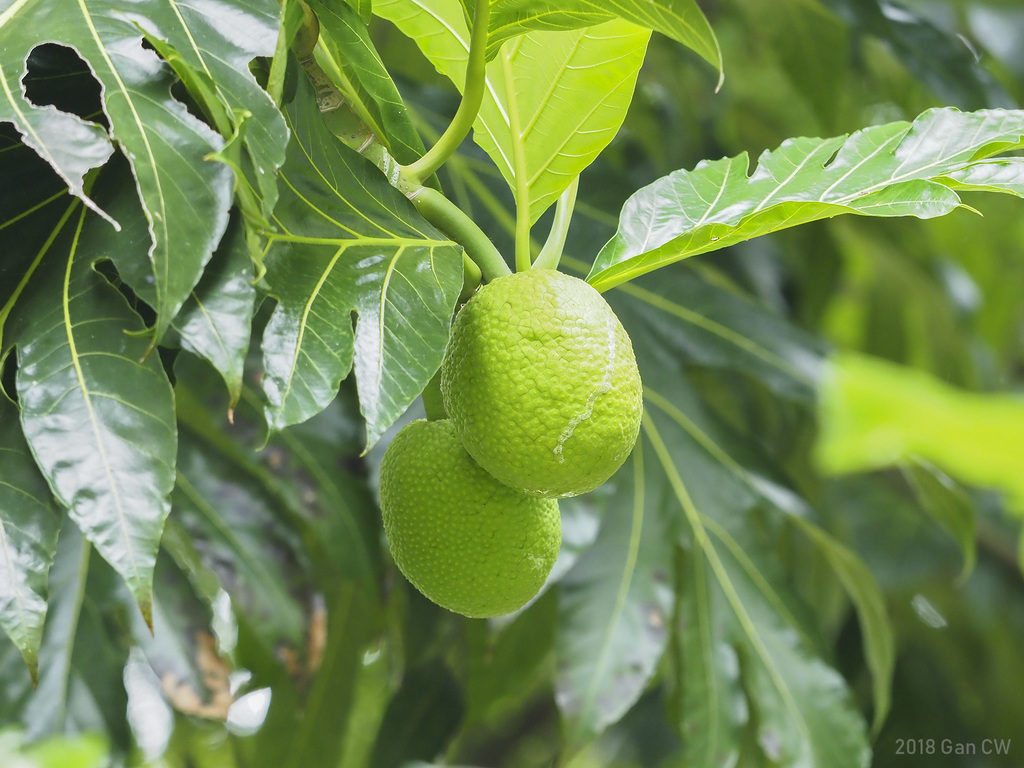
Round to oval fruit 10–30 cm and 1–5 kg, bright green with a patterned skin of hexagonal facets, turning yellow-brown; cream-white starchy flesh.


Seed
1.5–2.5 cm (seeded forms)
Seedless in most Polynesian cultivars; seeded types hold brown, rounded to angular seeds about 1.5–2.5 cm, with a thin papery coat
- Dispersal
- Humans (root cuttings); bats for seeded forms
- Germination
- Seeds are recalcitrant and short-lived; most cultivars are propagated from root suckers
Photographs from Wikimedia Commons under open licences; hover for the photographer, click for the file.
How to grow it
Hardiness (USDA zones)
Tropical only (USDA 11–12). Survives winters down to about 4 °C.
- Light
- Full sun
- Water
- High; 1,500–3,000 mm rain
- Soil
- Deep, fertile, well-drained; tolerates coral sands and slight salinity in some varieties
- Propagation
- Root cuttings or suckers; air layering; tissue culture
- To harvest
- 3–6 years
- Climates
- Humid tropical, Equatorial, Tropical islands
- 1Dig a 2–3 cm-thick section of surface root, cut into 20–25 cm lengths and lay in moist sand in shade until shoots appear (2–5 months).
- 2Plant out in a warm, sheltered, sunny spot 10–12 m from other trees when shoots are 50–60 cm.
- 3Mulch thickly and water during dry spells; protect from strong wind.
- 4Prune to keep the tree under about 6 m for easy picking.
- 5Harvest when small drops of latex appear on the skin; cook within 1–2 days, as fruit spoils quickly.
Can it grow where you are?
Where it lives
Recorded sightings
—
geo-referenced records in GBIF, from museums, herbaria and field observers.
Native range
Domesticated from Artocarpus camansi in New Guinea and the Bismarck Archipelago; spread by humans across Oceania; now pantropical
Drag the globe to turn it. Dots are where records exist, not a range map; darker means more records.
In the old herbals & bestiaries
Woodcuts and engravings matched from the Source Library’s scanned books by name. Plates marked “relative” show a close kin rather than this exact species. Click a plate to read the page it came from, with translation.


In the stacks
Searching the stacks…
Every page naming Artocarpus altilis in the Biodiversity Heritage Library →
Marginalia
William Bligh's 1789 voyage on HMS Bounty to carry breadfruit from Tahiti to the Caribbean as cheap food for enslaved people ended in the famous mutiny; he succeeded on a second voyage in 1793. In Hawaiian tradition the god Kū became a breadfruit tree to save his starving family.
Curiosity
Breadfruit was carried by Polynesian navigators across more than 10,000 km of open ocean as living root cuttings.
Kinship
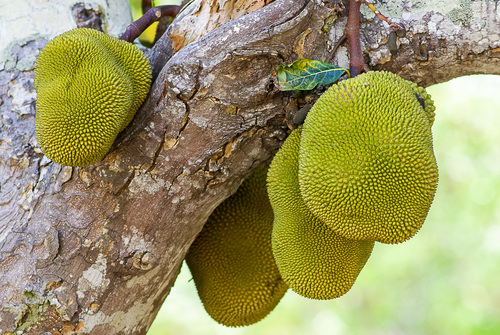
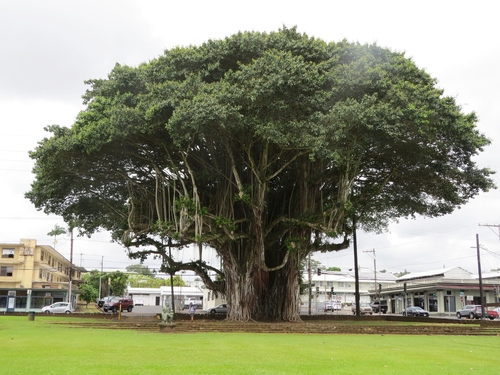

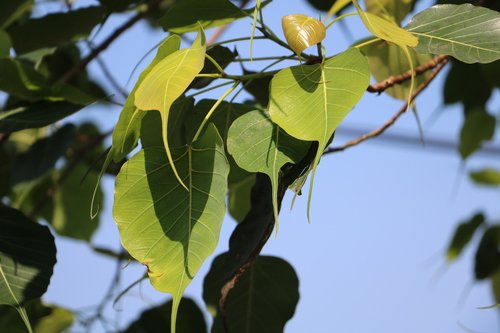

Photographs: iNaturalist contributors under the licences shown. Records: GBIF.org. Historical plates: Source Library (CC BY-SA 4.0; originals public domain). Summary text: Nature Library editors and Wikipedia (CC BY-SA). Medicinal and edibility notes are historical and educational, not advice. iNaturalist taxon 70027.