 NL·0009
Herbarium of the Nature Library
- Name
- Asimina triloba
- Family
- Annonaceae
- Native to
- Eastern United States and southern Ontario, from the Great Lakes to the Gulf Coast
- Habitat
- Temperate deciduous forest understorey, River floodplains
Pawpaw
Asimina triloba
Also calledAsimin (Miami-Illinois) · Hassomin (Algonquian, origin of the genus name) · Prairie banana (US folk name) · Hoosier banana (US folk name) · Papaye du Nord (French)
The largest edible fruit native to the United States, a temperate member of the tropical custard-apple family. Its maroon flowers smell faintly of rotting meat to attract carrion flies and beetles, and its fruit tastes of banana, mango and custard.
Asimina triloba, the American papaw, pawpaw, paw paw, or paw-paw, among many regional names, is a species of small deciduous tree. It has large leaves and produces a large, yellowish-green to brown fruit. Wikipedia
What it can do
- iForms clonal thickets (patches) by root suckers
- iiLeaves and bark contain acetogenins that deter most herbivores and insects
- iiiPawpaws and their Asimina relatives are the only host plants for zebra swallowtail caterpillars, which store their toxins for defence
- ivFlowers are pollinated by flies and beetles drawn to a fermenting, yeasty scent
At the table
Eatenripe fruit flesh
Ripe flesh is eaten fresh or frozen. Skin and seeds contain annonaceous acetogenins and should not be eaten; seeds are toxic if chewed. Some people get stomach upset or skin rashes from handling the fruit.
In the medicine cabinet
| Tradition | Use |
|---|---|
| Cherokee and other Indigenous American medicine | Seeds and bark preparations used to treat lice and as an emetic |
| Modern research | Twig extract acetogenins (asimicin) studied for pesticidal and anticancer activity in the lab |
Weight of evidence
Traditional. Long historical use; little or no modern clinical evidence.
Active compounds
asimicin, annonacin, other annonaceous acetogenins
Fruit & seed


Fruit
Berry
Ripens: Late summer to early autumn (August–October)
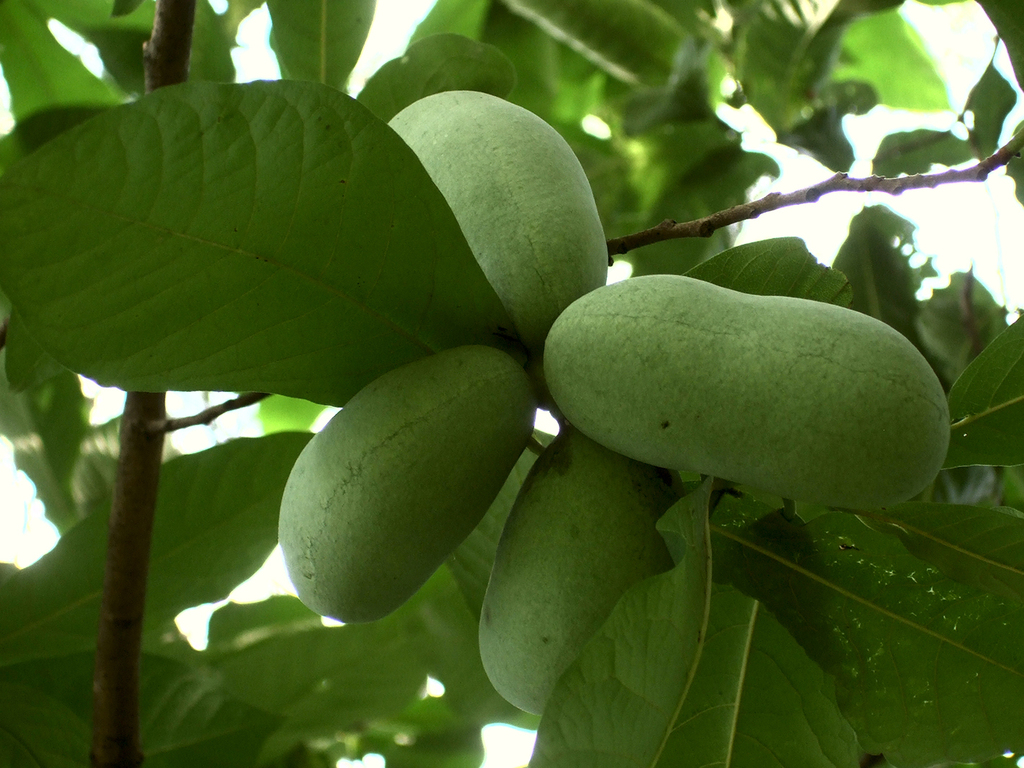
Oblong, slightly kidney-shaped berry 5–16 cm, green ripening to yellowish with dark flecks, often in clusters; soft, custardy, pale-yellow to orange flesh.


Seed
2–3 cm
Large, flattened, bean-like seeds 2–3 cm long, glossy dark brown, in two rows of 10–14 inside the fruit
- Dispersal
- Raccoons, opossums, foxes, bears and formerly megafauna
- Germination
- Never let seeds dry; cold-stratify moist for 90–120 days, then sow 2–3 cm deep in deep pots at 25 °C. Shoots emerge slowly (6–10 weeks) after a long taproot forms
Photographs from Wikimedia Commons under open licences; hover for the photographer, click for the file.
How to grow it
Hardiness (USDA zones)
USDA 5–8. Survives winters down to about -29 °C.
- Light
- Shade when young (first 1–2 years); full sun for best fruiting
- Water
- Moderate–high; likes moist soil
- Soil
- Deep, fertile, moist but well-drained, slightly acidic (pH 5.5–7)
- Propagation
- Seed (after cold stratification), or grafting named cultivars ('Shenandoah', 'Susquehanna', 'Sunflower')
- To harvest
- 3–4 years from graft; 5–8 years from seed
- Climates
- Humid temperate, Humid continental, Humid subtropical
- 1Plant at least two genetically different trees (two grafted cultivars or seedlings), as pawpaws are self-incompatible.
- 2Use container-grown plants — the long taproot resents digging — and shade them with a tube or cloth for the first summer.
- 3Keep soil moist and mulched; feed lightly with compost.
- 4If fruit set is poor, hand-pollinate with a small brush, or hang rotting meat or fish nearby to attract flies (a traditional trick).
- 5Pick when fruit gives gently like a ripe peach and smells fruity; eat within 2–3 days or freeze the pulp.
Can it grow where you are?
Where it lives
Recorded sightings
—
geo-referenced records in GBIF, from museums, herbaria and field observers.
Native range
Eastern United States and southern Ontario, from the Great Lakes to the Gulf Coast
Drag the globe to turn it. Dots are where records exist, not a range map; darker means more records.
In the old herbals & bestiaries
Woodcuts and engravings matched from the Source Library’s scanned books by name. Plates marked “relative” show a close kin rather than this exact species. Click a plate to read the page it came from, with translation.


In the stacks
Searching the stacks…
Every page naming Asimina triloba in the Biodiversity Heritage Library →
Marginalia
In 1541 the de Soto expedition found Native Americans growing and eating what was probably pawpaw east of the Mississippi, and Lewis and Clark relied on pawpaws when food ran short in 1806. A popular but undocumented story makes chilled pawpaw George Washington's favourite dessert.
Curiosity
Pawpaw is the largest fruit native to North America, sometimes reaching 0.5 kg.
Kinship



Fact-checked: 2 corrections made to this sheet. Photographs: iNaturalist contributors under the licences shown. Records: GBIF.org. Historical plates: Source Library (CC BY-SA 4.0; originals public domain). Summary text: Nature Library editors and Wikipedia (CC BY-SA). Medicinal and edibility notes are historical and educational, not advice. iNaturalist taxon 50897.