 NL·0158
Herbarium of the Nature Library
- Name
- Atropa bella-donna
- Family
- Solanaceae
- Native to
- Europe, North Africa and Western Asia (to Iran); naturalised locally elsewhere
- Habitat
- Temperate woodland, Woodland edge, Scrub on chalk and limestone
Deadly nightshade
Atropa bella-donna
Also calledBelladonna (Italian, 'beautiful lady') · Tollkirsche (German, 'mad cherry') · Belladona (Spanish) · Diānqié 颠茄 (Chinese) · Dwale (Old English) · Atropa belladonna (common older spelling)
A shade-loving perennial of chalky woods whose glossy, sweet black berries can kill a child. Its alkaloid atropine is an essential medicine, still used to restart slow hearts and to counter nerve agents.
Atropa bella-donna, commonly known as deadly nightshade or belladonna, is a toxic perennial herbaceous plant in the nightshade family Solanaceae, which also includes tomatoes, potatoes and eggplant. It is native to Europe and Western Asia, including Turkey, its distribution extending from England in the west to western Ukraine and the Iranian province of Gilan in the east. It is also naturalised or introduced in some parts of Canada, North Africa and the United States. Wikipedia
What it can do
- iMakes tropane alkaloids (hyoscyamine, atropine, scopolamine) that block acetylcholine at muscarinic receptors
- iiDilates the pupils, relaxes gut and airway muscle and speeds the heart
- iiiSome rabbits and other animals carry an enzyme, atropinesterase, that lets them eat it safely
At the table
All parts are deadly, including the sweet-tasting berries, and a few berries can kill a child. Symptoms include dry mouth, flushing, dilated pupils, racing heart, delirium, hallucinations and coma.
In the medicine cabinet
| Tradition | Use |
|---|---|
| European folk medicine | Leaf plasters for pain and as an antispasmodic; famously misused as a poison and in 'witches' ointments' |
| Modern medicine | Atropine for slow heart rate, organophosphate and nerve-agent poisoning, before anaesthesia and to dilate pupils; scopolamine for motion sickness |
Weight of evidence
Strong. An approved drug, or consistent results in well-run clinical trials.
Active compounds
(–)-hyoscyamine, atropine, scopolamine (hyoscine), apoatropine, belladonnine
Fruit & seed
Fruit
Berry
Ripens: Late summer–autumn
Glossy black cherry-sized berry, 1–1.5 cm, sitting in a five-pointed green star of sepals; sweet and deadly.
Seed
~1.5–2 mm
Many small, kidney-shaped, pitted brown seeds
- Dispersal
- Birds, which are less affected by the toxins
- Germination
- Slow and erratic; needs cold stratification
How to grow it
Hardiness (USDA zones)
USDA 6–9. Survives winters down to about -23 °C.
- Light
- Part shade
- Water
- Moderate
- Soil
- Alkaline, chalky or limestone loam
- Propagation
- Seed (stratified) or root division; grown only in licensed physic gardens
- To harvest
- Leaves at flowering, years 2–4 (pharmaceutical crops only)
- Climates
- Temperate
- 1Not recommended for home gardens, especially with children or pets
- 2In physic gardens grow behind barriers with clear labels
- 3Wear gloves; wash hands after handling
- 4Remove berries before they ripen in public plantings
Can it grow where you are?
Where it lives
Recorded sightings
—
geo-referenced records in GBIF, from museums, herbaria and field observers.
Native range
Europe, North Africa and Western Asia (to Iran); naturalised locally elsewhere
Drag the globe to turn it. Dots are where records exist, not a range map; darker means more records.
In Gerard's Herball, 1597

Second Booke · Chap. 51 · p. 269 · read the page →
Of sleeping Nightshade.
John Gerard, The Herball, or Generall Historie of Plantes, London, 1597. What England's best-known herbal said of deadly nightshade, in its own spelling.
- The vertues
- This kinde of Nightshade causeth sleepe, troubleth the minde, bringeth madnes if a fewe of the berries be inwardly taken, but if mo be giuen they also kill and bring present death. Theophrastus in his 6. booke doth likewise write of Mandrake in this maner; Mandrake causeth sleepe, and if also much of it be taken it bringeth death. The greene leaues of deadly Nightshade may with great aduise be vsed in such cases at Pettimorrell: but if you will follow my counsell, deale not with the fame in any case, and banish it from your gardens and the vse of it also, being a plant so furious and deadly: for it bringeth such as haue eaten thereof into a dead sleepe wherein many haue died, as hath beene often seene and prooued by experience both in England and else where. But to giue you an example hereof it shall not be amisse: It came to passe that three boies of Wisbich in the Ile of Ely, did eate of the pleasant and beautifull fruite hereof, two whereof died in lesse then 8. howers after they had eaten of them.
- The place
- It groweth in vntilled places neere vnto high waies and the sea marshes and such like places. It groweth very plentifully in Hollande in Lincolneshire, and in the Ile of Elie at a place called Walsoken, neere vnto Wisbitch. I founde it growing without the gate of Highgate neere vnto a pound or pinfold on the left hād.
- The time
- This flourisheth al the sommer and spring, beareth his seede and flower in Iuly and August.
- The temperature
- It is colde euen in the fourth degree.
- The names
- It is called of Dioscorides στρύχνος ὑπνωτικος : of Theophrastus στρύχνος μανικὸς : of the Latines Solanum somniferum somniferum or sleeping Nightshade; and Solanum lethale, or deadly Nightshade; and Solanum manicum, raging Nightshade; of some Apollinaris minor vlticana, & Herba Opfago: in English Dwale or sleeping Nightshade: the Venetians and Italians call it Bella dona: the Germaines Dollwurtz: the lowe Dutch Dulle bessen: in French Morelle mortelle: it commeth very neere vnto Theophrastus hi…
Gerard wrote within Galenic humoral medicine, and his opinions, including about the peoples of the Americas and their crops, are those of 1590s London. His “vertues” are history, not advice. Transcription: Source Library (CC BY-SA 4.0). The whole chapter in the Herball Room.
In the old herbals & bestiaries
Woodcuts and engravings matched from the Source Library’s scanned books by name. Plates marked “relative” show a close kin rather than this exact species. Click a plate to read the page it came from, with translation.

History of Rare Plants of Pannonia
Carolus Clusius · 1576 · p.580

Notable Commentaries on the History of Plants
Leonhart Fuchs · 1549 · p.721

Commentaries on the Six Books of Pedanius Dioscorides on Medical Matter
Pietro Andrea Mattioli · 1565 · p.1245

Commentaries on the Six Books of Pedanius Dioscorides on Medical Matter
Pietro Andrea Mattioli · 1565 · p.1244

A New Herbal, or History of Plants
Rembert Dodoens (trans. Henry Lyte) · 1578 · p.471

Six Groups of the History of Plants
Rembert Dodoens · 1583 · p.474

Rariorum Plantarum Historia (with Fungorum Historia)
Carolus Clusius · 1601 · p.467

Rariorum Plantarum Historia (with Fungorum Historia)
Carolus Clusius · 1601 · p.468

History of Rare Plants
Carolus Clusius · 1601 · p.462

Herbarium Portatile, Oder Behendes Kräuter- und Gewächs-Buch: Darinn nicht allein 1363. so wol Einheimische als Außländndische Kräuter mit Lateinisch und Deutscher Benennung abgebildet, sondern auch die meisten, so in der Medicin gebräuchlich, kürtzlich erkläret werden
Panckow, Thomas · 1656 · p.163
In the stacks
Searching the stacks…
Every page naming Atropa bella-donna in the Biodiversity Heritage Library →
Marginalia
Renaissance Italian women are said to have used belladonna drops to make their pupils large and alluring. Linnaeus named the genus after Atropos, the Fate who cuts the thread of life.
Curiosity
Scottish chronicle tradition, retold by the 16th-century historian George Buchanan, says the Scots drugged an invading Danish army in the 11th century with drink laced with a sleep-inducing nightshade, often identified as belladonna. It is probably legend.
Kinship
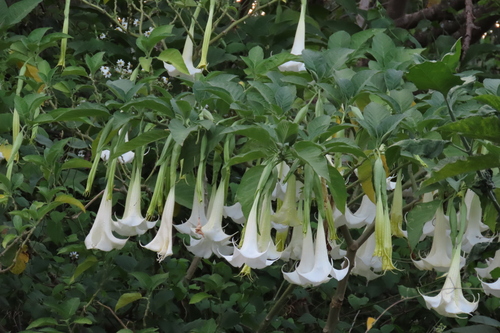
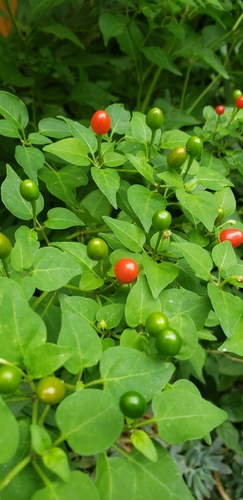
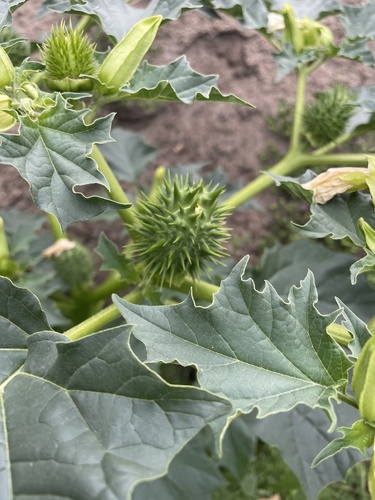
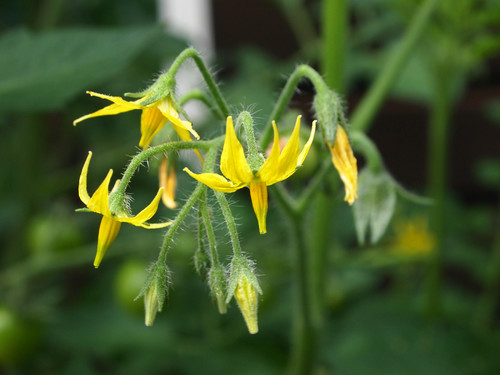
Fact-checked: 1 correction made to this sheet. Photographs: iNaturalist contributors under the licences shown. Records: GBIF.org. Historical plates: Source Library (CC BY-SA 4.0; originals public domain). Summary text: Nature Library editors and Wikipedia (CC BY-SA). Medicinal and edibility notes are historical and educational, not advice. iNaturalist taxon 159098.