 NL·0190
Herbarium of the Nature Library
- Name
- Laetiporus sulphureus
- Family
- Fomitopsidaceae
- Native to
- Europe and eastern North America in the strict sense; related species replace it in western North America and elsewhere
- Habitat
- Temperate forest, Parks and old trees, Riparian woodland
Chicken of the woods
Laetiporus sulphureus
Also calledSchwefelporling (German) · Polypore soufré (French) · Sulphur shelf (English) · Żółciak siarkowy (Polish)
Overlapping shelves of brilliant sulphur-yellow and orange on oak, willow and cherry, visible from far across a wood. When young it has a texture so like chicken breast that it is a common meat substitute.
Laetiporus sulphureus is a species of bracket fungus. Its common names include sulphur polypore, sulphur shelf, and chicken-of-the-woods. Its fruit bodies grow as striking golden-yellow shelf-like structures on tree trunks and branches. Old fruitbodies fade to pale beige or pale grey. The undersurface of the fruit body is made up of tubelike pores rather than gills. Wikipedia
What it can do
- iCauses brown cubical heart rot in living trees, digesting cellulose and leaving lignin
- iiCan produce brackets totalling over 20 kg from a single tree
- iiiHas no gills; it releases spores from tiny pores on the sulphur-yellow underside
At the table
Eatentender outer edges of young brackets (thoroughly cooked)
Popular edible but must be well cooked. A minority of people get vomiting, dizziness or swollen lips, even from cooked mushrooms. Avoid specimens growing on yew (Taxus), eucalyptus, locust or conifers, which some foragers report as more likely to cause illness. There is no deadly bracket lookalike, but the toxic jack-o'-lantern (Omphalotus), which has gills and grows in clusters, is sometimes confused with it at a distance. Old brackets are tough and sour.
Fruiting body & spores
Spores
Spore print white; spores ellipsoid to ovoid, smooth, about 5–7 × 3.5–5 µm
- Dispersal
- Wind-borne basidiospores; also spreads by thick-walled asexual chlamydospores
Where it lives
Recorded sightings
—
geo-referenced records in GBIF, from museums, herbaria and field observers.
Native range
Europe and eastern North America in the strict sense; related species replace it in western North America and elsewhere
Drag the globe to turn it. Dots are where records exist, not a range map; darker means more records.
In the old herbals & bestiaries
Woodcuts and engravings matched from the Source Library’s scanned books by name. Plates marked “relative” show a close kin rather than this exact species. Click a plate to read the page it came from, with translation.

In the stacks
Searching the stacks…
Every page naming Laetiporus sulphureus in the Biodiversity Heritage Library →
Marginalia
German foresters call it 'Schwefelporling' (sulphur polypore). It is feared in old orchards because its brown rot leaves trunks hollow and brittle.
Curiosity
Rotted heartwood left by this fungus breaks into neat cubes, the classic sign of brown rot.
Kinship
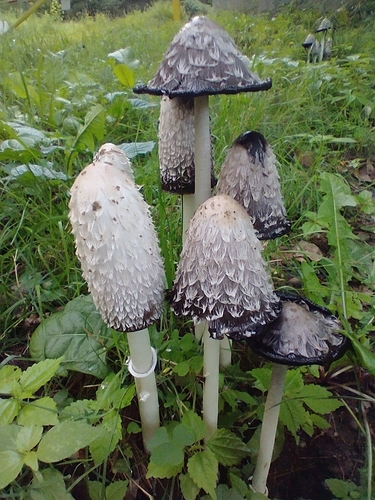


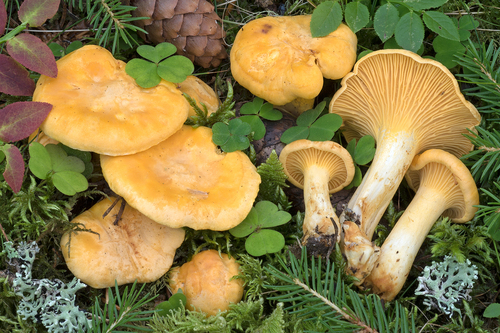
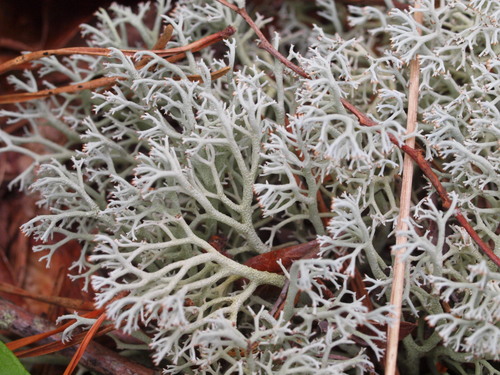
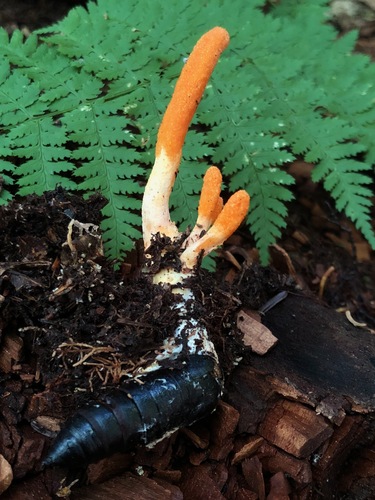
Photographs: iNaturalist contributors under the licences shown. Records: GBIF.org. Historical plates: Source Library (CC BY-SA 4.0; originals public domain). Summary text: Nature Library editors and Wikipedia (CC BY-SA). Medicinal and edibility notes are historical and educational, not advice. iNaturalist taxon 53713.