 NL·0304
Herbarium of the Nature Library
- Name
- Leiurus quinquestriatus
- Family
- Buthidae
- Native to
- North-eastern Africa, chiefly Egypt and Sudan into the Horn of Africa; related Leiurus species formerly included in it range across Arabia and the Levant
- Habitat
- Desert, Dry scrub
Deathstalker
Leiurus quinquestriatus
Also calledAkrab asfar (Arabic) · Gelber Mittelmeerskorpion (German) · Scorpion jaune (French)
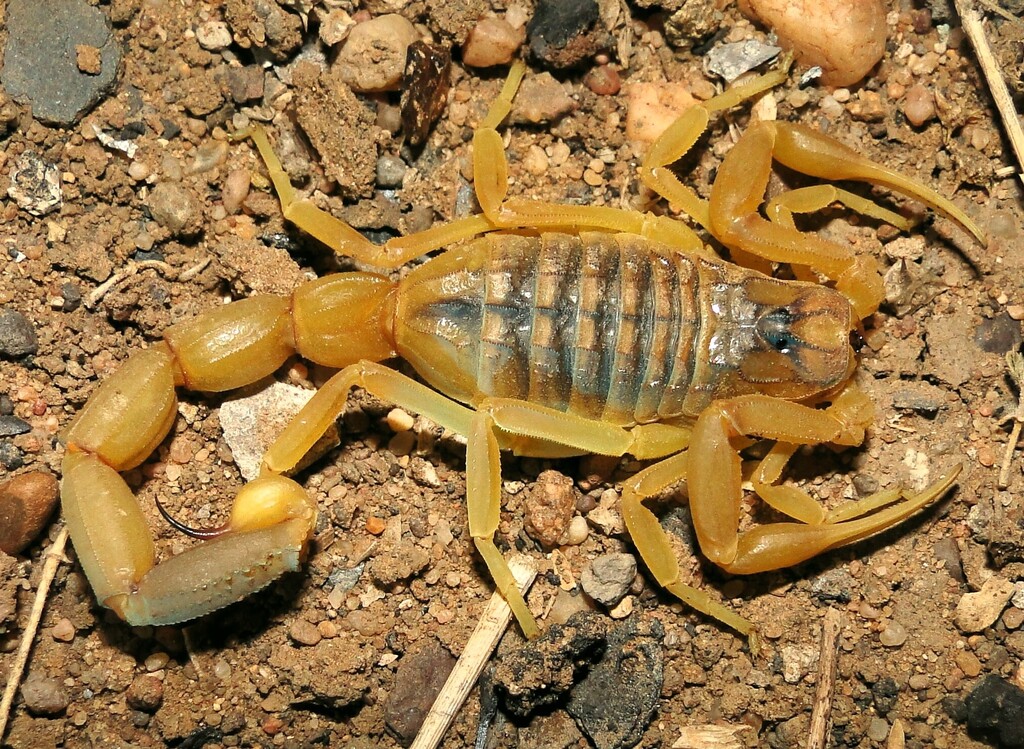
A slender straw-yellow scorpion of north-east African deserts whose venom is among the most dangerous of any scorpion. The same venom has yielded chlorotoxin, a molecule now used to make brain tumours glow during surgery.
The deathstalker is a species of scorpion, a member of the family Buthidae. It is also known as the Palestine yellow scorpion, Omdurman scorpion, and Naqab desert scorpion, as well as by many other colloquial names, which generally originate from the commercial captive trade of the animal. To eliminate confusion, especially important with potentially dangerous species, the scientific name is normally used to refer to them. The name Leiurus quinquestriatus roughly translates into English as "five-striped smooth-tail". In 2014, the subspecies L. q. hebraeus was separated from it and elevated to its own species Leiurus hebraeus. Other species of the genus Leiurus are also often referred to as "deathstalkers". Leiurus quinquestriatus is yellow, and 30–77 millimetres (1.2–3.0 in) long, with an average of 58 mm (2.3 in). Wikipedia
What it can do
- iVenom mixes several neurotoxins that can cause intense pain, convulsions, heart failure and pulmonary oedema
- iiChlorotoxin from its venom binds selectively to glioma cells and is used in tumour-imaging agents
- iiiGlows blue-green under ultraviolet light, like all scorpions
- ivCan survive long periods without food
In the field
Field marks
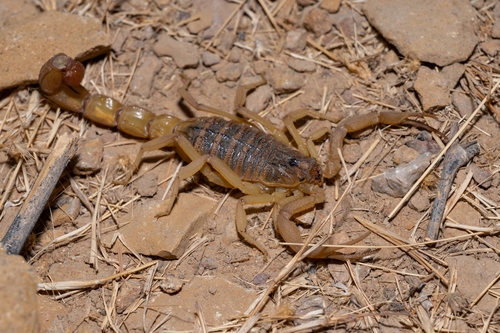
- aStraw-yellow to pale yellow-brown body
- bSlender, weak-looking pincers
- cLong, thin tail with a darker last segment and sting
- dFive keels (ridges) along the back, giving the name quinquestriatus, 'five-striped'
- Not to be confused with
- Other Leiurus species (e.g. L. hebraeus in the Levant) are separated by fine details and range. Fat-tailed scorpions (Androctonus) have much thicker tails and are often darker. Buthus species are similar but have different ridge patterns.
- Where to see it
- Rocky desert in Egypt and Sudan, where it glows under ultraviolet light at night; best seen in zoos. Never handle it, and shake out shoes and bedding in its range.
- When
- Year-round; most active on warm nights
Life & habits
- Diet
- Insects, spiders, other scorpions and small invertebrates
- Habitat
- Dry, rocky or sandy desert and scrub; shelters under stones and in burrows
- Size
- About 3–8 cm
It hunts at night, relying on venom rather than its slender pincers to subdue prey.
Where it lives
Recorded sightings
—
geo-referenced records in GBIF, from museums, herbaria and field observers.
Native range
North-eastern Africa, chiefly Egypt and Sudan into the Horn of Africa; related Leiurus species formerly included in it range across Arabia and the Levant
Drag the globe to turn it. Dots are where records exist, not a range map; darker means more records.
In the stacks
Searching the stacks…
Every page naming Leiurus quinquestriatus in the Biodiversity Heritage Library →
Marginalia
Scorpions were the emblem of Serqet, the ancient Egyptian goddess who healed stings and venomous bites. A peptide toxin from this scorpion's venom, charybdotoxin, became a standard tool for studying potassium channels.
Curiosity
An imaging drug derived from chlorotoxin, nicknamed 'Tumor Paint', has been tested in clinical trials to help surgeons see the edges of brain tumours.
Kinship





Fact-checked: 1 correction made to this sheet. Photographs: iNaturalist contributors under the licences shown. Records: GBIF.org. Historical plates: Source Library (CC BY-SA 4.0; originals public domain). Summary text: Nature Library editors and Wikipedia (CC BY-SA). Medicinal and edibility notes are historical and educational, not advice. iNaturalist taxon 179686.