 NL·0759
Herbarium of the Nature Library
- Name
- Mellisuga helenae
- Family
- Trochilidae
- Native to
- Endemic to Cuba and the Isla de la Juventud
- Habitat
- Tropical forest, Forest edge, Coastal scrub
On eBird ↗
Bee Hummingbird
Live sightings near you, the range map, bar charts of when it is seen, and Macaulay Library photos and recordings.
Bee hummingbird
Mellisuga helenae
Also calledZunzuncito (Cuban Spanish) · Pájaro mosca (Spanish) · Colibri d'Elena (French)
The smallest bird in the world, about 5–6 cm long and under 2 g, found only in Cuba. Its eggs are the size of coffee beans.
The bee hummingbird, zunzuncito or Helena hummingbird is a species of hummingbird, native to the island of Cuba in the Caribbean. It is the smallest known bird. The bee hummingbird feeds on flower nectar and insects. Wikipedia
What it can do
- iWorld's smallest bird, weighing about 1.6–2 g
- iiHas one of the highest metabolic rates of any warm-blooded animal
- iiiVisits up to 1,500 flowers in a day
In the field
Field marks
- aWorld's smallest bird, about 5–6 cm
- bBreeding male has an iridescent fiery red-pink head and throat with long lateral plumes
- cUpperparts bluish; female green above, pale below with white-tipped tail
- dVery short tail and tiny body
- Voice
- A high-pitched, jumbled twitter, often sung from a treetop
- Not to be confused with
- Cuban emerald is much larger, all green with a forked tail.
- Where to see it
- Zapata Swamp, Cuba (e.g. around Bermejas and Playa Larga); also Alejandro de Humboldt National Park
- When
- Resident; breeds mainly Mar–Jun
Listen
Looking for field recordings…
Life & habits
- Diet
- Nectar and small insects
- Habitat
- Forest, woodland edges and gardens with flowering plants
- Size
- 5–6 cm; 1.6–2 g
- Lifespan
- About 7 years
Females build a cup nest about 2.5 cm across, woven from cobwebs, lichen and bark.
Where it lives
Recorded sightings
—
geo-referenced records in GBIF, from museums, herbaria and field observers.
Native range
Endemic to Cuba and the Isla de la Juventud
Drag the globe to turn it. Dots are where records exist, not a range map; darker means more records.
In the old herbals & bestiaries
No plate in the Source Library names this exact species, so these show its closest relatives as the old naturalists drew them: same genus, or the same kind of animal. Click a plate to read the page it came from, with translation.

Maria Sibylla Merian — Dissertatio de generatione et metamorphosibus insectorum Surinamensium (1719)
Relative · Maria Sibylla Merian · 1719 · p.71

Tudela Codex
Relative · Anonymous Nahua tlacuilo · n.d. · p.184

Treasury of Medical Matters of New Spain
Relative · Francisco Hernández · 1651 · p.754

De Indiae utriusque re naturali et medica
Relative · Willem Piso · 1658 · p.348

De Indiae utriusque re naturali et medica
Relative · Willem Piso · 1658 · p.349

The Natural History of Carolina, Florida and the Bahama Islands, Vol. 1
Relative · Mark Catesby · 1777 · p.212

Jean Baptiste Audebert — Histoire naturelle des colibris (1802)
Relative · Jean Baptiste Audebert · 1802 · p.264

Jean Baptiste Audebert — Histoire naturelle des colibris (1802)
Relative · Jean Baptiste Audebert · 1802 · p.154

Jean Baptiste Audebert — Histoire naturelle des grimpereaux et des oiseaux de paradis (1802)
Relative · Jean Baptiste Audebert · 1802 · p.26

Thesaurus of Medical Things of New Spain, or History of Mexican Plants, Animals, and Minerals
Relative · Francisco Hernández; Nardo Antonio Recchi (ed.) · 1651 · p.742
In the stacks
Searching the stacks…
Every page naming Mellisuga helenae in the Biodiversity Heritage Library →
Marginalia
It was described in the 1840s from Cuba and appears on Cuban postage stamps; Cubans call it zunzuncito after its buzzing.
Curiosity
It is smaller than some of the moths that share its flowers.
Kinship
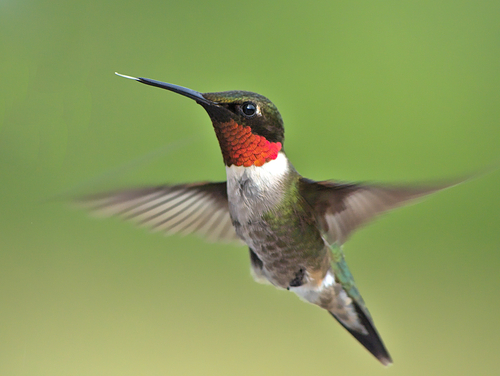
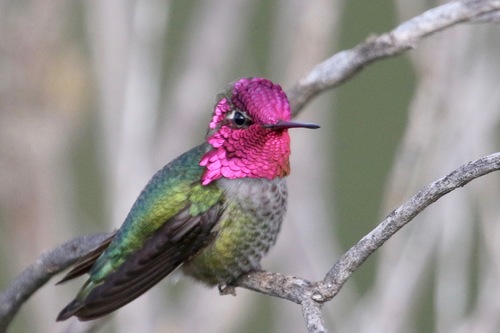
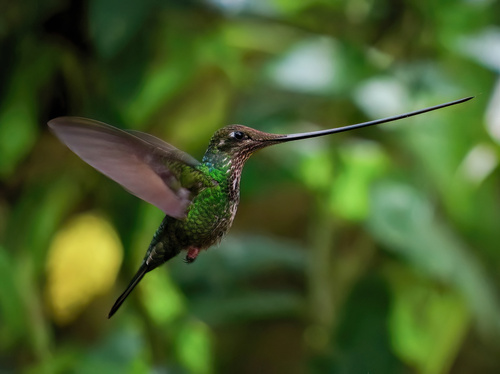



Fact-checked: 1 correction made to this sheet. Photographs: iNaturalist contributors under the licences shown. Records: GBIF.org. Historical plates: Source Library (CC BY-SA 4.0; originals public domain). Summary text: Nature Library editors and Wikipedia (CC BY-SA). Medicinal and edibility notes are historical and educational, not advice. iNaturalist taxon 6425.