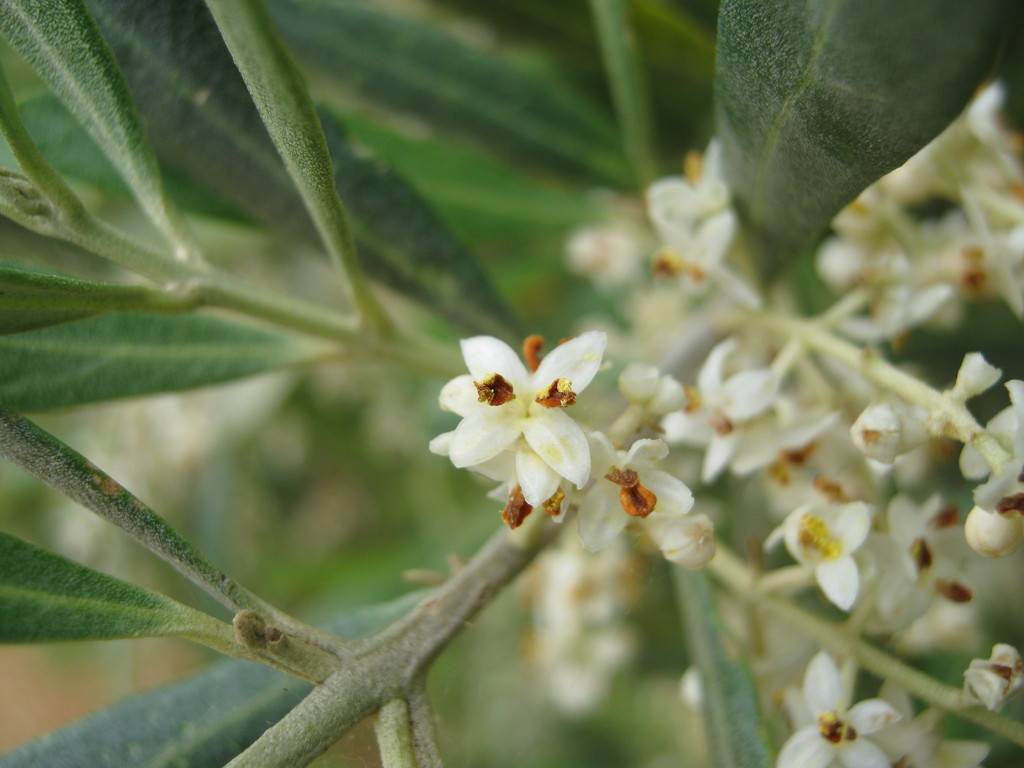
 NL·0114
Herbarium of the Nature Library
- Name
- Olea europaea
- Family
- Oleaceae
- Native to
- Mediterranean Basin and Near East (cultivated form); wild subspecies across Africa, Arabia and South Asia
- Habitat
- Mediterranean scrub (maquis), Dry hillsides, Orchards
Olive
Olea europaea
Also calledZaytūn (Arabic) · Zayit (Hebrew) · Zaitoon (Urdu/Persian) · Elaía (Greek) · Aceituna / Olivo (Spanish) · Zeytin (Turkish) · Mùxīlǎn (Chinese)
The defining tree of the Mediterranean, domesticated in the Levant around 7,000 years ago. Gnarled olive trees can live for well over 1,000 years, resprouting from their base after fire, frost or felling.
Olea europaea is the tree species that includes the cultivated olive, and five other subspecies. Some of the subspecies are polyploid. Wikipedia
What it can do
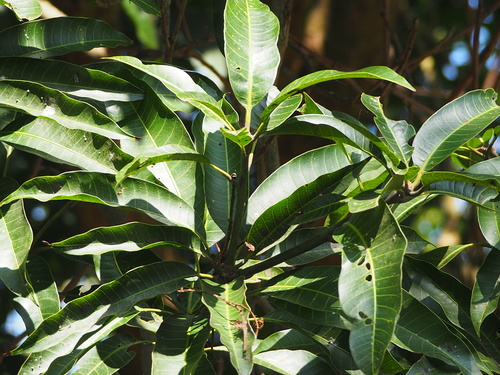
- iSilvery leaves with scaly hairs reduce water loss, letting trees fruit on as little as 200–400 mm of rain
- iiResprouts from a burl (lignotuber) after the trunk is killed
- iiiIndividual trees in Crete, Lebanon and Sardinia are estimated at 2,000–3,000 years old
- ivWind-pollinated; pollen is a major springtime allergen in the Mediterranean
At the table
Eatenfruit (after curing) · oil pressed from fruit · leaves (tea)
Raw olives are inedibly bitter because of oleuropein; they must be cured in brine, lye, water or dry salt before eating.
In the medicine cabinet
| Tradition | Use |
|---|---|
| Mediterranean folk medicine | Olive leaf tea for fever and high blood pressure |
| Prophetic medicine (Islamic) | Olive oil eaten and applied to the body, called 'from a blessed tree' |
| Modern nutrition science | Extra-virgin olive oil central to the Mediterranean diet; EU-authorised claim for polyphenols protecting blood lipids |
Weight of evidence
Strong. An approved drug, or consistent results in well-run clinical trials.
Active compounds
oleuropein, hydroxytyrosol, oleocanthal, oleic acid, squalene
Fruit & seed


Fruit
Drupe
Ripens: Autumn to winter (green olives October, black November–January)
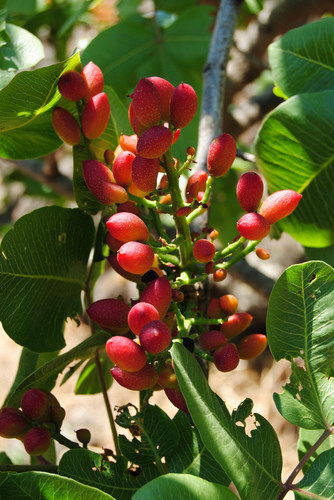
Oval drupe 1–4 cm, green ripening through violet to black; oily, bitter flesh around a hard stone.

Seed
1–2 cm (stone)
A hard, pointed oval stone, pale brown and finely ridged, 1–2 cm long, enclosing a single slender cream-coloured seed
- Dispersal
- Birds (especially starlings and thrushes) and mammals
- Germination
- Slow and erratic: crack or clip the stone, cold-stratify 1–2 months, then sow warm; 1–3 months
Photographs from Wikimedia Commons under open licences; hover for the photographer, click for the file.
How to grow it
Hardiness (USDA zones)
USDA 8–11 (most cultivars damaged below −10 °C). Survives winters down to about -12 °C.
- Light
- Full sun
- Water
- Low once established
- Soil
- Well-drained, even poor, stony or chalky; dislikes waterlogging, pH 6.5–8.5
- Propagation
- Semi-hardwood cuttings under mist, or grafting onto seedling or wild rootstock
- To harvest
- 3–5 years for first crop; full production at 10–15 years
- Climates
- Mediterranean, Semi-arid, Warm temperate
- 1Choose a cultivar suited to your climate and use (e.g. 'Arbequina' self-fertile for oil, 'Manzanilla' for table olives).
- 2Plant in spring in a sunny, frost-sheltered spot with excellent drainage; on clay, plant on a mound.
- 3Water weekly for the first summer, then only during long droughts; most olives fruit better with some summer water stress.
- 4Prune in late winter to an open vase shape to let light into the canopy, since fruit forms on last year's growth.
- 5Pick by hand or rake onto nets; cure table olives in brine (changed weekly) for 1–3 months, or press within 24 hours for oil.
Can it grow where you are?
Where it lives
Recorded sightings
—
geo-referenced records in GBIF, from museums, herbaria and field observers.
Native range
Mediterranean Basin and Near East (cultivated form); wild subspecies across Africa, Arabia and South Asia
Drag the globe to turn it. Dots are where records exist, not a range map; darker means more records.
In the old herbals & bestiaries
Woodcuts and engravings matched from the Source Library’s scanned books by name. Plates marked “relative” show a close kin rather than this exact species. Click a plate to read the page it came from, with translation.

Garden of Health
1507 · p.236

Ortus sanitatis
1491 · p.292

Anatomical Compendium (Syntagma Anatomicum) (1647)
Johann Vesling · 1647 · p.11

Garden of Health (Hortus Sanitatis)
Jacob Meydenbach · 1491 · p.239

Garden of Health
1507 · p.237

Maria Sibylla Merian — Der rupsen begin, voedzel en wonderbaare verandering (1712)
Maria Sibylla Merian · 1717 · p.225

De medicinali materia libri sex
Dioscorides · 1552 · p.152

Commentaries on the Six Books of Dioscorides
Pietro Andrea Mattioli · 1560 · p.237

Flora of Japan
Carl Peter Thunberg · 1784 · p.70

The Great Herbary with all the figures of the herbs
1532 · p.232
In the stacks
Searching the stacks…
Every page naming Olea europaea in the Biodiversity Heritage Library →
Marginalia
Athena won Athens from Poseidon by giving the city an olive tree, and olive wreaths crowned victors at the ancient Olympic Games. In Genesis the dove returns to Noah's ark with an olive leaf, the origin of the olive branch as a sign of peace.
Curiosity
Olive trees in the Garden of Gethsemane in Jerusalem have been radiocarbon-dated to the 12th century, and their roots may be far older.
Kinship

Fact-checked: 1 correction made to this sheet. Photographs: iNaturalist contributors under the licences shown. Records: GBIF.org. Historical plates: Source Library (CC BY-SA 4.0; originals public domain). Summary text: Nature Library editors and Wikipedia (CC BY-SA). Medicinal and edibility notes are historical and educational, not advice. iNaturalist taxon 57140.