 NL·0588
Herbarium of the Nature Library
- Name
- Ornithoptera alexandrae
- Family
- Papilionidae
- Native to
- Endemic to Oro (Northern) Province, south-eastern Papua New Guinea
- Habitat
- Tropical lowland rainforest
Queen Alexandra's birdwing
Ornithoptera alexandrae
Also calledAlexandra's birdwing (English)
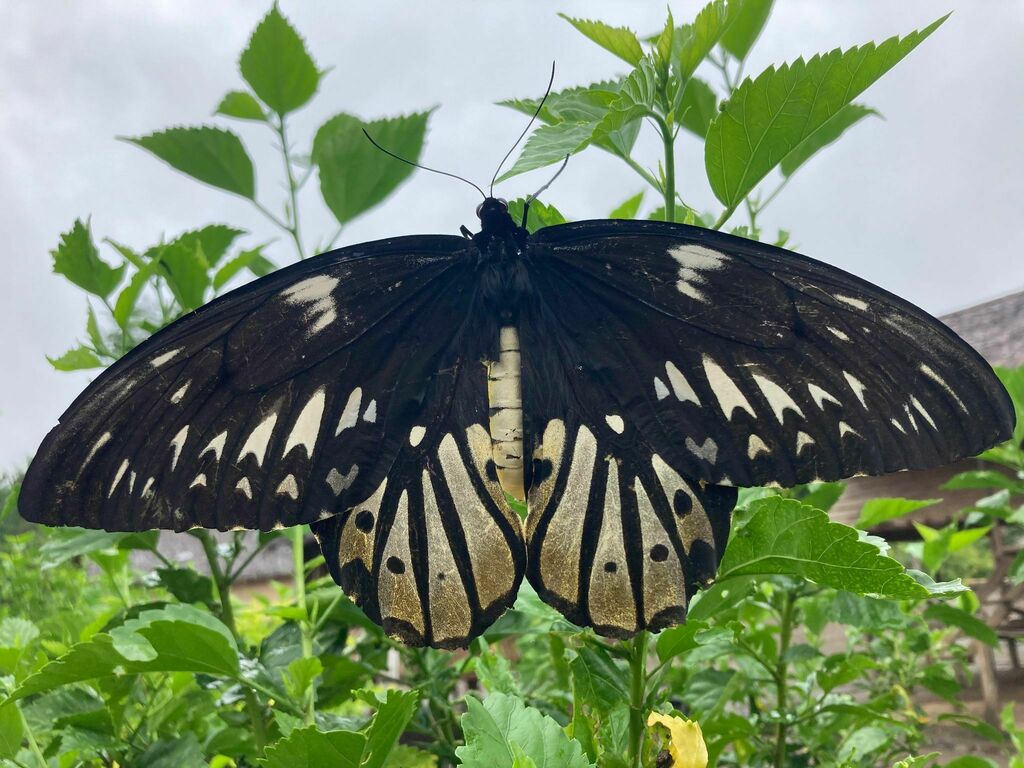
The largest butterfly in the world: females can exceed 25 cm across the wings. It lives only in a small area of lowland rainforest in Oro Province, Papua New Guinea, and is protected by both national law and CITES Appendix I.
Ornithoptera alexandrae, the Queen Alexandra's birdwing, is the largest species of butterfly in the world, with females reaching wingspans slightly in excess of 25 to 28 cm. This birdwing is restricted to the forests of the Oro Province in eastern Papua New Guinea. Wikipedia
What it can do
- iWorld's largest butterfly by wingspan
- iiCaterpillars depend on a single group of Pararistolochia vines and absorb their toxins
- iiiAdults usually fly high in the rainforest canopy, descending to within a few metres of the ground to feed or lay eggs
In the field
Field marks
- aMale: long, narrow, pointed forewings of black with iridescent blue-green and turquoise bands
- bMale abdomen bright yellow
- cFemale: enormous, broad brown wings with cream-white markings and a creamy yellow abdomen
- dRed patch on the thorax
- Not to be confused with
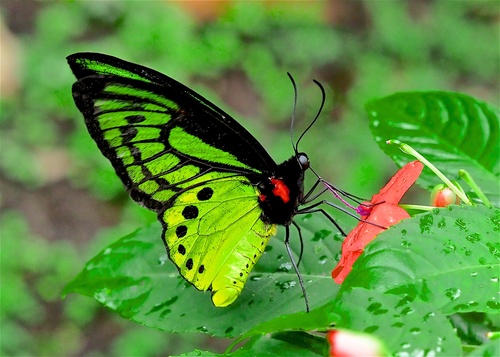
- The common green birdwing (Ornithoptera priamus), which shares parts of New Guinea, has broader male forewings with purer green and is far smaller in the female.
- Where to see it
- Only in the Popondetta plains and nearby forests of Oro Province, PNG; viewing is through local conservation programmes.
Listen
Looking for field recordings…
Life & habits
- Diet
- Adults sip nectar from canopy flowers such as Hibiscus; caterpillars feed on Pararistolochia vines (notably P. dielsiana)
- Habitat
- Primary and old secondary lowland rainforest on volcanic soils
- Size
- Female wingspan up to about 25–28 cm; males smaller, around 16–20 cm
- Lifespan
- Adults about 3 months
Females lay eggs on the host vine high in the canopy; caterpillars can ring-bark the vine stem, forcing the plant to put out new growth.
Where it lives
Recorded sightings
—
geo-referenced records in GBIF, from museums, herbaria and field observers.
Native range
Endemic to Oro (Northern) Province, south-eastern Papua New Guinea
Drag the globe to turn it. Dots are where records exist, not a range map; darker means more records.
In the stacks
Searching the stacks…
Every page naming Ornithoptera alexandrae in the Biodiversity Heritage Library →
Marginalia
The first specimen, a female, was brought down with a small-shot gun by collector Albert Meek in 1906; Walter Rothschild named the species in 1907 after Queen Alexandra, wife of Edward VII. The 1951 eruption of Mount Lamington destroyed a large part of its habitat.
Curiosity
It is the only birdwing on CITES Appendix I, the treaty's strictest category, which bans international commercial trade in wild-caught specimens.
Kinship



Fact-checked: 2 corrections made to this sheet. Photographs: iNaturalist contributors under the licences shown. Records: GBIF.org. Historical plates: Source Library (CC BY-SA 4.0; originals public domain). Summary text: Nature Library editors and Wikipedia (CC BY-SA). Medicinal and edibility notes are historical and educational, not advice. iNaturalist taxon 107926.