 NL·0301
Herbarium of the Nature Library
- Name
- Rhinella marina
- Family
- Bufonidae
- Native to
- Southern Texas and Mexico through Central America to the central Amazon; introduced in Australia, the Caribbean, Hawaii, Florida, the Philippines, Papua New Guinea and many islands
- Habitat
- Tropical forest, Savanna, Farmland, Towns
Cane toad
Rhinella marina
Also calledSapo cururu (Portuguese) · Sapo gigante (Spanish) · Crapaud (Caribbean French) · Marine toad · Giant neotropical toad
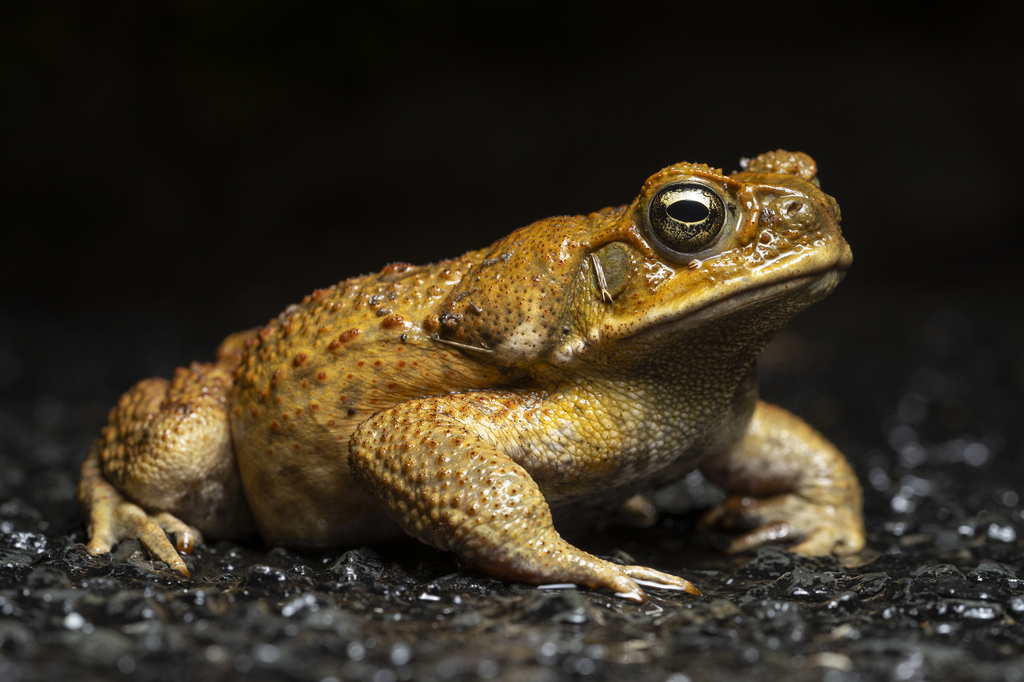
A heavy, warty toad of tropical America that was released in Australia, the Caribbean and the Pacific to control cane beetles. It failed at that and instead spread its poison through native wildlife. Its skin glands produce bufotoxins that can kill dogs, quolls, goannas and snakes that bite it.
The cane toad, also known as the giant neotropical toad or marine toad, is a large, terrestrial true toad native to South and mainland Central America, but which has been introduced to various islands throughout Oceania and the Caribbean, as well as Northern Australia. It is a member of the genus Rhinella, which includes many true toad species found throughout Central and South America, but it was formerly assigned to the genus Bufo. Wikipedia
What it can do
- iLarge glands behind the eyes (parotoids) produce bufadienolide toxins that can stop the heart of predators
- iiEggs and tadpoles are toxic too
- iiiHas spread across northern Australia at up to ~50 km per year
- ivBreeds in almost any still water, laying up to 30,000 eggs at a time
In the field
Field marks
- aLarge, warty, brown toad with dry skin
- bHuge triangular parotoid glands behind the eyes
- cBony ridges above the eyes meeting at the snout
- dUnwebbed fingers, webbed toes
- Voice
- A long, low trill like a dial tone or a distant idling motor, lasting several seconds
- Not to be confused with
- In Australia, native frogs such as giant banjo frogs (Limnodynastes) and burrowing frogs have no large parotoid glands or bony head ridges. In the US the Gulf Coast toad (Incilius nebulifer) is smaller with a light stripe down the back.
- Where to see it
- Introduced: Queensland and the Northern Territory (Australia), Florida, Hawaii; native: Central and South American lowlands
- When
- Active year-round in the tropics; breeds mostly in the wet season
Listen
Looking for field recordings…
Life & habits
- Diet
- Insects, snails, small vertebrates, pet food and garbage
- Habitat
- Open habitats near water, farmland, gardens and towns
- Size
- Usually 10–15 cm; up to ~24 cm
- Lifespan
- ~10–15 years
When threatened it puffs up and tilts its glands toward the attacker. Pets that mouth a toad may drool, collapse and die: wipe the gums with a damp cloth (do not hose into the throat) and get to a vet at once. People who handle toads should wash their hands. Never lick or eat toads or eggs; people have died from eating them.
Where it lives
Recorded sightings
—
geo-referenced records in GBIF, from museums, herbaria and field observers.
Native range
Southern Texas and Mexico through Central America to the central Amazon; introduced in Australia, the Caribbean, Hawaii, Florida, the Philippines, Papua New Guinea and many islands
Drag the globe to turn it. Dots are where records exist, not a range map; darker means more records.
In the stacks
Searching the stacks…
Every page naming Rhinella marina in the Biodiversity Heritage Library →
Marginalia
In 1935, 102 cane toads were brought from Hawaii to Gordonvale, Queensland, to control cane beetles. Their descendants have spread across more than 1.2 million square kilometres of Australia.
Curiosity
In parts of Australia, crows and native water rats (rakali) have learned to flip cane toads over and eat them from the belly side, avoiding the poison glands.
Kinship



Photographs: iNaturalist contributors under the licences shown. Records: GBIF.org. Historical plates: Source Library (CC BY-SA 4.0; originals public domain). Summary text: Nature Library editors and Wikipedia (CC BY-SA). Medicinal and edibility notes are historical and educational, not advice. iNaturalist taxon 553515.