 NL·0060
Herbarium of the Nature Library
- Name
- Ricinus communis
- Family
- Euphorbiaceae
- Native to
- Probably north-eastern Africa (Ethiopia) and the Middle East; naturalised throughout the tropics and warm temperate regions
- Habitat
- Disturbed ground, Riverbanks, Cultivation
Castor oil plant
Ricinus communis
Also calledArandi / Erand (Hindi/Urdu) · Eranda (Sanskrit) · Kharwa (Arabic) · Bīmá 蓖麻 (Chinese) · Mamona (Brazilian Portuguese) · Higuerilla (Spanish) · Kiki (Ancient Egyptian/Greek)
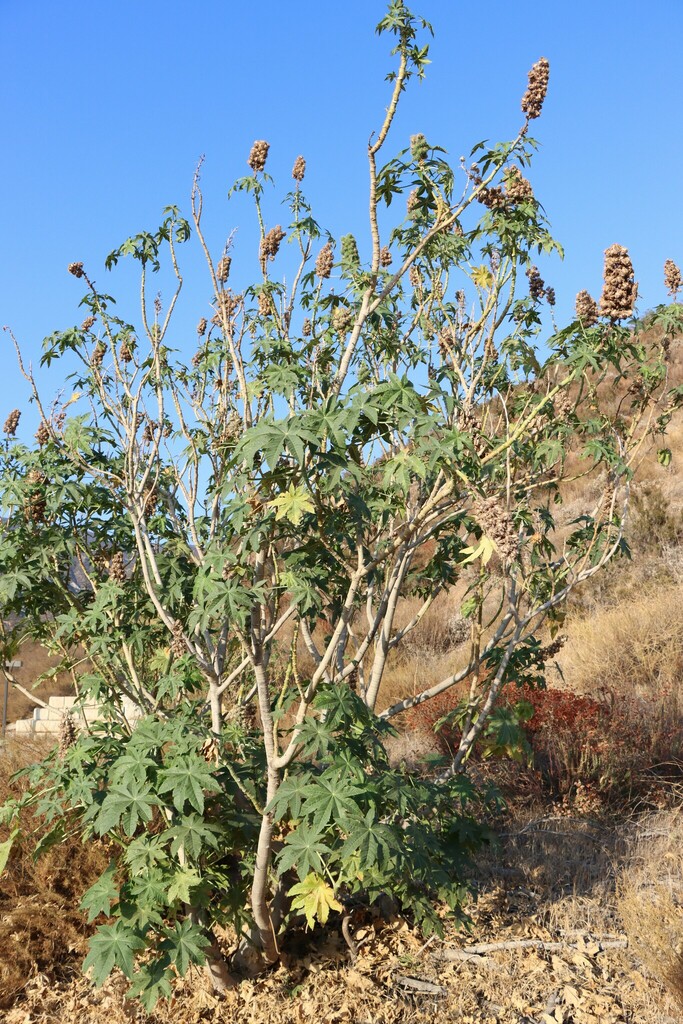
A fast-growing, dramatic plant whose mottled seeds hold both castor oil and ricin, one of the most toxic natural proteins. Pressing separates them: the oil is a safe, ancient laxative and industrial lubricant, while ricin stays in the seed cake.
Ricinus communis, the castor bean or castor oil plant, is a species of perennial flowering plant in the spurge family, Euphorbiaceae. It is the sole species in the monotypic genus, Ricinus, and subtribe, Ricininae. Wikipedia
What it can do
- iProduces ricin, a protein that disables ribosomes and stops cells making proteins
- iiStores up to ~50% oil in its seeds, mostly ricinoleic acid, an unusual hydroxy fatty acid
- iiiLaunches seeds from explosive capsules, then ants carry them off by their fatty caruncle
- ivGrows several metres in a single season
At the table
Seeds are deadly if chewed or crushed: ricin causes symptoms after a delay of several hours, including severe vomiting, bloody diarrhoea, dehydration, low blood pressure and failure of the liver, kidneys and spleen; a few well-chewed seeds can kill a child. Swallowed whole seeds may pass through intact. Commercial castor oil is ricin-free. Seeds are used in jewellery and are attractive to children; also highly toxic to dogs.
In the medicine cabinet
| Tradition | Use |
|---|---|
| Ancient Egyptian medicine (Ebers Papyrus) | Castor oil as a laxative and in ointments |
| Ayurveda | Castor oil (eranda taila) as a purgative and for joint pain (vata disorders) |
| Modern medicine | Castor oil is an approved stimulant laxative; ricinoleic acid also used in drug formulations |
Weight of evidence
Strong. An approved drug, or consistent results in well-run clinical trials.
Active compounds
ricin, ricinine, ricinoleic acid
Fruit & seed


Fruit
Spiny capsule
Ripens: Summer–autumn
Three-lobed, spiny green-to-red capsules that split explosively.


Seed
~1–1.5 cm
Glossy seeds mottled brown, black and white, with a pale caruncle
- Dispersal
- Explosive capsules, then ants
- Germination
- Soak overnight and sow in warmth (with gloves); 1–3 weeks
Photographs from Wikimedia Commons under open licences; hover for the photographer, click for the file.
How to grow it
Hardiness (USDA zones)
USDA 9–11 perennial; annual elsewhere. Survives winters down to about -7 °C.
- Light
- Full sun
- Water
- Moderate
- Soil
- Rich, well-drained
- Propagation
- Seed
- To harvest
- Seeds in 4–5 months
- Climates
- Tropical, Subtropical, Mediterranean, Temperate (annual)
- 1Wear gloves and keep seeds away from children and pets
- 2Soak seed overnight and sow indoors in warmth
- 3Plant out after frost in rich soil
- 4Remove flower spikes before seeds form if children or animals visit
Can it grow where you are?
Where it lives
Recorded sightings
—
geo-referenced records in GBIF, from museums, herbaria and field observers.
Native range
Probably north-eastern Africa (Ethiopia) and the Middle East; naturalised throughout the tropics and warm temperate regions
Drag the globe to turn it. Dots are where records exist, not a range map; darker means more records.
In the old herbals & bestiaries
Woodcuts and engravings matched from the Source Library’s scanned books by name. Plates marked “relative” show a close kin rather than this exact species. Click a plate to read the page it came from, with translation.

Metamorphosis Insectorum Surinamensium
Maria Sibylla Merian · 1705 · p.99

Maria Sibylla Merian — Dissertatio de generatione et metamorphosibus insectorum Surinamensium (1719)
Maria Sibylla Merian · 1719 · p.107

The Ambonese Herbal, Vol. 3
Georg Eberhard Rumphius · 1743 · p.139

Notable Commentaries on the History of Plants
Leonhart Fuchs · 1542 · p.374

Book of Herbs
Hieronymus Bock (Tragus) · 1546 · p.252

Notable Commentaries on the History of Plants
Leonhart Fuchs · 1549 · p.372

On the Names of Plants
Hieronymus Bock (Tragus) · 1552 · p.360

The Flowering Garden: Autumn
Crispijn van de Passe · 1616 · p.40

Garden of Malabar, Vol. 1
Hendrik van Rheede · 1683 · p.268

Hortus Eystettensis
Basilius Besler · 1640 · p.101
In the stacks
Searching the stacks…
Every page naming Ricinus communis in the Biodiversity Heritage Library →
Marginalia
Castor seeds have been found in Egyptian tombs from about 4000 BCE, and Herodotus described Egyptians using 'kiki' oil in lamps. In 1978 Bulgarian dissident Georgi Markov was killed in London by a tiny ricin pellet fired, it is believed, from a modified umbrella.
Curiosity
'Ricinus' is Latin for 'tick', because the seeds look like a swollen tick.
Kinship
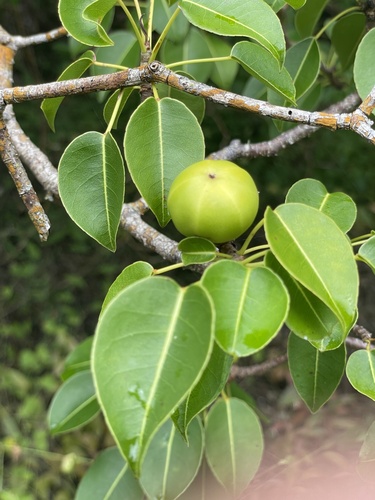
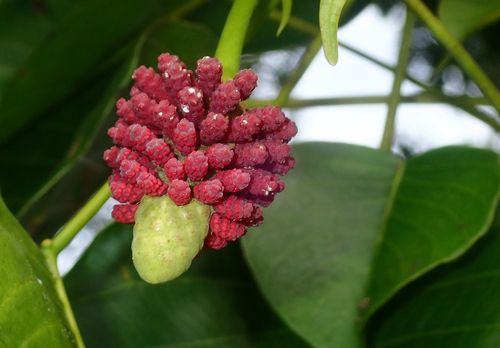
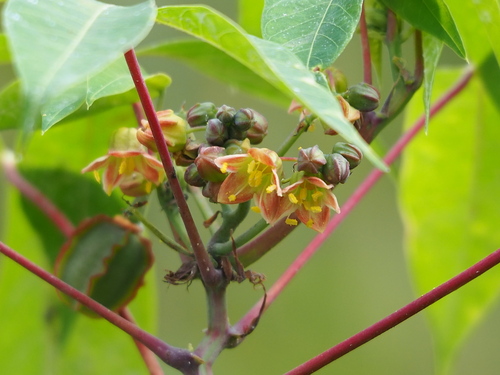

Photographs: iNaturalist contributors under the licences shown. Records: GBIF.org. Historical plates: Source Library (CC BY-SA 4.0; originals public domain). Summary text: Nature Library editors and Wikipedia (CC BY-SA). Medicinal and edibility notes are historical and educational, not advice. iNaturalist taxon 56739.