 NL·0045
Herbarium of the Nature Library
- Name
- Valeriana officinalis
- Family
- Caprifoliaceae
- Native to
- Europe and temperate Asia; naturalised in North America
- Habitat
- Wet meadow, Riparian woodland, Fen
Valerian
Valeriana officinalis
Also calledBaldrian (German) · Valeriana (Spanish/Italian) · Xié cǎo 缬草 (Chinese) · All-heal (English) · Phu (Greek, Dioscorides)
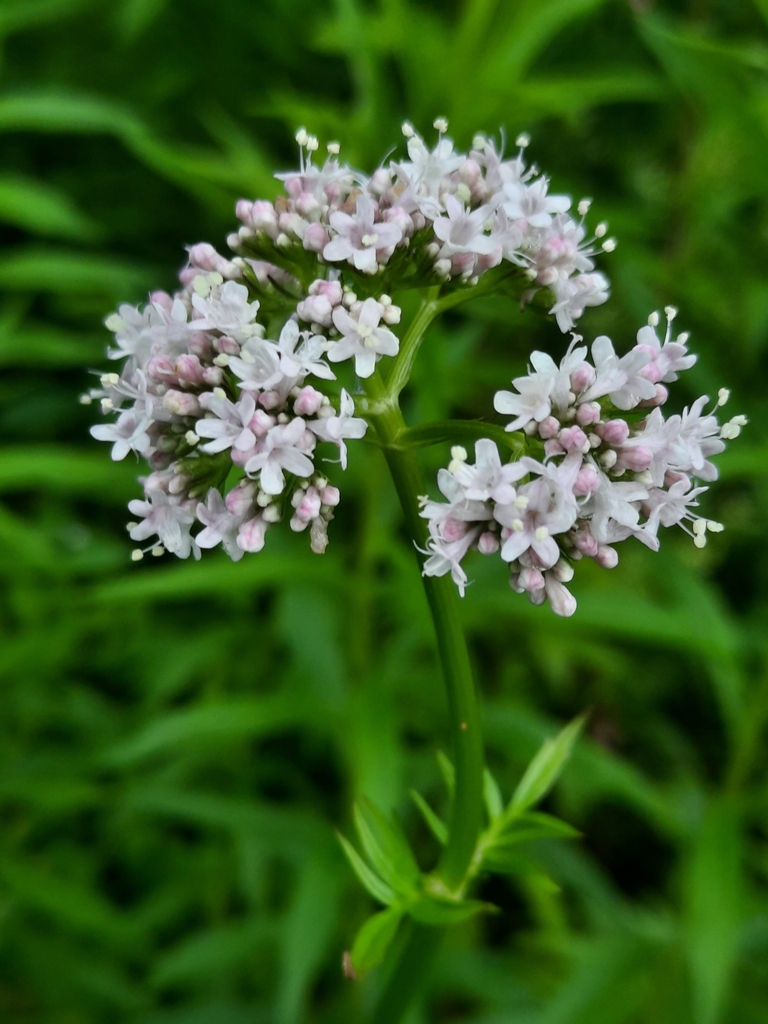
A tall, damp-meadow perennial with sweetly scented pink-white flowers above roots that smell powerfully of old socks. Those roots have been Europe's classic sleep remedy since Galen's day, and cats find them irresistible.
Valerian is an herbaceous perennial flowering plant in the family Caprifoliaceae, native to Europe and southwestern Asia. It is the type species of the genus Valeriana. Wikipedia
What it can do
- iRoots produce valerenic acid and valepotriates, which act on GABA-A receptors in lab studies
- iiRoot odour comes from isovaleric acid, which forms as the roots dry
- iiiAttracts cats, which roll on the roots much as they do on catnip
- ivFragrant flower heads draw hoverflies, bees and butterflies
At the table
Root is used as tea, tincture or capsules, not as food.
In the medicine cabinet
| Tradition | Use |
|---|---|
| European folk medicine | Root tea for insomnia, nervous tension, palpitations and cramps; Galen prescribed 'phu' for insomnia |
| Modern phytotherapy | Root extracts approved in Germany and by the EMA (traditional use) for mild nervous tension and sleep disorders |
| Unani | Related valerians (asaroon, sumbul-ut-teeb) used as nervines; V. officinalis root used similarly in Persian pharmacy |
Weight of evidence
Moderate. Some clinical trials with promising but limited or mixed results.
Active compounds
valerenic acid, acetoxyvalerenic acid, valepotriates (valtrate), isovaleric acid, hesperidin
Fruit & seed

Fruit
Cypsela with feathery pappus
Ripens: Late summer
Small one-seeded fruit crowned with a parachute of plumes.


Seed
~3–4 mm
Oblong, ribbed seed with a feathery pappus
- Dispersal
- Wind
- Germination
- Needs light; 2–3 weeks at 18–20 °C; viability falls after a year
Photographs from Wikimedia Commons under open licences; hover for the photographer, click for the file.
How to grow it
Hardiness (USDA zones)
USDA 4–9. Survives winters down to about -34 °C.
- Light
- Full sun to part shade
- Water
- Moderate–high
- Soil
- Moist, rich loam
- Propagation
- Seed or division
- To harvest
- Roots in autumn of year 2
- Climates
- Temperate, Continental
- 1Surface-sow fresh seed in spring
- 2Plant 45–60 cm apart in moist soil
- 3Remove flower stems in year 2 to send energy into the roots
- 4Lift roots in autumn, wash quickly and dry at under 40 °C
Can it grow where you are?
Where it lives
Recorded sightings
—
geo-referenced records in GBIF, from museums, herbaria and field observers.
Native range
Europe and temperate Asia; naturalised in North America
Drag the globe to turn it. Dots are where records exist, not a range map; darker means more records.
In the old herbals & bestiaries
Woodcuts and engravings matched from the Source Library’s scanned books by name. Plates marked “relative” show a close kin rather than this exact species. Click a plate to read the page it came from, with translation.

The Great Herbary with all the figures of the herbs
1532 · p.321

Notable Commentaries on the History of Plants
Leonhart Fuchs · 1542 · p.890

Notable Commentaries on the History of Plants
Leonhart Fuchs · 1542 · p.891

Commentaries on the Six Books of Dioscorides
Pietro Andrea Mattioli · 1560 · p.134

Introductio Generalis in Rem Herbariam
Augustus Quirinus Rivinus · 1690 · p.87

Introductio Generalis in Rem Herbariam
Augustus Quirinus Rivinus · 1690 · p.89

History of Monsters
Ulisse Aldrovandi · 1642 · p.635

Latin Herbal
1484 · p.309

Herbarius
1485 · p.310

Commentaries on the Six Books of Pedanius Dioscorides on Medical Matter
Pietro Andrea Mattioli · 1565 · p.216
In the stacks
Searching the stacks…
Every page naming Valeriana officinalis in the Biodiversity Heritage Library →
Marginalia
Dioscorides and Galen called it phu, a word thought to echo disgust at its smell. It is reported to have been used in Britain during the World Wars for nervous strain, including the stress of air raids.
Curiosity
Cats react to valerian root because of actinidine, a compound related to the nepetalactone in catnip.
Kinship




Fact-checked: 1 correction made to this sheet. Photographs: iNaturalist contributors under the licences shown. Records: GBIF.org. Historical plates: Source Library (CC BY-SA 4.0; originals public domain). Summary text: Nature Library editors and Wikipedia (CC BY-SA). Medicinal and edibility notes are historical and educational, not advice. iNaturalist taxon 56160.