 NL·0113
Herbarium of the Nature Library
- Name
- Victoria amazonica
- Family
- Nymphaeaceae
- Native to
- Amazon basin: Brazil, Peru, Colombia, Bolivia, Guyana
- Habitat
- Floodplain lakes, Slow backwaters
Giant Amazon water lily
Victoria amazonica
Also calledVitória-régia (Brazilian Portuguese) · Irupé (Guaraní, also for V. cruziana) · Royal water lily (English) · 王莲 wánglián (Chinese)
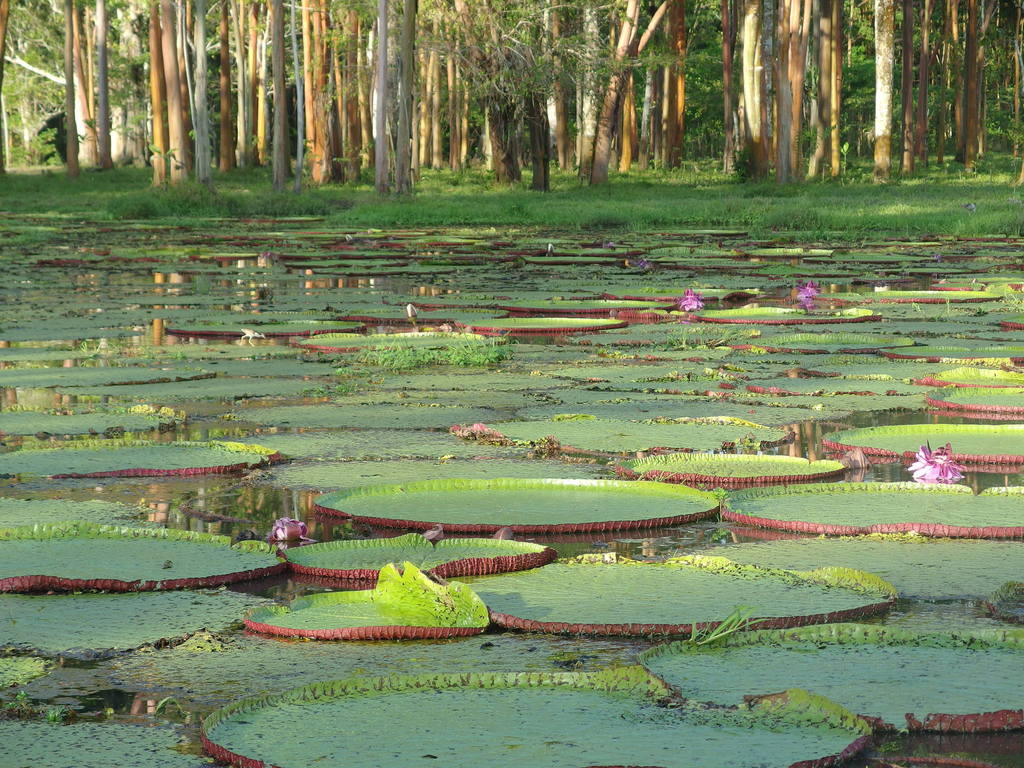
A water lily whose leaves reach up to about 3 m across, ribbed underneath like the girders of a bridge. Its flowers open white and fragrant on the first night, shut beetles inside, and reopen pink the next night to release them covered in pollen.
Victoria amazonica is a species of flowering plant, the second largest in the water lily family Nymphaeaceae. It is called Vitória-Régia or Iaupê-Jaçanã in Brazil and Atun Sisac in Inca (Quechua). Its native region is tropical South America, specifically Guyana and the Amazon Basin. Wikipedia
What it can do
- iGrows floating leaves up to about 3 m across with upturned rims
- iiIts spiny underside ribs trap air and spread load, so a leaf can bear a small child if weight is spread
- iiiHeats its first-night flower and releases a pineapple-like scent to attract Cyclocephala scarab beetles
- ivChanges sex in two nights: female and white on night one, male and pink on night two
At the table
Eatenseeds (roasted or ground) · rhizome (cooked)
Starchy seeds are roasted or ground into flour locally. Stalks and leaf undersides are covered in sharp spines.
Fruit & seed
Fruit
Spiny berry
Ripens: After flowering
Prickly fruit that develops underwater and releases pea-sized seeds.
Seed
~1 cm
Round, hard seeds
- Dispersal
- Water
- Germination
- Store in water (they die if dried); germinate at about 30 °C
How to grow it
Hardiness (USDA zones)
Tropical only (USDA 11–12) or heated glasshouse pool. Survives winters down to about 4 °C.
- Light
- Full sun
- Water
- Warm still water, 28–32 °C
- Soil
- Rich, heavy loam in a large container
- Propagation
- Seed (usually grown as an annual)
- To harvest
- Flowers 4–6 months from seed
- Climates
- Tropical
- 1Keep seed in water until sowing
- 2Germinate in shallow water at about 30 °C
- 3Move to a large, very fertile container in a big warm pool
- 4Fertilise heavily: a single plant needs a lot of feeding
Can it grow where you are?
Where it lives
Recorded sightings
—
geo-referenced records in GBIF, from museums, herbaria and field observers.
Native range
Amazon basin: Brazil, Peru, Colombia, Bolivia, Guyana
Drag the globe to turn it. Dots are where records exist, not a range map; darker means more records.
In the stacks
Searching the stacks…
Every page naming Victoria amazonica in the Biodiversity Heritage Library →
Marginalia
John Lindley named the genus after the young Queen Victoria in 1837 from specimens Robert Schomburgk sent from British Guiana; Joseph Paxton at Chatsworth first brought it to flower in November 1849. Paxton said the ribbed leaf inspired the iron-and-glass structure of the Crystal Palace for the Great Exhibition of 1851.
Curiosity
Paxton had his daughter Annie stand on a leaf (on a tray to spread her weight), an image that made the plant famous.
Kinship

Fact-checked: 2 corrections made to this sheet. Photographs: iNaturalist contributors under the licences shown. Records: GBIF.org. Historical plates: Source Library (CC BY-SA 4.0; originals public domain). Summary text: Nature Library editors and Wikipedia (CC BY-SA). Medicinal and edibility notes are historical and educational, not advice. iNaturalist taxon 179027.