- Animals
- ›Arthropods
- ›Hexapods
- ›Insects
- ›Winged and Once-winged Insects
- ›Butterflies and Moths
- ›Hawk, Sphinx, Silk, Emperor, and Allied Moths
- ›Sphinx Moths
- ›Macroglossine Sphinx Moths
- ›Dilophonotini
- ›Dilophonotina
- ›Pseudosphinx
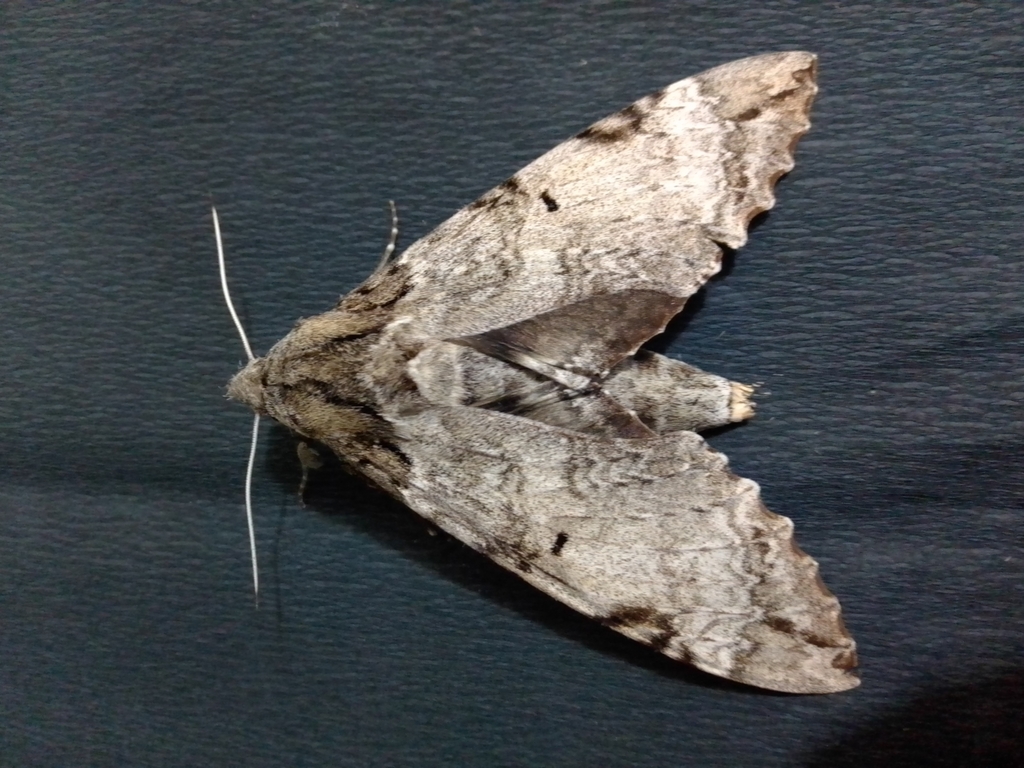
Tetrio Sphinx
Pseudosphinx tetrio
Pseudosphinx is a monotypic genus of moth in the family Sphingidae first described by Hermann Burmeister in 1856. Its only species, Pseudosphinx tetrio, was first described by Carl Linnaeus in 1771. Its common names include tetrio sphinx, giant gray sphinx, frangipani hornworm, and plumeria caterpillar. In the island of Martinique it is best known as Rasta caterpillar (chenille rasta, in French) because of its colors which are reminiscent of the ones found in Rastafarian clothing and accessories. It is native to the tropical and subtropical Americas from the southern and southwestern United States to Brazil. The occasional individual has been recorded as far north as the northeastern United States.
From the article Pseudosphinx on Wikipedia (CC BY-SA), quoted section by section
Description
The adult moth is brown with gray and white markings, and the hindwing is a darker brown. The female may be lighter in tone. The body has gray, white, and black bands. The wingspan is 12.7 to 14 centimeters, and the female is generally slightly larger than the male.
The larva is a caterpillar which may exceed 15 centimeters in length. It is black with aposematic yellow bands and a red-orange head. Toward the posterior end is an orange bump with a black horn roughly 2 centimeters long. The legs are orange with black spots. The pupa is about 7 centimeters long. It is yellow when new, turning brown and darkening to a reddish brown as it hardens.
Listen
Looking for field recordings…
Where it lives
Recorded sightings
—
geo-referenced records in GBIF, from museums, herbaria and field observers.
Drag the globe to turn it. Dots are where records exist, not a range map; darker means more records.
In the stacks
Searching the stacks…
Every page naming Pseudosphinx tetrio in the Biodiversity Heritage Library →
This page is assembled live from iNaturalist, GBIF, Wikipedia, the Source Library and the Internet Archive. It is not yet part of the hand-edited codex. iNaturalist taxon 124467.