- Animals
- ›Arthropods
- ›Hexapods
- ›Insects
- ›Winged and Once-winged Insects
- ›Butterflies and Moths
- ›Butterflies
- ›Whites, Yellows, and Sulphurs
- ›Yellows and Sulphurs
- ›Coliadini
- ›Callidryina
- ›Phoebis
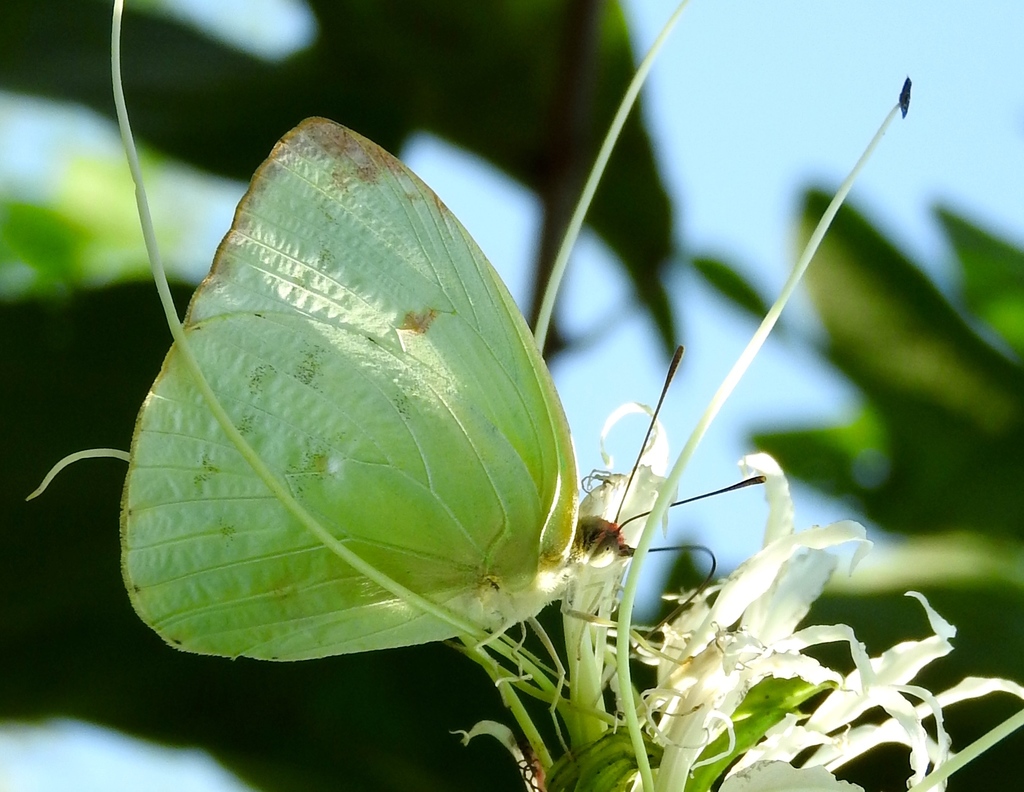
Statira Sulphur
Phoebis statira
Aphrissa statira, the statira sulphur, is a species of Lepidoptera in the family Pieridae. The species is a medium-sized yellow butterfly, with females more pale than males. They are found from southern regions of Florida and Texas through southern Brazil and northern Argentina. The caterpillars feed on the leaves of several local host plants, while adults prefer to feed on the nectar of red or orange colored flowers. The species is most noted for their dramatic migrations in the tropical areas of the Americas. They have been the subject of many studies about how butterflies navigate and orient during migration.
From the article Aphrissa statira on Wikipedia (CC BY-SA), quoted section by section
Range & habitat
The species ranges from Argentina north through Central America, extending as far as southern Texas and Florida and are also found on nearby islands. They can also be found through southern Georgia, New Mexico, and Kansas. They are especially abundant in the Amazon. Many flights occur in Florida from June through February and they make large migrations in the tropics.
Wikipedia: “Geographic range”
What it does
Adult statira sulphur feed on the nectar of flowers. They preferentially feed from red-orange colored flowers, such as the scarlet bush and lantana. Males also drink from mud puddles.
Wikipedia: “Adult diet”
Listen
Looking for field recordings…
Where it lives
Recorded sightings
—
geo-referenced records in GBIF, from museums, herbaria and field observers.
Drag the globe to turn it. Dots are where records exist, not a range map; darker means more records.
In the stacks
Searching the stacks…
Every page naming Phoebis statira in the Biodiversity Heritage Library →
This page is assembled live from iNaturalist, GBIF, Wikipedia, the Source Library and the Internet Archive. It is not yet part of the hand-edited codex. iNaturalist taxon 126307.