 NL·0475
Herbarium of the Nature Library
- Name
- Leucogeranus leucogeranus
- Family
- Gruidae
- Native to
- Breeds in Arctic Yakutia and western Siberia; the main population winters at Poyang Lake on the Yangtze in China; former wintering sites in Iran and India (Keoladeo)
- Habitat
- Tundra, Wetland, Lake shore
On eBird ↗
Siberian Crane
Live sightings near you, the range map, bar charts of when it is seen, and Macaulay Library photos and recordings.
Siberian crane
Leucogeranus leucogeranus
Also calledBái hè 白鹤 (Chinese) · Sterkh Стерх (Russian) · Siberian white crane · Snow crane
A snow-white crane with a red face and black wingtips that migrates from the Arctic tundra to wetlands in China. Its western flock, which wintered in India and Iran, has all but disappeared.
The Siberian crane, also known as the Siberian white crane or the snow crane, is a bird of the family Gruidae, the cranes. They are distinctive among the cranes: adults are nearly all snowy white, except for their black primary feathers that are visible in flight, and with two breeding populations in the Arctic tundra of western and eastern Russia. The eastern populations migrate during winter to China, while the western population winters in Iran and (formerly) in Bharatpur, India. Wikipedia
What it can do
- iMigrates around 5,000 km between Siberia and China
- iiDigs for roots and tubers of aquatic plants in shallow water
- iiiDepends on very specific shallow wetlands, making it highly vulnerable
In the field
Field marks
- aAll-white plumage with black primary feathers visible in flight
- bBare brick-red skin on the face and forehead
- cLong reddish-pink legs and a long, slightly serrated bill
- dJuveniles are rusty-cinnamon
- Voice
- A soft, musical, flute-like 'koonk-koonk', unlike the harsh trumpeting of other cranes
- Not to be confused with
- White stork has a red bill and black flight feathers along the whole rear wing; Great white egret and spoonbills are slimmer and lack a red face.
- Where to see it
- Poyang Lake, Jiangxi, China, in winter; Momoge reserve in Jilin on migration
- When
- Winter visitor to China (Nov–Mar); breeds in Siberia (May–Aug)
Listen
Looking for field recordings…
Life & habits
- Diet
- Roots, tubers and shoots of aquatic plants; also invertebrates and small animals in summer
- Habitat
- Open tundra wetlands in summer; shallow lakes and marshes in winter
- Size
- About 140 cm tall; wingspan about 210–230 cm
Feeds in shallow water by probing deep into the mud; more strictly aquatic than any other crane.
Where it lives
Recorded sightings
—
geo-referenced records in GBIF, from museums, herbaria and field observers.
Native range
Breeds in Arctic Yakutia and western Siberia; the main population winters at Poyang Lake on the Yangtze in China; former wintering sites in Iran and India (Keoladeo)
Drag the globe to turn it. Dots are where records exist, not a range map; darker means more records.
In the old herbals & bestiaries
No plate in the Source Library names this exact species, so these show its closest relatives as the old naturalists drew them: same genus, or the same kind of animal. Click a plate to read the page it came from, with translation.

The Tudor Pattern Book (Herbal-Bestiary)
Relative · Anonymous · 1525 · p.88

Ulyssis Aldrovandi ... Ornithologiae
Relative · Aldrovandi, Ulisse · 1610 · p.992

The Tudor Pattern Book (Herbal-Bestiary)
Relative · Anonymous · 1525 · p.70

The Hieroglyphics
Relative · Horapollo · 1551 · p.239

Collected Illustrations of the Three Powers (Sancai Tuhui), Vol. 63
Relative · 王圻, 王思義 · 1609 · p.52

Hokusai Manga (北斎漫画), Vol. 1
Relative · Katsushika Hokusai · 1814 · p.18

Hokusai Manga (北斎漫画), Vol. 3
Relative · Katsushika Hokusai · 1815 · p.32

Bestiary
Relative · Anonymous · 1240 · p.143

Garden of Health (Hortus Sanitatis)
Relative · Jacob Meydenbach · 1491 · p.556

History of Animals, Book I: On Viviparous Quadrupeds
Relative · Conrad Gessner · 1554 · p.696
In the stacks
Searching the stacks…
Every page naming Leucogeranus leucogeranus in the Biodiversity Heritage Library →
Marginalia
Keoladeo (Bharatpur) in India was the famous wintering site of the western population until the last birds stopped arriving after 2002. The western flock's route passed through Afghanistan and Pakistan, where hunting took a heavy toll.
Curiosity
Nearly the entire world population, a few thousand birds, spends the winter at a single lake system in China.
Kinship
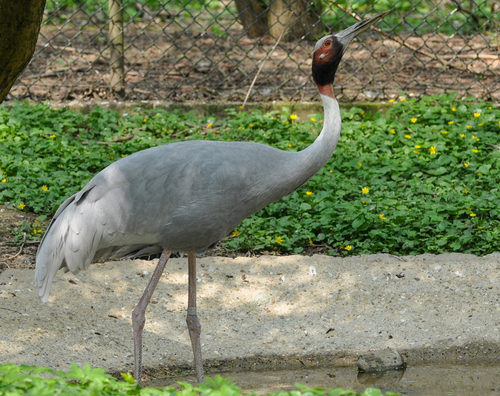
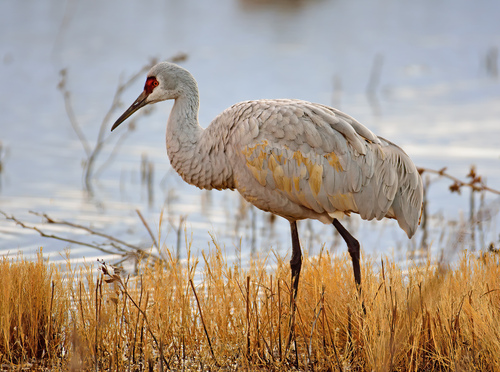
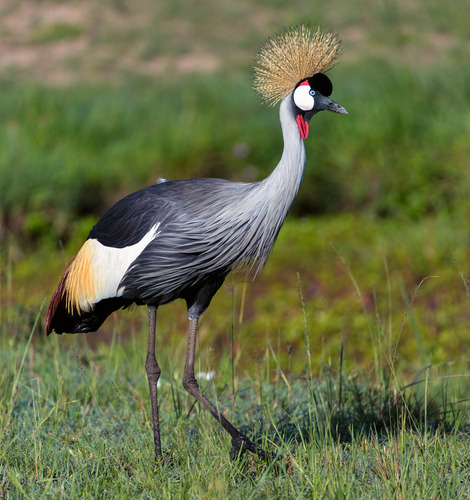
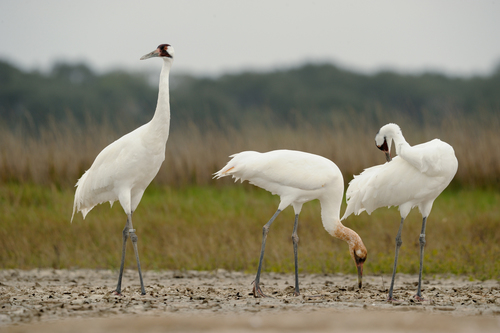
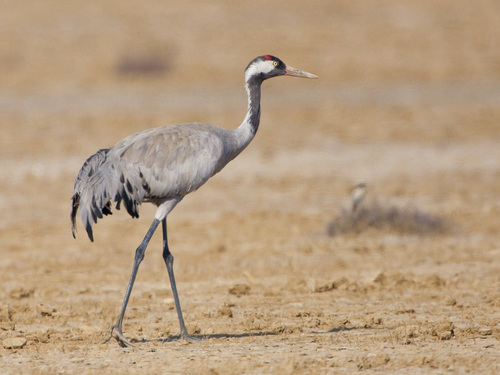
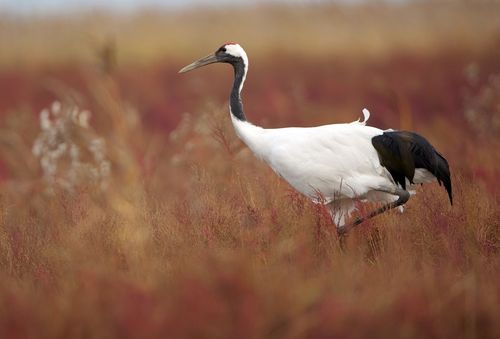
Photographs: iNaturalist contributors under the licences shown. Records: GBIF.org. Historical plates: Source Library (CC BY-SA 4.0; originals public domain). Summary text: Nature Library editors and Wikipedia (CC BY-SA). Medicinal and edibility notes are historical and educational, not advice. iNaturalist taxon 144289.