Eubodonida
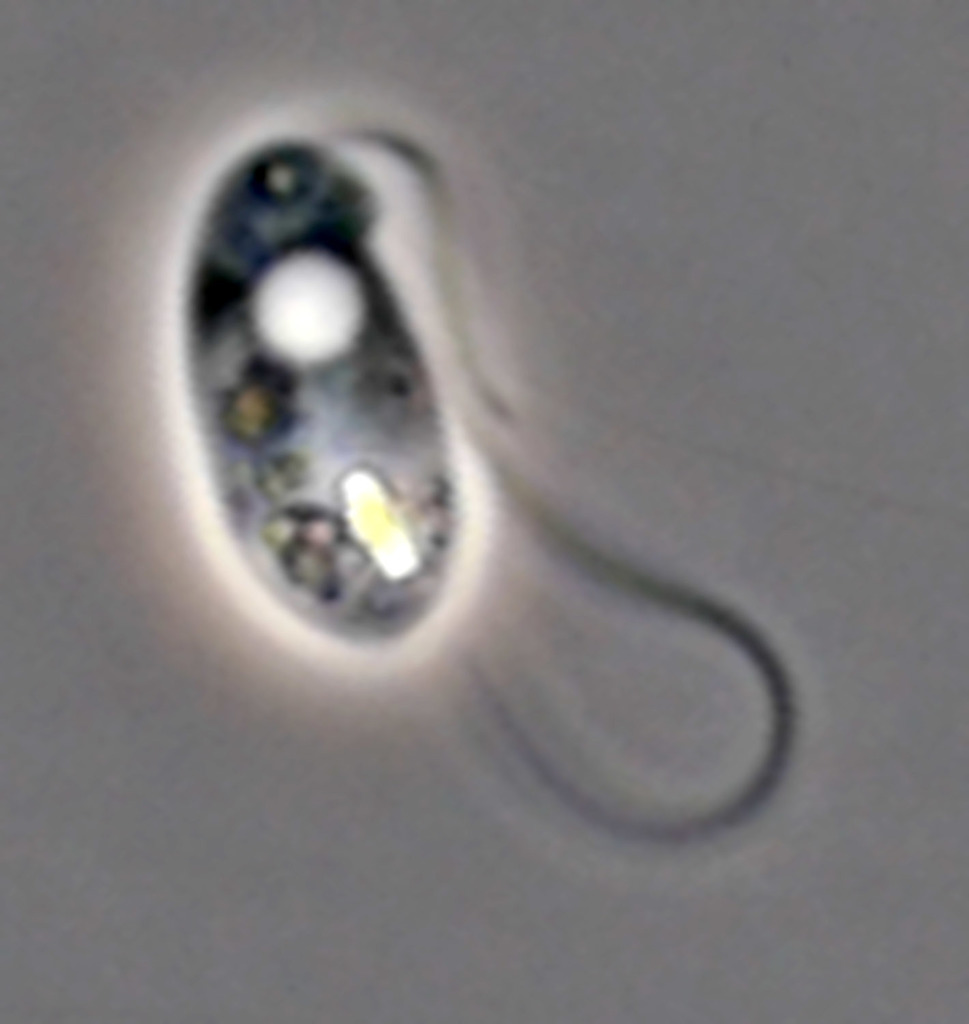
Bodo (/ˈboʊdoʊ/) is a genus of microscopic kinetoplastids, flagellate excavates first described in 1831 by Christian Gottfried Ehrenberg. The genus is small, as it has recently been redefined to include only four species. Bodo includes free-living, phagotrophic organisms that can be found in many marine and freshwater environments as well as some terrestrial environments. Being phagotrophic, Bodo feeds on bacteria and other microorganisms that it finds while swimming through its water-based habitats. The swimming-like movement is...
1 branches of this order, most-observed first
See this branch on the Wheel of Life →
Where it lives
Recorded sightings
—
geo-referenced records in GBIF, from museums, herbaria and field observers.
Drag the globe to turn it. Dots are where records exist, not a range map; darker means more records.
In the stacks
Searching the stacks…
Every page naming Eubodonida in the Biodiversity Heritage Library →
This page is assembled live from iNaturalist, GBIF, Wikipedia, the Source Library and the Internet Archive. It is not yet part of the hand-edited codex. iNaturalist taxon 1446526.