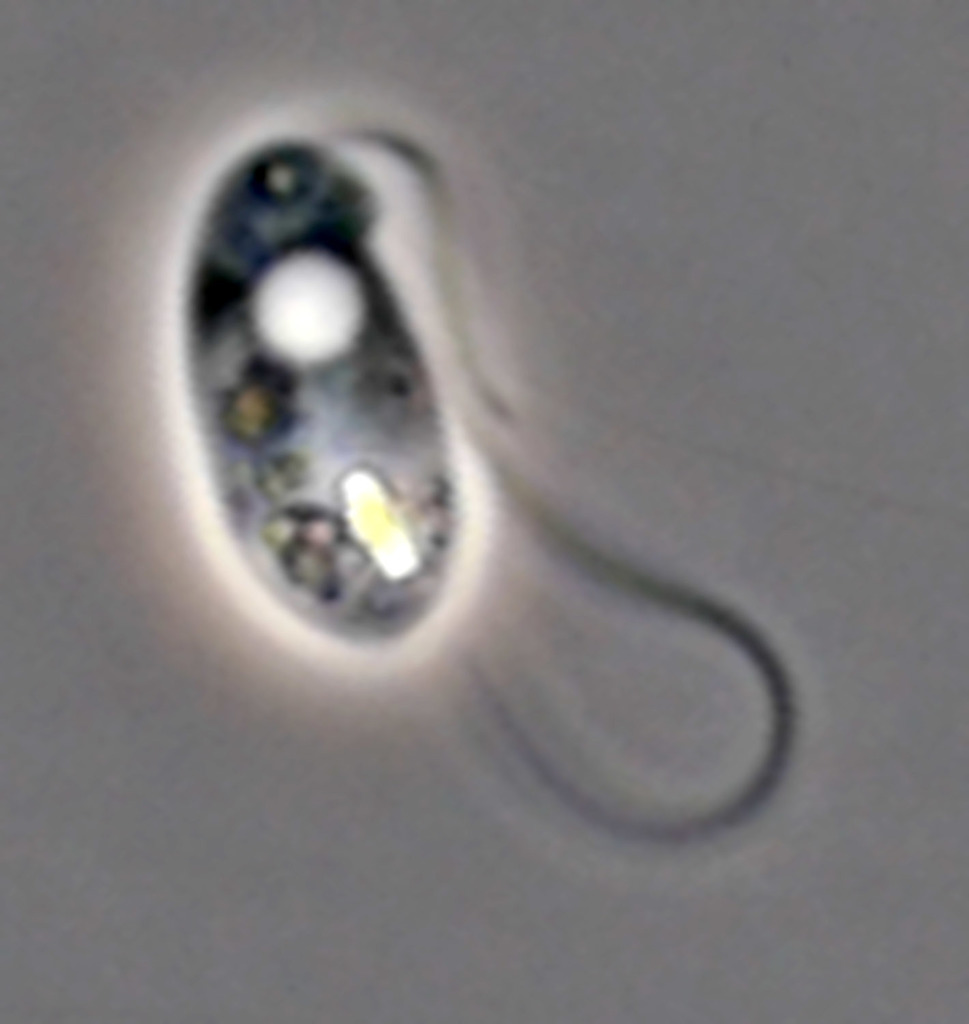
Bodonidae
Bodo () is a genus of microscopic kinetoplastids, flagellate excavates first described in 1831 by Christian Gottfried Ehrenberg. The genus contains four species. Bodo includes free-living, phagotrophic organisms that can be found in many marine and freshwater environments as well as some terrestrial environments. Being phagotrophic, Bodo feeds on bacteria and other microorganisms that it finds while swimming through its water-based habitats. The swimming-like movement is facilitated by the two unequal flagella that Bodo possesses which arise from an anteriorly located flagellar pocket. Bodo is roughly bean-shaped and is often missed in samples from water or terrestrial environments due to its small size.

Where it lives
Recorded sightings
—
geo-referenced records in GBIF, from museums, herbaria and field observers.
Drag the globe to turn it. Dots are where records exist, not a range map; darker means more records.
In the stacks
Searching the stacks…
Every page naming Bodonidae in the Biodiversity Heritage Library →
This page is assembled live from iNaturalist, GBIF, Wikipedia, the Source Library and the Internet Archive. It is not yet part of the hand-edited codex. iNaturalist taxon 1446529.