- Plants
- ›Vascular Plants
- ›flowering plants
- ›Dicots
- ›pinks, cactuses, and allies
- ›cacti
- ›globular cacti, moonlight cacti, torch cacti, and allies
- ›Trichocereeae
- ›Harrisia
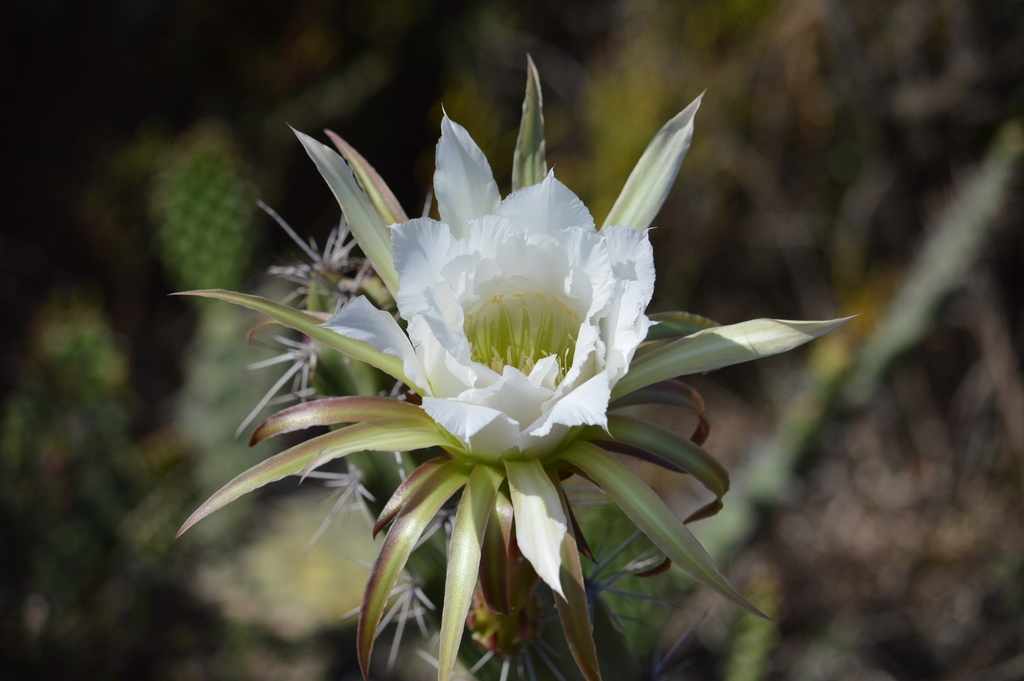
Giant Red Dragon Apple Cactus
Harrisia bonplandii
Harrisia bonplandii is a species of cactus. The cactus plants in the Gran Chaco (Paraguay, Argentina, Bolivia) are generally called tuna and this specific variety reina de la noche (queen of the night). Fruits and roots are edible and well known to the native nations of the Gran Chaco.
Names of this cactus in the different languages of the native Nations are: Ayoreo Nation: daturirai / datura; Enxet Nation: laapang; Nivaclé Nation: sôtôyuc. In Argentina it is also known as pasacana/ulua. The plant remains often unnoticed in the forest, but can not be overseen when it blossoms only in the night and where its Spanish name originates. In English, it's also called the giant red dragon apple cactus or strangler prickly apple.
From the article Harrisia bonplandii on Wikipedia (CC BY-SA), quoted section by section
Description
Harrisia bonplandii is stem scandent, clambering or sprawling and grows up leaning-climbing. The stems have diameters of up to 5 centimeters and are up to 2.5 meters long. They are three to four edged with flat faces. Their edges are sharp and wavy. The single strong central spine is up to 2.5 centimeters long. The four to five side spines reach a length of 4 to 5 millimeters. The flowers reach a length of 20 to 25 centimeters. Their pericarpel and the corolla tube are virtually without wool, but filled with large scurf’s. The spherical, red fruits are edible and strongly tuberculate. They have diameters of 4 to 4.5 centimetres.
Range & habitat
Harrisia bonplandii can be found in the southwest of Brazil, in Paraguay, in Bolivia and in the north of Argentina in the Chaco at elevations of 80–900 meters.
Wikipedia: “Distribution”
Where it lives
Recorded sightings
—
geo-referenced records in GBIF, from museums, herbaria and field observers.
Drag the globe to turn it. Dots are where records exist, not a range map; darker means more records.
In the stacks
Searching the stacks…
Every page naming Harrisia bonplandii in the Biodiversity Heritage Library →
This page is assembled live from iNaturalist, GBIF, Wikipedia, the Source Library and the Internet Archive. It is not yet part of the hand-edited codex. iNaturalist taxon 157462.