- Animals
- ›Arthropods
- ›Hexapods
- ›Insects
- ›Winged and Once-winged Insects
- ›Butterflies and Moths
- ›Hawk, Sphinx, Silk, Emperor, and Allied Moths
- ›Sphinx Moths
- ›Sphinginae
- ›Sphingini
- ›Sphingina
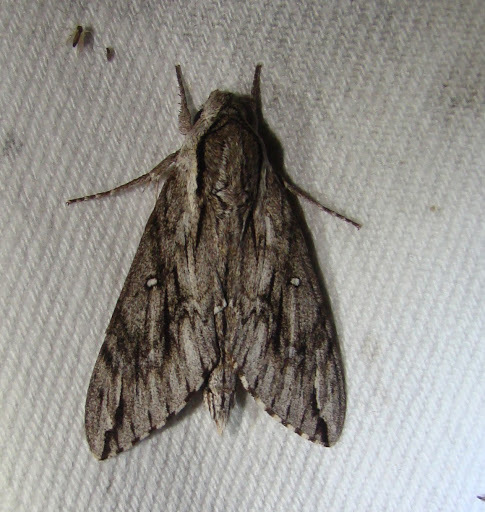
Paratrea
Paratrea is a monotypic moth genus in the family Sphingidae erected by Augustus Radcliffe Grote in 1903. Its sole species, Paratrea plebeja, commonly known as the plebeian sphinx moth, was first described by Johan Christian Fabricius in 1777. This species is found in the eastern part of the United States extending westward to Nebraska, Kansas, Oklahoma and eastern Texas.
The length of the forewing is measured 31–35 mm. In the northern regions, adults are active in two generations, flying from May to August. In the southern regions, there are at least two generations, with adults on the wing from late April to June and from August to October. In Florida, adults are active from April to November, and in Louisiana, they are seen from March to September. Adults feed on the nectar of various flowers, including Saponaria officinalis, Phlox, Petunia, Mirabilis, Lonicera, Hymenocallis occidentalis and Verbena.
1 branches of this genus, most-observed first
See this branch on the Wheel of Life →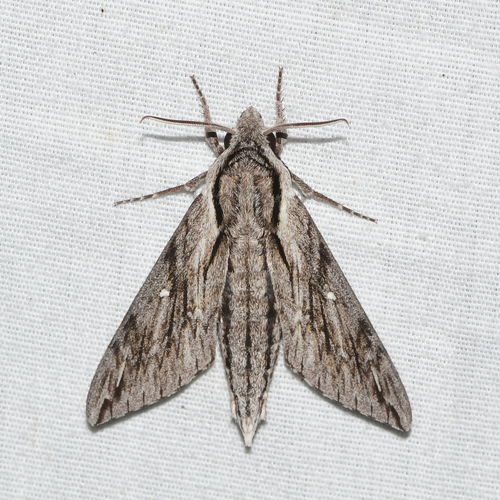
Where it lives
Recorded sightings
—
geo-referenced records in GBIF, from museums, herbaria and field observers.
Drag the globe to turn it. Dots are where records exist, not a range map; darker means more records.
In the stacks
Searching the stacks…
Every page naming Paratrea in the Biodiversity Heritage Library →
This page is assembled live from iNaturalist, GBIF, Wikipedia, the Source Library and the Internet Archive. It is not yet part of the hand-edited codex. iNaturalist taxon 178300.