- Animals
- ›Arthropods
- ›Hexapods
- ›Insects
- ›Winged and Once-winged Insects
- ›Butterflies and Moths
- ›Owlet Moths and Allies
- ›Underwing, Tiger, Tussock, and Allied Moths
- ›Erebinae
- ›Catocalini
- ›Arsacia
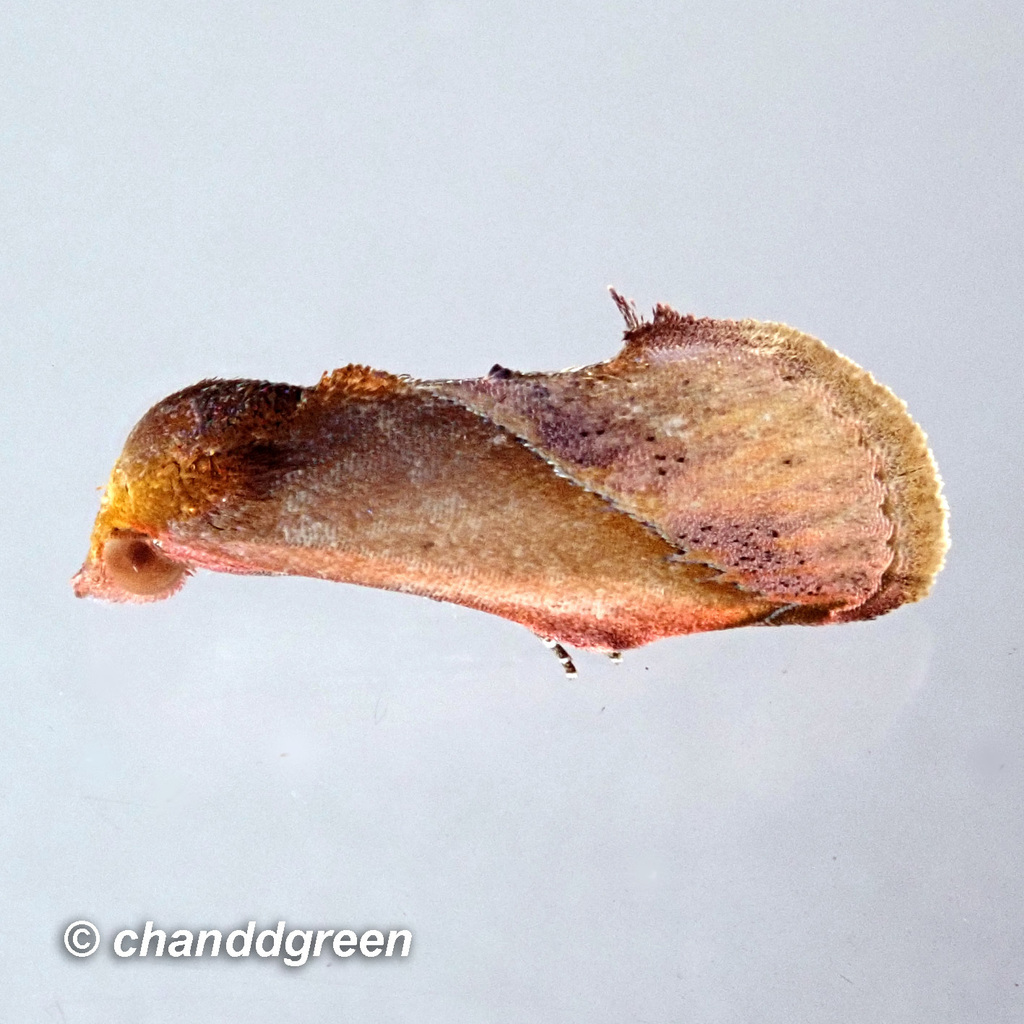
Arsacia rectalis
Arsacia is a monotypic genus of moths in the family Noctuidae. Its only species is Arsacia rectalis. Both the genus and species were described by Francis Walker, the genus in 1866 and the species in 1863. It is found from the Indo-Australian tropics of India, Sri Lanka to Queensland and the Solomon Islands.
From the article Arsacia on Wikipedia (CC BY-SA), quoted section by section
Description
Palpi porrect (extending forward), where the second joint thickly scaled, and third joint minute and acute. Frontal tuft absent. Antennae almost simple in male. Thorax and abdomen smoothly scaled. Tibia naked. Forewings with quadrate apex. Outer margin rounded. Inner margin lobed and with slight tufts of hair near base and at outer angle. Veins 7, 8, 9 and 10 stalked. The wingspan is 14–18 mm. Adults have been recorded on wing in March. Head and thorax rufous. Abdomen fuscous. Forewings bright chestnut. The costa suffused with pink. There is an oblique line runs from apex to middle of inner margin, the area beyond it suffused with pink and with indistinct sub-marginal and marginal series of patches of dark scales. Hindwings dark fuscous.
Listen
Looking for field recordings…
Where it lives
Recorded sightings
—
geo-referenced records in GBIF, from museums, herbaria and field observers.
Drag the globe to turn it. Dots are where records exist, not a range map; darker means more records.
In the stacks
Searching the stacks…
Every page naming Arsacia rectalis in the Biodiversity Heritage Library →
This page is assembled live from iNaturalist, GBIF, Wikipedia, the Source Library and the Internet Archive. It is not yet part of the hand-edited codex. iNaturalist taxon 200148.