- Animals
- ›Arthropods
- ›Hexapods
- ›Insects
- ›Winged and Once-winged Insects
- ›Butterflies and Moths
- ›Owlet Moths and Allies
- ›Underwing, Tiger, Tussock, and Allied Moths
- ›Erebinae
- ›Erebini
- ›Erygia
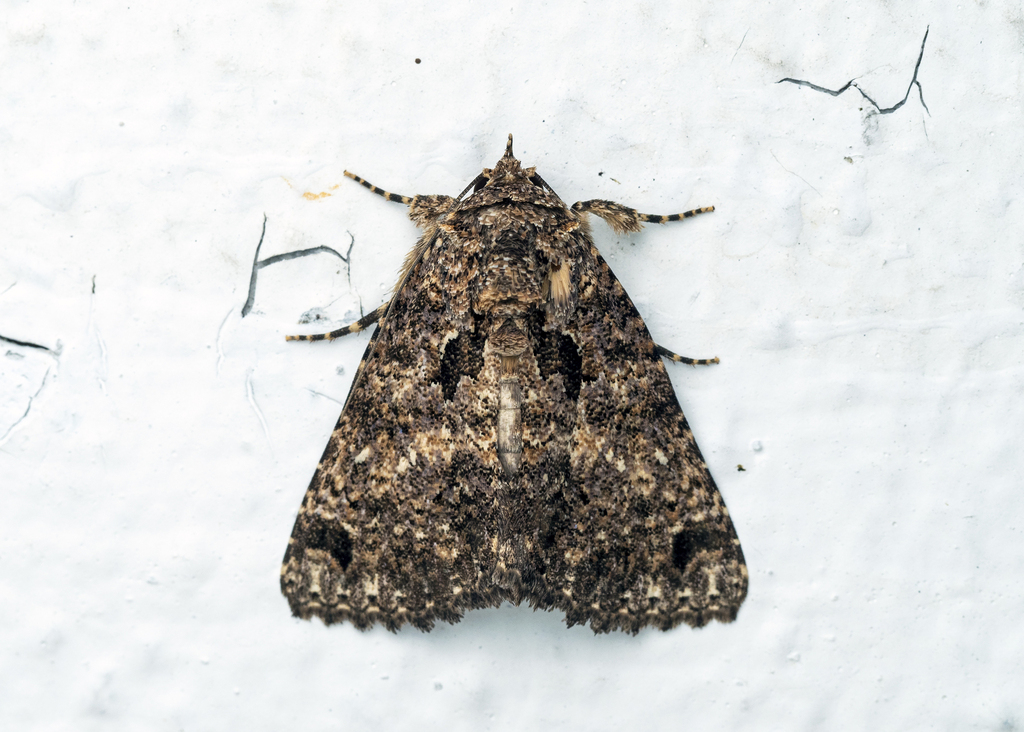
Erygia apicalis
Erygia apicalis is a moth of the Erebidae family. It is found from the Indo-Australian tropics of India, Sri Lanka to Japan, Australia (where it has been recorded from the Northern Territory, Queensland and New South Wales) and the Solomon Islands. The habitat consists of lowland areas, including dry heath forests and softwood plantations.
From the article Erygia apicalis on Wikipedia (CC BY-SA), quoted section by section
Description
The wingspan is about 40 mm. Head and thorax consist of dark reddish brown scales. Abdomen possess reddish brown dorsal tufts. Male has black anal tufts. Forewings are dark and reddish brown with numerous indistinct waved lines. The sub-basal, irregular antemedial and postmedial lines are excurved beyond the cell being the most conspicuous character. A red-brown band found inside the antemedial line which runs from cell to inner margin. There are some red-brown marks found near apex and outer angle, and a crenulate marginal line as well. Hindwings are fuscous with a reddish patch near center of outer margin. The caterpillar is dark brown with yellow speckles. Ventrally it is pale green with a red mark under each segment. Branched filaments project out of the sides. First two proleg pairs reduced, so it shows looping movements. The larvae feed on Acacia, Albizia, Desmodium, Flemingia, Pueraria and Wisteria species.
== References ==
Listen
Looking for field recordings…
Where it lives
Recorded sightings
—
geo-referenced records in GBIF, from museums, herbaria and field observers.
Drag the globe to turn it. Dots are where records exist, not a range map; darker means more records.
In the stacks
Searching the stacks…
Every page naming Erygia apicalis in the Biodiversity Heritage Library →
This page is assembled live from iNaturalist, GBIF, Wikipedia, the Source Library and the Internet Archive. It is not yet part of the hand-edited codex. iNaturalist taxon 244670.