- Animals
- ›Arthropods
- ›Hexapods
- ›Insects
- ›Winged and Once-winged Insects
- ›Butterflies and Moths
- ›Hawk, Sphinx, Silk, Emperor, and Allied Moths
- ›Sphinx Moths
- ›Macroglossine Sphinx Moths
- ›Dilophonotini
- ›Dilophonotina
- ›Hemeroplanes
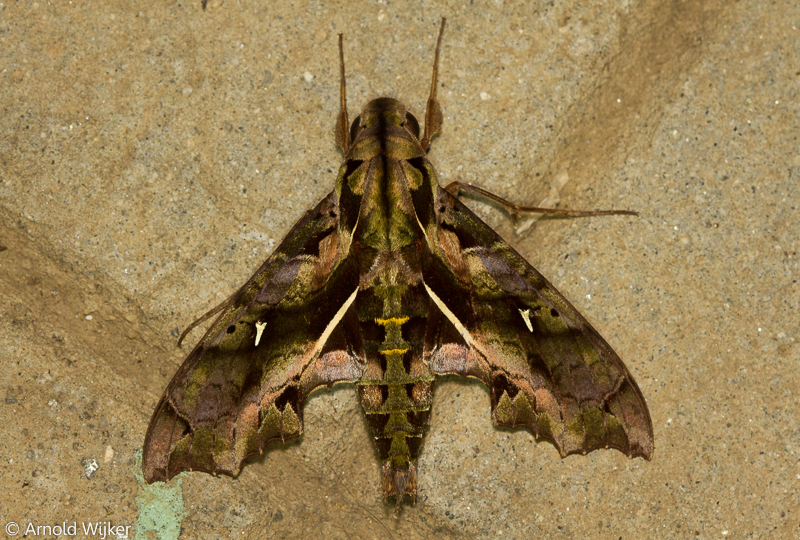
Hemeroplanes ornatus
Hemeroplanes ornatus is a species of sphinx moth native from Mexico through northern South America. The species was first described by Walter Rothschild in 1894.
From the article Hemeroplanes ornatus on Wikipedia (CC BY-SA), quoted section by section
Description
H. ornatus is mainly light brownish gray with green, pink, and dark brown markings. In the forewing cell, there is a short silver mark. There is a greenish-brown stripe running the length of the abdomen, with three yellow lateral stripes on the second, third, and fourth segments.
What it does
The female releases pheromones to attract males. The caterpillar is green, camouflaged against its host plant Fischeria panamensis. However, when disturbed, the caterpillar hangs from the vine with his prolegs and puffs up its head and thorax. The underside of its body is brown, and it has a pair of false eyes on the thorax, making it look like a small snake. It will move back and forth and strike at predators.
== References ==
Wikipedia: “Life cycle”
Listen
Looking for field recordings…
Where it lives
Recorded sightings
—
geo-referenced records in GBIF, from museums, herbaria and field observers.
Drag the globe to turn it. Dots are where records exist, not a range map; darker means more records.
In the stacks
Searching the stacks…
Every page naming Hemeroplanes ornatus in the Biodiversity Heritage Library →
This page is assembled live from iNaturalist, GBIF, Wikipedia, the Source Library and the Internet Archive. It is not yet part of the hand-edited codex. iNaturalist taxon 256354.