- Animals
- ›Arthropods
- ›Chelicerates
- ›Arachnids
- ›Spiders
- ›Typical Spiders
- ›Entelegyne Spiders
- ›RTA Clade Spiders
- ›Meshweavers and Allies
- ›desid spiders
- ›Desinae

Foliage-webbing Spiders
Phryganoporus
Phryganoporus is a genus of Australian intertidal spiders that was first described by Eugène Simon in 1908. Its five species only occur in Australia and Tasmania, with one species also occurring on Norfolk Island, south of New Caledonia. The name is derived from Greek phryganon ("dry stick") and poros ("hole"), referring to the web that is often built on dry shrubs or low vegetation with a hole as an entrance.
Though they are typically solitary, P. candidus is also known for its communal behaviour, building "nests" made of branches and leaves knitted together with silk, creating tunnels for the spiders to live. Most of these webs are built late in the summer by individual females working separately in the construction and cleaning of their individual webs. Their behaviour is likely due to pheromone mediated sibling tolerance, and is not considered true cooperative behaviour. As they mature, they grow less tolerant of each other and tend to disperse over the course of the summer. In the Riverina area of New South Wales, these nests have caused foliage matting, leaf fall and withering of limbs in fruit trees.
5 branches of this genus, most-observed first

Foliage Webbing Spider
speciesPhryganoporus candidus
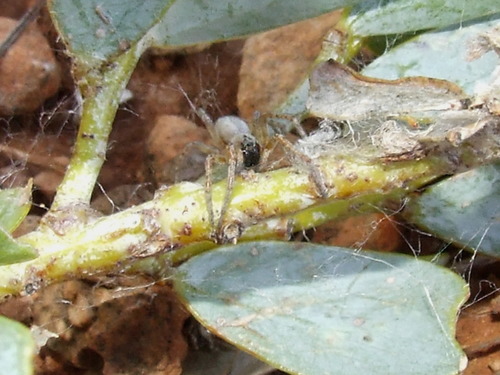
Arid Semi-social Spider
speciesPhryganoporus nigrinus
Phryganoporus vandiemeni
speciesPhryganoporus vandiemeni
Phryganoporus davidleei
speciesPhryganoporus davidleei
Phryganoporus melanopygus
speciesPhryganoporus melanopygus
Where it lives
Recorded sightings
—
geo-referenced records in GBIF, from museums, herbaria and field observers.
Drag the globe to turn it. Dots are where records exist, not a range map; darker means more records.
In the stacks
Searching the stacks…
Every page naming Phryganoporus in the Biodiversity Heritage Library →
This page is assembled live from iNaturalist, GBIF, Wikipedia, the Source Library and the Internet Archive. It is not yet part of the hand-edited codex. iNaturalist taxon 416711.