- Plants
- ›Vascular Plants
- ›flowering plants
- ›Dicots
- ›pinks, cactuses, and allies
- ›cacti
- ›globular cacti, moonlight cacti, torch cacti, and allies
- ›Cereeae
- ›Cereus
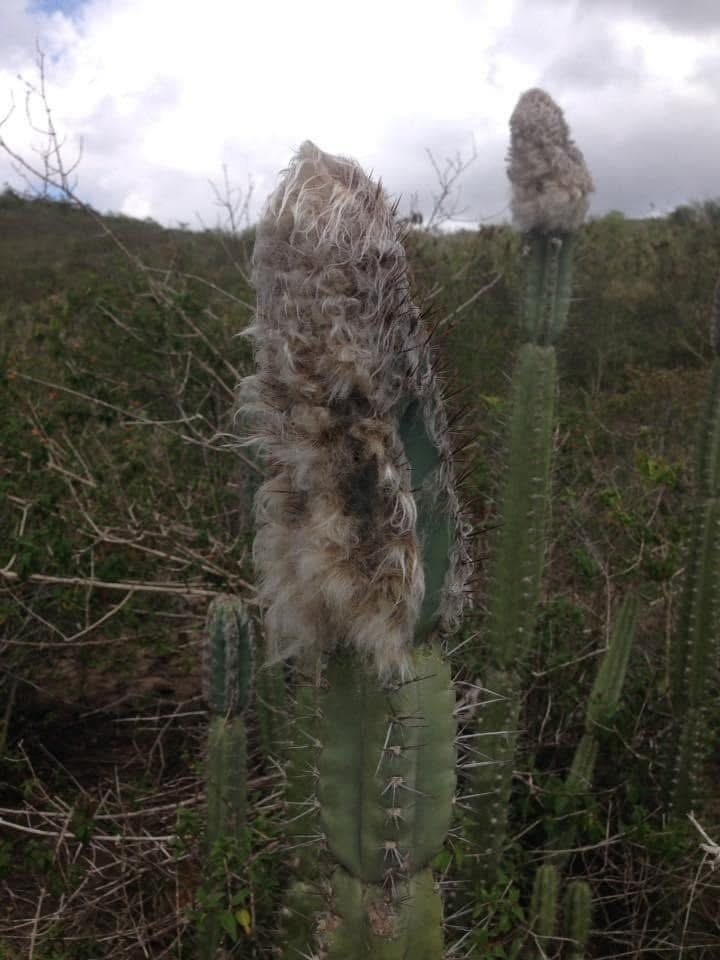
Cereus mortensenii
Cereus mortensenii is a species of plant found in seasonally dry areas of Venezuela. It is the only Cereus species that develops a cephalium.
From the article Cereus mortensenii on Wikipedia (CC BY-SA), quoted section by section
Description
Cereus mortensenii is a species of treelike cactus that is very branched and reaches heights of up to 8 metres (26 ft). The stems are hexagonal and although initially bluish, as they age, they become blue-greenish. They have a diameter of up to 8 centimetres (3.1 in) and have up to nine ribs. The wooly areoles have 1 to 2 strong central spines of yellowish to gray color and reach a length of 3 to 4 cm. There are also 5 to 7 thin and pointed marginal spines of brown to gray and measure 1 to 1.5 cm long. Mature plants form a thick pseudocephalium The flowers are creamy white and nocturnal. They measure up to 6 cm long and up to 3.5 cm in diameter. The fruits are spherical and depressed, and are characterized by having adhered flowering remains.
In human culture
This plant is named for Russell H. Mortensen who helped with the discovery and collection of this species
== References ==
Wikipedia: “Etymology”
Where it lives
Recorded sightings
—
geo-referenced records in GBIF, from museums, herbaria and field observers.
Drag the globe to turn it. Dots are where records exist, not a range map; darker means more records.
In the stacks
Searching the stacks…
Every page naming Cereus mortensenii in the Biodiversity Heritage Library →
This page is assembled live from iNaturalist, GBIF, Wikipedia, the Source Library and the Internet Archive. It is not yet part of the hand-edited codex. iNaturalist taxon 438220.