- Animals
- ›Arthropods
- ›Hexapods
- ›Insects
- ›Winged and Once-winged Insects
- ›Ants, Bees, Wasps, and Sawflies
- ›Narrow-waisted Wasps, Ants, and Bees
- ›Ants, Bees, and Stinging Wasps
- ›Bees and Apoid Wasps
- ›Bees
- ›Honey Bees, Bumble Bees, and Allies
- ›Apine Bees
- ›Honey Bees
- ›Apis

Cavity-nesting Honey Bees
Apis
A honey bee (also spelled honeybee) is a eusocial flying insect from the genus Apis of the largest bee family, Apidae. Honey bees are known for their creation of perennial nests within cavities (i.e. beehives) containing hexagonal cells made of secreted wax, their large colony sizes, and their routine regurgitation of digested carbohydrates as surplus food storage in the form of honey, the lattermost of which distinguishes their hives as a prized foraging target of many mellivorous animals including honey badgers, bears and human hunter-gatherers.
Although honey bees represent only a small fraction of the roughly 20,000 known species of bees, they are the bee clade most familiar to humans and are also the most valuable beneficial insects to agriculture and horticulture. The best-known honey bee species is the western honey bee (Apis mellifera), which was domesticated and farmed (i.e. beekeeping) for honey production and crop pollination. The only other domesticated species is the eastern honey bee (Apis cerana), which are raised in South, Southeast and East Asia.
6 branches of this group, most-observed first
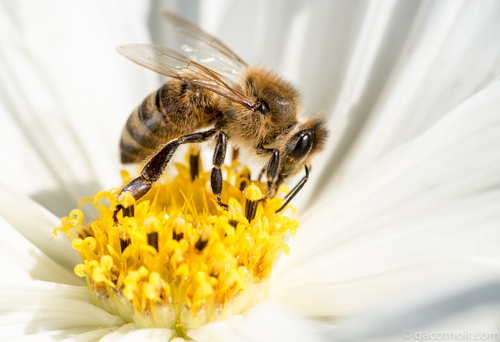
Western Honey Bee
speciesApis mellifera
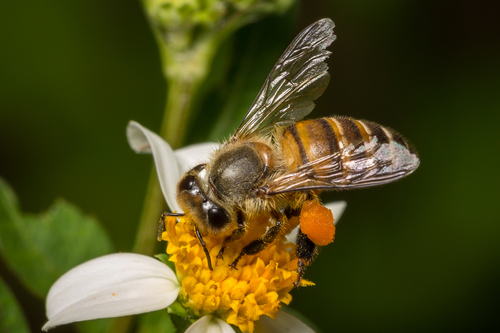
Asian Honey Bee
speciesApis cerana
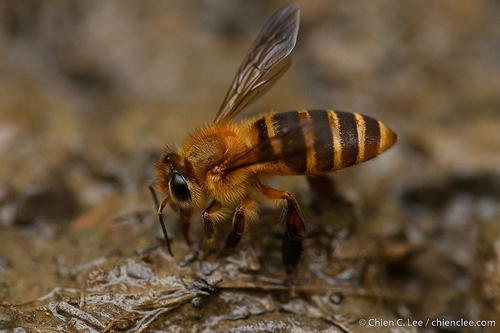
Koschevnikov's Honey Bee
speciesApis koschevnikovi
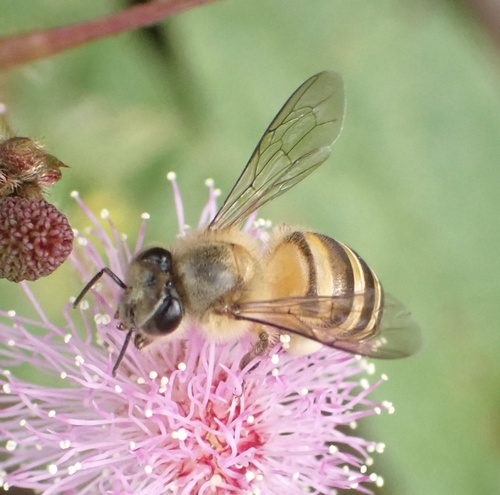
Black-banded Honey Bee
speciesApis nigrocincta
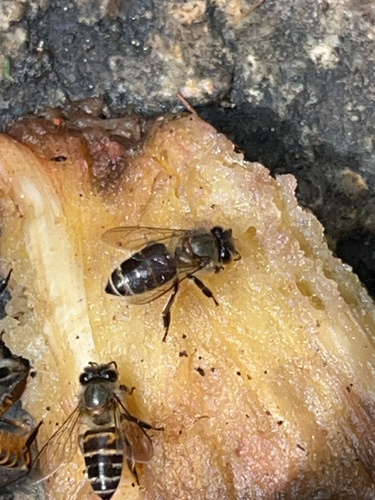
Indian black honey bee
speciesApis karinjodian
Apis nuluensis
speciesApis nuluensis
Where it lives
Recorded sightings
—
geo-referenced records in GBIF, from museums, herbaria and field observers.
Drag the globe to turn it. Dots are where records exist, not a range map; darker means more records.
In the old herbals & bestiaries

Latin Herbal with German Synonyms
1486 · p.262

Introductio Generalis in Rem Herbariam
Augustus Quirinus Rivinus · 1690 · p.318

Latin Herbal
1484 · p.261

On the Virtues of Herbs
Macer Floridus · 1150 · p.167

Latin Herbal with German Synonyms
1484 · p.289

Herbarius
1485 · p.262

Herbarius latinus (with Dutch synonyms)
1486 · p.259

Ortus sanitatis
1491 · p.412

Garden of Health
Jacob Meydenbach · 1491 · p.412

Ortus sanitatis
1491 · p.788

Herbal of Virtues
1499 · p.261

The Great Herbary with all the figures of the herbs
1532 · p.279
In the stacks
Searching the stacks…
Every page naming Apis in the Biodiversity Heritage Library →
This page is assembled live from iNaturalist, GBIF, Wikipedia, the Source Library and the Internet Archive. It is not yet part of the hand-edited codex. iNaturalist taxon 578086.