- Animals
- ›Arthropods
- ›Hexapods
- ›Insects
- ›Winged and Once-winged Insects
- ›Butterflies and Moths
- ›Butterflies
- ›Whites, Yellows, and Sulphurs
- ›Yellows and Sulphurs
- ›Euremini
- ›Euremina
- ›Eurema
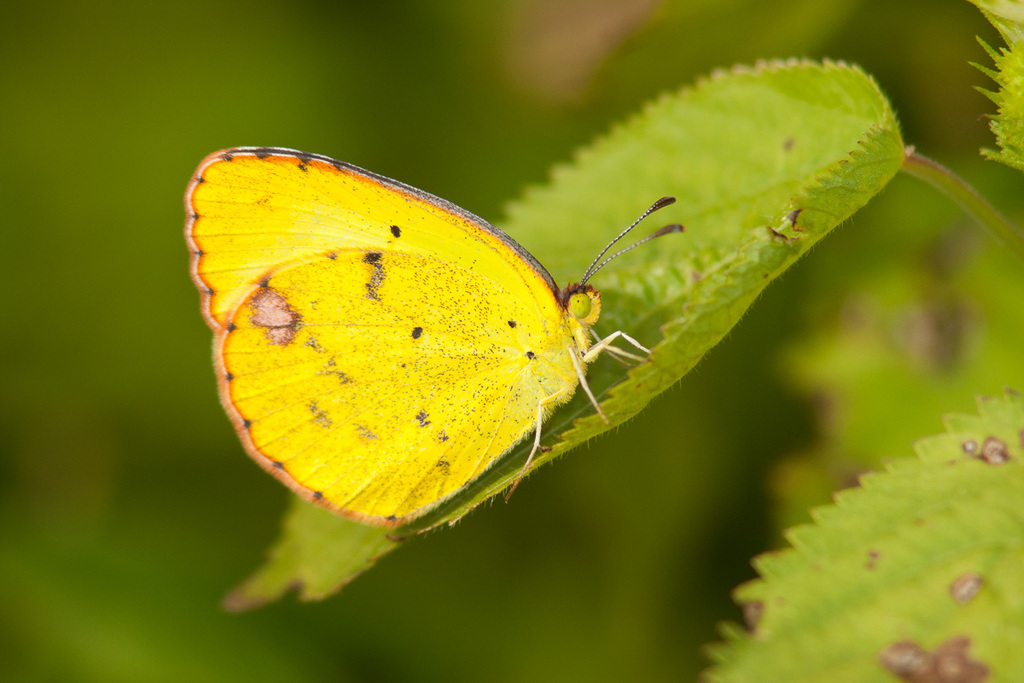
Little Yellow
Eurema lisa
Eurema lisa, commonly known as the little yellow, little sulphur or little sulfur, is a butterfly species of subfamily Coliadinae that occurs in Central America and the southern part of North America.
From the article Eurema lisa on Wikipedia (CC BY-SA), quoted section by section
Description
The wingspan is between 32 and 44 mm, not to be confused with the sleepy orange that is large and orange not yellow. The dorsal view of the forewing has a broad dark margin and the hindwing's ventral view has two basal blacks spots. Females have a white morph (alba). Males reflect ultraviolet.
Range & habitat
The little yellow lives in the southern United States and as far south as Costa Rica and the Antilles. They can seasonally colonize the northern United States (and as far north as Quebec). Migration to Bermuda occurs, but it is not established. Within their range they can be seen in open areas, most commonly old fields.
Wikipedia: “Range and habitat”
What it does
In the southern part of its range there can be up to five broods per year, while in the northern range there are between one and three. During warm days males patrol for females so they can mate. Females lay eggs singly on the midveins or rachis of their host plant.
Larval foods. Source:
Cassia fasciculata Cassia marilandica Cassia occidentalis Cassia nictitans Amphicarpa Desmanthus Glycine (in Puerto Rico) Mimosa pudica (in Antilles) Mimosa strigillosa
Wikipedia: “Life cycle”
Listen
Looking for field recordings…
Where it lives
Recorded sightings
—
geo-referenced records in GBIF, from museums, herbaria and field observers.
Drag the globe to turn it. Dots are where records exist, not a range map; darker means more records.
In the stacks
Searching the stacks…
Every page naming Eurema lisa in the Biodiversity Heritage Library →
This page is assembled live from iNaturalist, GBIF, Wikipedia, the Source Library and the Internet Archive. It is not yet part of the hand-edited codex. iNaturalist taxon 58530.