 NL·0044
Herbarium of the Nature Library
- Name
- Cannabis sativa
- Family
- Cannabaceae
- Native to
- Central and South Asia (possibly East Asia); cultivated worldwide
- Habitat
- Temperate grassland, Disturbed ground, Cultivation
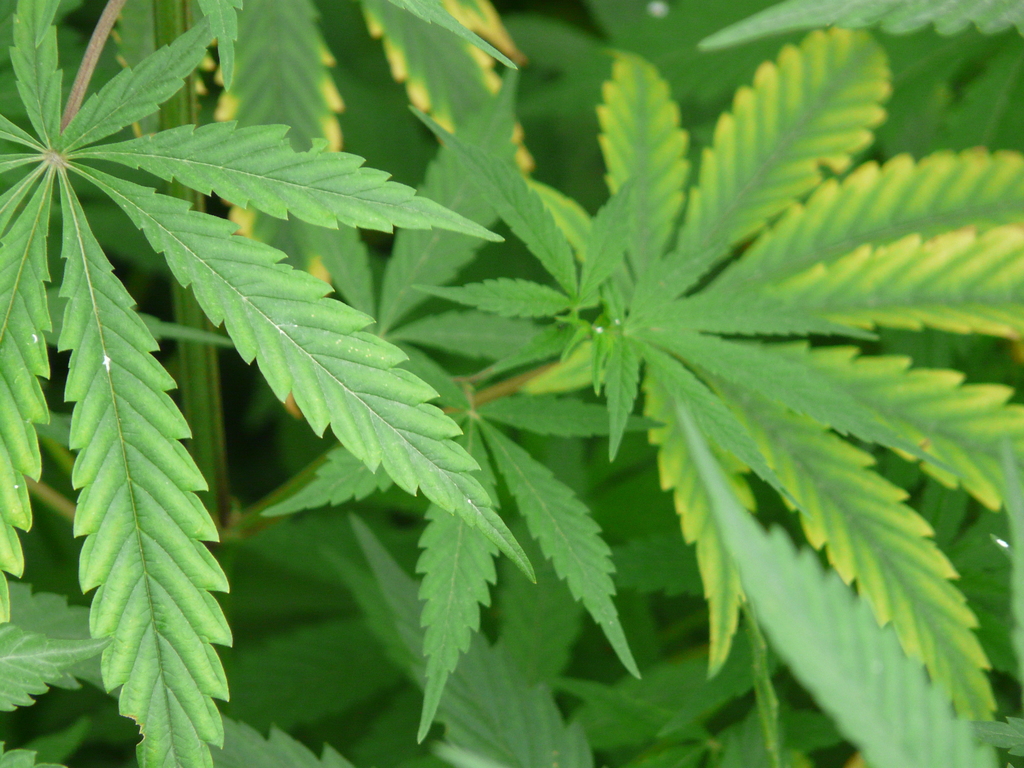
Hemp (Cannabis)
Cannabis sativa
Also calledBhang / Ganja (Hindi/Sanskrit) · Charas (Urdu/Persian, resin) · Hashish (Arabic) · Dà má 大麻 (Chinese) · Taima 大麻 / Asa 麻 (Japanese) · Dagga (Southern Africa) · Marihuana (Mexican Spanish)
One of humanity's oldest crops, grown for rope and cloth, edible seeds, oil, medicine and its mind-altering resin. The flowers' resin glands make THC and CBD, compounds that act on the body's own endocannabinoid system.
Cannabis sativa is an annual herbaceous flowering plant. The species was first classified by Carl Linnaeus in 1753. The specific epithet sativa means 'cultivated'. Indigenous to Eastern Asia, the plant is now of cosmopolitan distribution due to widespread cultivation. It has been cultivated throughout recorded history and used as a source of industrial fiber, seed oil, food, and medicine. It is also used as a recreational drug and for religious and spiritual purposes. Wikipedia
What it can do
- iProduces long, strong bast fibres used for rope, sails, paper and cloth
- iiMakes resin in glandular trichomes rich in cannabinoids (THC, CBD) and terpenes
- iiiMany varieties switch to flowering when nights lengthen
- ivGrows extremely fast, reaching 2–5 m in one season
At the table
Eatenseeds (hemp hearts) · seed oil · young leaves (in some cuisines)
Hemp seeds and oil contain little or no THC and are widely eaten. Flowers and resin are psychoactive; edibles can cause severe intoxication, especially in children and pets (dogs are very sensitive). Legal status varies by country.
In the medicine cabinet
| Tradition | Use |
|---|---|
| Ayurveda | Purified bhang (vijaya) for pain, digestion and sleep |
| Traditional Chinese medicine | Seeds (huo ma ren) as a laxative |
| Modern medicine | Purified CBD (Epidiolex) approved for certain epilepsies; THC drugs (dronabinol, nabilone) for chemotherapy nausea and appetite loss |
Weight of evidence
Strong. An approved drug, or consistent results in well-run clinical trials.
Active compounds
Δ9-tetrahydrocannabinol (THC), cannabidiol (CBD), cannabigerol, β-caryophyllene, myrcene
Fruit & seed
Fruit
Achene
Ripens: Autumn
Small, smooth, grey-brown seeds enclosed in a bract.
Seed
~3–5 mm
Hard, oval, mottled achenes
- Dispersal
- Birds and people
- Germination
- Sow 1 cm deep at 20–25 °C; 3–7 days
How to grow it
Hardiness (USDA zones)
Annual; any frost-free season
- Light
- Full sun
- Water
- Moderate
- Soil
- Fertile, well-drained loam
- Propagation
- Seed, cuttings
- To harvest
- Fibre 70–90 days; seed 100–120 days
- Climates
- Temperate, Subtropical, Tropical
- 1Check local laws: growing is restricted or licensed in many places
- 2Sow after the last frost in fertile soil
- 3For fibre, sow densely; for seed, sow widely spaced
- 4Harvest fibre stems at early flowering; harvest seed when most seeds are brown
Where it lives
Recorded sightings
—
geo-referenced records in GBIF, from museums, herbaria and field observers.
Native range
Central and South Asia (possibly East Asia); cultivated worldwide
Drag the globe to turn it. Dots are where records exist, not a range map; darker means more records.
In the old herbals & bestiaries
Woodcuts and engravings matched from the Source Library’s scanned books by name. Plates marked “relative” show a close kin rather than this exact species. Click a plate to read the page it came from, with translation.

Notable Commentaries on the History of Plants
Leonhart Fuchs · 1549 · p.425

Latin Herbal with German Synonyms
1486 · p.108

Herbarius latinus (with Dutch synonyms)
1486 · p.105

The Great Herbary with all the figures of the herbs
1532 · p.95

Notable Commentaries on the History of Plants
Leonhart Fuchs · 1542 · p.427

On the Names of Plants
Hieronymus Bock (Tragus) · 1552 · p.422

Illustrated Herbal Primer
Chen Jiamo (陳嘉謨) · 1628 · p.229

Tractado de las Drogas y Medicinas de las Indias Orientales
Cristóvão da Costa · 1578 · p.390

Latin Herbal
1484 · p.107

Introductio Generalis in Rem Herbariam
Augustus Quirinus Rivinus · 1690 · p.116
In the stacks
Searching the stacks…
Every page naming Cannabis sativa in the Biodiversity Heritage Library →
Marginalia
Hemp cloth and cord are known from Neolithic China, and Herodotus (5th century BCE) described Scythians throwing hemp seeds on hot stones and howling with joy in the vapour. Braziers from a ~2,500-year-old cemetery at Jirzankal in the Pamirs contain residues of high-THC cannabis.
Curiosity
The English word 'canvas' comes from cannabis, via Old French and Latin.
Kinship

Photographs: iNaturalist contributors under the licences shown. Records: GBIF.org. Historical plates: Source Library (CC BY-SA 4.0; originals public domain). Summary text: Nature Library editors and Wikipedia (CC BY-SA). Medicinal and edibility notes are historical and educational, not advice. iNaturalist taxon 75997.