 NL·0053
Herbarium of the Nature Library
- Name
- Diospyros kaki
- Family
- Ebenaceae
- Native to
- China; long cultivated in Japan and Korea, now grown in warm-temperate regions worldwide
- Habitat
- Temperate mixed forest, Orchards
Japanese persimmon
Diospyros kaki
Also calledShì (Chinese) · Kaki (Japanese) · Gam (Korean) · Khurmaloo (Persian) · Caqui (Spanish/Portuguese) · Trabzon hurması (Turkish)
A relative of ebony, cultivated in China for over 2,000 years for its glowing orange fruit that hangs on bare branches into winter. Astringent varieties are inedibly puckering until soft-ripe; non-astringent types like 'Fuyu' can be eaten crisp like an apple.
Diospyros kaki, the Oriental persimmon, Chinese persimmon, Japanese persimmon, kaki persimmon, or Fuyu persimmon, is the most widely cultivated species of the genus Diospyros. Although its first botanical description was not published until 1780, D. kaki cultivation in China dates back more than 2000 years. Wikipedia
What it can do
- iSoluble tannins in unripe astringent fruit bind proteins in the mouth, causing a dry pucker
- iiFruit can set without pollination (parthenocarpy), giving seedless fruit
- iiiFruit hangs on leafless branches well into winter
- ivUnripe juice (kakishibu) is fermented into a waterproofing dye for paper and cloth
At the table
Eatenfruit (fresh, or dried as hoshigaki / shìbǐng) · leaves (tea)
Ripe fruit is safe. Eating lots of unripe astringent persimmons, especially on an empty stomach, can form hard stomach masses (diospyrobezoars) that may need surgery.
In the medicine cabinet
| Tradition | Use |
|---|---|
| Traditional Chinese Medicine | Dried calyx (shì dì) used for hiccups; dried fruit for cough |
| Japanese folk medicine | Persimmon-leaf tea, rich in vitamin C, as a tonic |
Weight of evidence
Traditional. Long historical use; little or no modern clinical evidence.
Active compounds
proanthocyanidins (tannins), β-cryptoxanthin, vitamin C, shibuol
Fruit & seed


Fruit
Berry
Ripens: Autumn to early winter
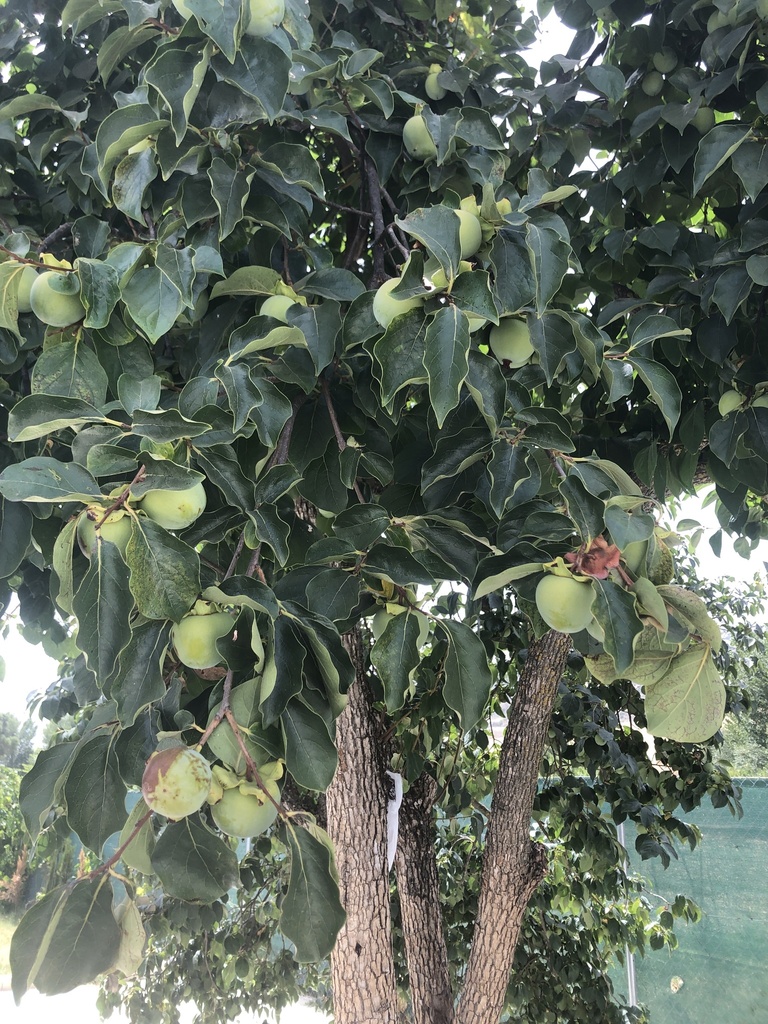
Round to acorn-shaped berry 5–9 cm, glossy orange to red-orange, with a persistent four-lobed green calyx; flesh orange, jelly-soft when ripe or crisp in non-astringent types.


Seed
1.5–2 cm
Flattened, oblong, dark-brown seeds 1.5–2 cm long, smooth and hard; 0–8 per fruit, often none
- Dispersal
- Birds and mammals
- Germination
- Cold-stratify 60–90 days, sow 2 cm deep at 20–25 °C; slow and taprooted, 3–8 weeks
Photographs from Wikimedia Commons under open licences; hover for the photographer, click for the file.
How to grow it
Hardiness (USDA zones)
USDA 7–10. Survives winters down to about -18 °C.
- Light
- Full sun
- Water
- Moderate; even moisture reduces fruit drop
- Soil
- Deep, well-drained loam, pH 6–7.5; tolerates clay if drained
- Propagation
- Grafting onto D. kaki, D. lotus or D. virginiana seedling rootstocks
- To harvest
- 3–5 years from a grafted tree
- Climates
- Warm temperate, Humid subtropical, Mediterranean
- 1Choose a variety: non-astringent ('Fuyu', 'Jiro') to eat crisp, or astringent ('Hachiya') to eat soft or dry.
- 2Plant a grafted tree in full sun, sheltered from strong wind, which damages brittle branches.
- 3Water regularly in the first years and during fruit swell; feed lightly, as excess nitrogen causes fruit drop.
- 4Prune lightly in winter to thin crowded branches; thin heavy crops to prevent limb breakage.
- 5Cut fruit with a short stalk; ripen astringent types until jelly-soft, or peel and hang them to dry as hoshigaki.
Can it grow where you are?
Where it lives
Recorded sightings
—
geo-referenced records in GBIF, from museums, herbaria and field observers.
Native range
China; long cultivated in Japan and Korea, now grown in warm-temperate regions worldwide
Drag the globe to turn it. Dots are where records exist, not a range map; darker means more records.
In the old herbals & bestiaries
Woodcuts and engravings matched from the Source Library’s scanned books by name. Plates marked “relative” show a close kin rather than this exact species. Click a plate to read the page it came from, with translation.


In the stacks
Searching the stacks…
Every page naming Diospyros kaki in the Biodiversity Heritage Library →
Marginalia
Persimmon trees that survived the atomic bombing of Nagasaki have been propagated as 'Kaki Tree Project' saplings planted in schools worldwide. In Korea, dried persimmon (gotgam) is offered at ancestral rites during Chuseok.
Curiosity
Diospyros means 'fruit of the gods' (or 'grain of Zeus') in Greek.
Kinship

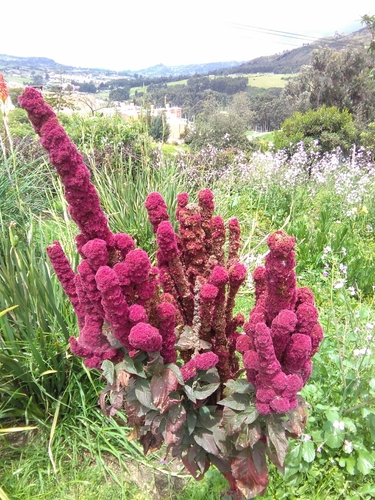
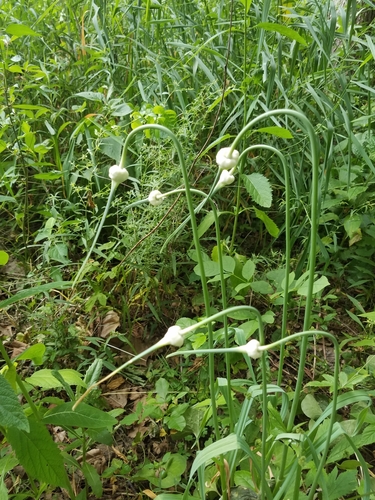


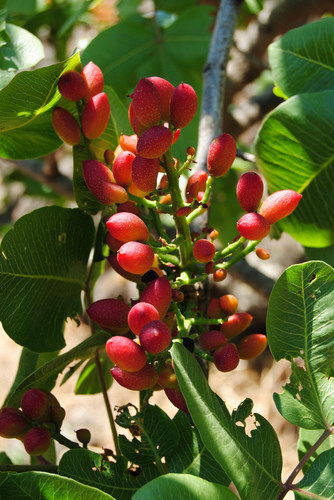
Photographs: iNaturalist contributors under the licences shown. Records: GBIF.org. Historical plates: Source Library (CC BY-SA 4.0; originals public domain). Summary text: Nature Library editors and Wikipedia (CC BY-SA). Medicinal and edibility notes are historical and educational, not advice. iNaturalist taxon 83468.