- Plants
- ›Vascular Plants
- ›flowering plants
- ›Dicots
- ›pinks, cactuses, and allies
- ›cacti
- ›globular cacti, moonlight cacti, torch cacti, and allies
- ›Pachycereae
- ›Cephalocereus
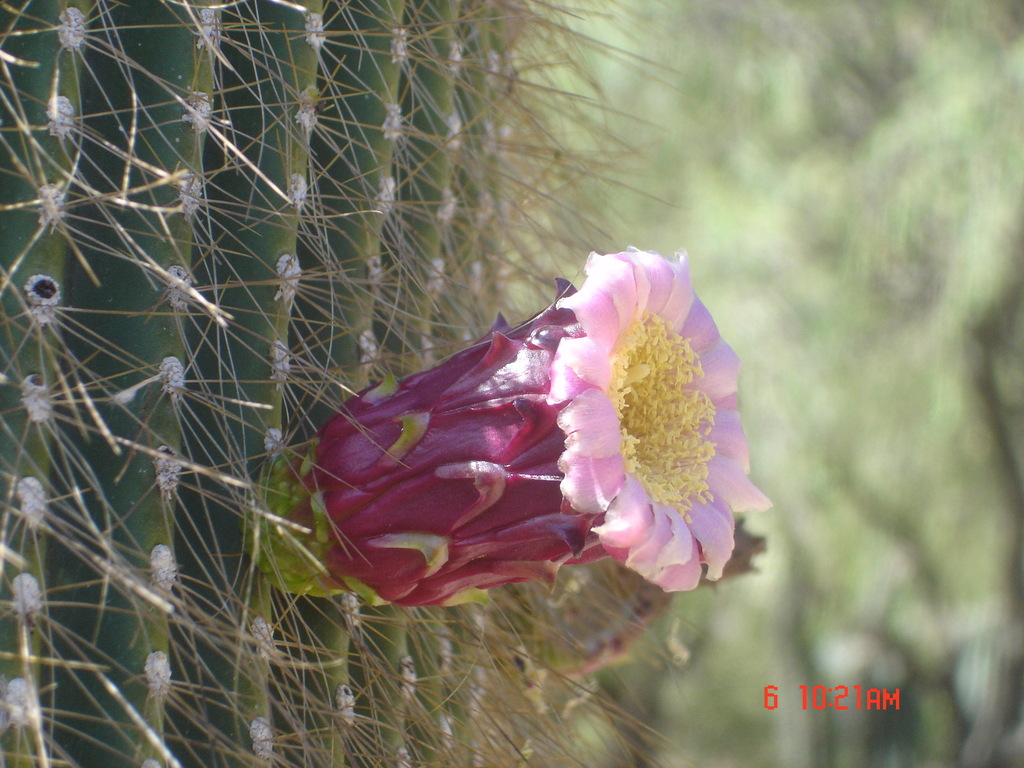
Cephalocereus polylophus
Cephalocereus polylophus is a species of cactus endemic to Mexico. Often grown under the synonym Neobuxbaumia polylopha, it is popular with cactus growers and reproduces well in cultivation.
From the article Cephalocereus polylophus on Wikipedia (CC BY-SA), quoted section by section
Description
Cephalocereus polylophus grows individually and reaches heights of up to 13 m (43 ft) or even 15 m (49 ft) and can grow to weigh many tons. The columnar shoots are initially light green and become darker with age. They have diameters of up to 50 cm (1 ft 8 in). The 22 to 36 (rarely from 10) narrow, slightly curved ribs are separated from each other by a sharp furrow. The single, flexible central spine, which can also be missing, is often shorter than the seven to eight marginal spines. The marginal spines are flexible and 1 to 2 cm (0.4 to 0.8 in) long. They are yellowish to brownish and turn gray with age. The flowers usually appear in groups near the tips of the shoots. They are dark red, 4 to 6 cm (1.6 to 2.4 in) long and reach a diameter of 30 to 35 mm (1.2 to 1.4 in). Its pericarpel and floral tube are covered with fairly large tubercles and small scales that are glabrous in the axillae. The egg-shaped, green fruits are 24 to 40 mm (0.9 to 1.6 in) long and covered with scales, wool and bristles. The fruits are edible by humans and have a delicate, nutty flavor.
Range & habitat
Cephalocereus polylophus is native to the Mexican states of Hidalgo, Querétaro, Guanajuato and San Luis Potosí.
Wikipedia: “Distribution”
Where it lives
Recorded sightings
—
geo-referenced records in GBIF, from museums, herbaria and field observers.
Drag the globe to turn it. Dots are where records exist, not a range map; darker means more records.
In the stacks
Searching the stacks…
Every page naming Cephalocereus polylophus in the Biodiversity Heritage Library →
This page is assembled live from iNaturalist, GBIF, Wikipedia, the Source Library and the Internet Archive. It is not yet part of the hand-edited codex. iNaturalist taxon 846112.