- Plants
- ›Vascular Plants
- ›flowering plants
- ›Dicots
- ›pinks, cactuses, and allies
- ›cacti
- ›globular cacti, moonlight cacti, torch cacti, and allies
- ›Cereeae
- ›Pilosocereus
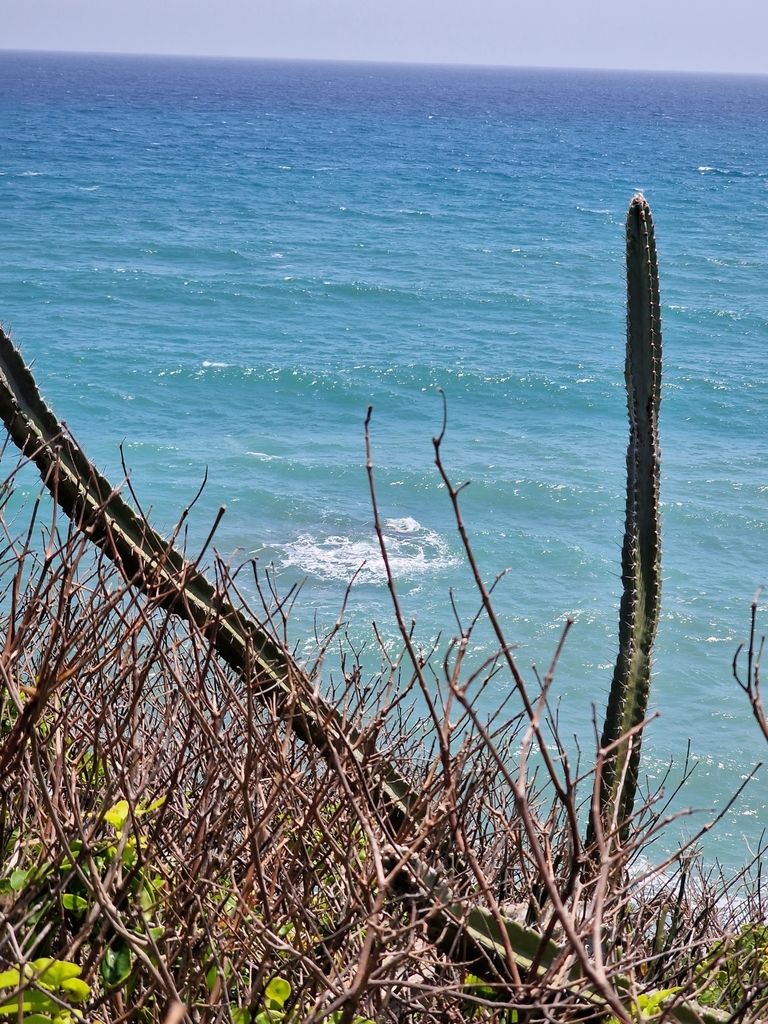
Pilosocereus moritzianus
Pilosocereus moritzianus is a species of flowering plant in the cactus family Cactaceae, native to Trinidad and Tobago and the Venezuelan Antilles in the Caribbean and to Venezuela in northern South America. It was first described in 1837 as Cereus moritzianus. It was subsequently placed in the genus Cephalocereus before being moved to Pilosocereus in 1957. It has also been treated as a subspecies of Pilosocereus lanuginosus, P. lanuginosus subsp. moritzianus.
From the article Pilosocereus moritzianus on Wikipedia (CC BY-SA), quoted section by section
Description
Pilosocereus moritzianus has green to somewhat bluish green stems with 7–10 ribs. Its branches are ascending, some completely upright. The areoles have rigid spines up to 3.5 cm (1.4 in) long that are yellow to brown when young. Flowering areoles have dense tufts of silky hairs up to 5 cm (2.0 in) long. Non-flowering areoles have fewer hairs. The flowers are 5–7 cm (2.0–2.8 in) long with bluish green outer segments (tepals) and white inner segments. The fruit is red.
Range & habitat
As of June 2025, Plants of the World Online records the distribution of Pilosocereus moritzianus as Trinidad and Tobago, Venezuela, and the Venezuelan Antilles. In Venezuela, it is known from Caracas, and the states of Carabobo and Vargas; in the Venezuelan Antilles, it is present in Patos Island. It has also been said to be present in Colombia.
== References ==
Wikipedia: “Distribution”
Where it lives
Recorded sightings
—
geo-referenced records in GBIF, from museums, herbaria and field observers.
Drag the globe to turn it. Dots are where records exist, not a range map; darker means more records.
In the stacks
Searching the stacks…
Every page naming Pilosocereus moritzianus in the Biodiversity Heritage Library →
This page is assembled live from iNaturalist, GBIF, Wikipedia, the Source Library and the Internet Archive. It is not yet part of the hand-edited codex. iNaturalist taxon 925099.