 NL·0179
Herbarium of the Nature Library
- Name
- Amanita ocreata
- Family
- Amanitaceae
- Native to
- Pacific coast of North America, from Washington through California to Baja California
- Habitat
- Oak woodland, Mixed evergreen forest, Mediterranean scrub
Western destroying angel
Amanita ocreata
Also calledDestroying angel (English) · Ángel destructor (Spanish) · Death angel (English)
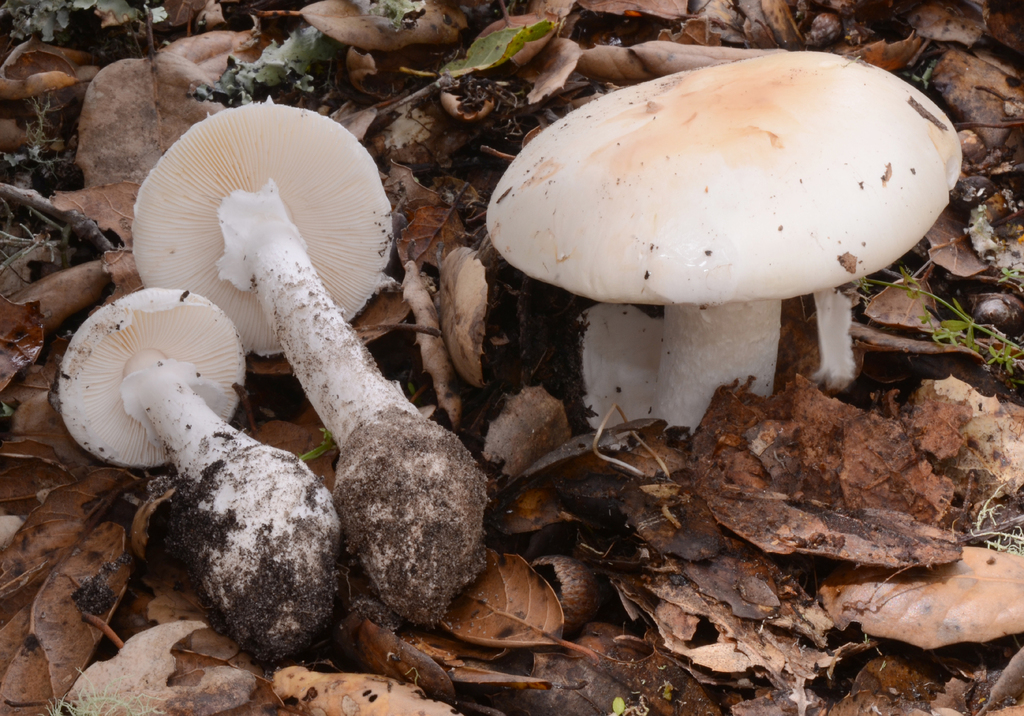
A pure-white, deadly Amanita of the North American Pacific coast. It contains the same amatoxins as the death cap. It fruits in late winter and spring under coast live oak, when foragers are out looking for other white mushrooms.
Amanita ocreata, commonly known as one of the many destroying angels, or more precisely the western North American destroying angel, is a deadly poisonous basidiomycete fungus, one of many in the genus Amanita. The large fruiting bodies generally appear in spring; the cap may be white or ochre and often develops a brownish centre, while the stipe, ring, gill and volva are all white. A. ocreata resembles several edible species commonly consumed by humans, increasing the risk of accidental poisoning. Mature fruiting bodies can be confused with the edible A. velosa, A. lanei or Volvopluteus gloiocephalus, while immature specimens may be difficult to distinguish from edible Agaricus mushrooms or puffballs. Wikipedia
What it can do
- iContains amatoxins and phallotoxins that cause delayed liver and kidney failure
- iiForms mycorrhizae mainly with coast live oak (Quercus agrifolia), and also with other oaks and pines
- iiiFruits in the cool wet season (January–April), unusually early for an Amanita
At the table
Deadly. It is all white with a sac-like volva, and its buttons can be mistaken for edible puffballs, meadow mushrooms (Agaricus), young Amanita velosa (springtime amanita) and white Lepiota. Always dig up the whole base and cut buttons vertically. A seriously poisoned person may feel better for a while before organ failure begins.
Fruiting body & spores
Spores
Spore print white; spores ellipsoid to subglobose, smooth, amyloid, about 9–14 × 7–10 µm
- Dispersal
- Wind-borne basidiospores
Where it lives
Recorded sightings
—
geo-referenced records in GBIF, from museums, herbaria and field observers.
Native range
Pacific coast of North America, from Washington through California to Baja California
Drag the globe to turn it. Dots are where records exist, not a range map; darker means more records.
In the old herbals & bestiaries
No plate in the Source Library names this exact species, so these show its closest relatives as the old naturalists drew them: same genus, or the same kind of plant. Click a plate to read the page it came from, with translation.

An History of Fungusses, growing about Halifax (Vols 1-2)
Relative · James Bolton · 1788 · p.236

Illustrations of Fungi which Grow in Bavaria and the Palatinate around Ratisbon, Vols 1–2
Relative · Jacob Christian Schaeffer; C.H. Persoon (ed.) · 1800 · p.141

Illustrations of Fungi which Grow in Bavaria and the Palatinate around Ratisbon, Vols 1–2
Relative · Jacob Christian Schaeffer; C.H. Persoon (ed.) · 1800 · p.142

Illustrations of Fungi which Grow in Bavaria and the Palatinate around Ratisbon, Vols 3–4
Relative · Jacob Christian Schaeffer; C.H. Persoon (ed.) · 1800 · p.155

Illustrations of Fungi which Grow in Bavaria and the Palatinate around Ratisbon, Vols 3–4
Relative · Jacob Christian Schaeffer; C.H. Persoon (ed.) · 1800 · p.158

Rariorum Plantarum Historia (with Fungorum Historia)
Relative · Carolus Clusius · 1601 · p.662

Iconography of the Mushrooms of Paulet
Relative · J.H. Léveillé; plates by Paulet · 1855 · p.480

Histoire des Champignons de la France, Vol 2
Relative · Pierre Bulliard · 1791 · p.9

Histoire des Champignons de la France, Vol 2
Relative · Pierre Bulliard · 1791 · p.125
In the stacks
Searching the stacks…
Every page naming Amanita ocreata in the Biodiversity Heritage Library →
Marginalia
It was formally described by Charles Horton Peck in 1909 from California specimens. It has caused several serious poisonings in California.
Curiosity
A drop of potassium hydroxide (KOH) stains its flesh yellow, a reaction it shares with other destroying angels.
Kinship
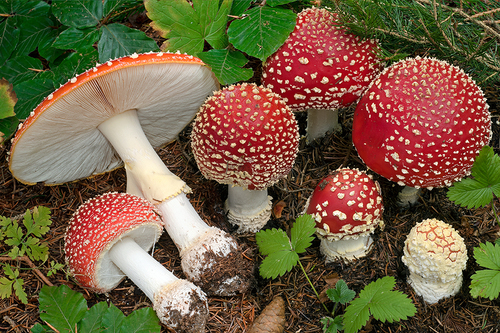
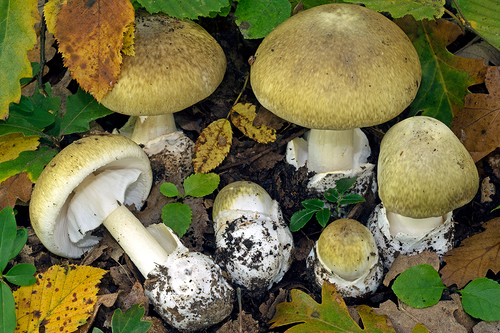
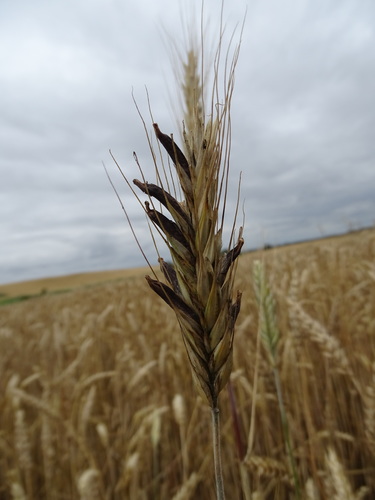

Fact-checked: 2 corrections made to this sheet. Photographs: iNaturalist contributors under the licences shown. Records: GBIF.org. Historical plates: Source Library (CC BY-SA 4.0; originals public domain). Summary text: Nature Library editors and Wikipedia (CC BY-SA). Medicinal and edibility notes are historical and educational, not advice. iNaturalist taxon 67356.