 NL·0152
Herbarium of the Nature Library
- Name
- Salix alba
- Family
- Salicaceae
- Native to
- Europe, North Africa and Western & Central Asia; widely planted and naturalised elsewhere
- Habitat
- Riparian woodland, Floodplain, Wetland
White willow
Salix alba
Also calledBed / Bed-e sada (Persian/Urdu, Unani) · Ṣafṣāf (Arabic) · Silberweide (German) · Sauce blanco (Spanish) · Bái liǔ 白柳 (Chinese)
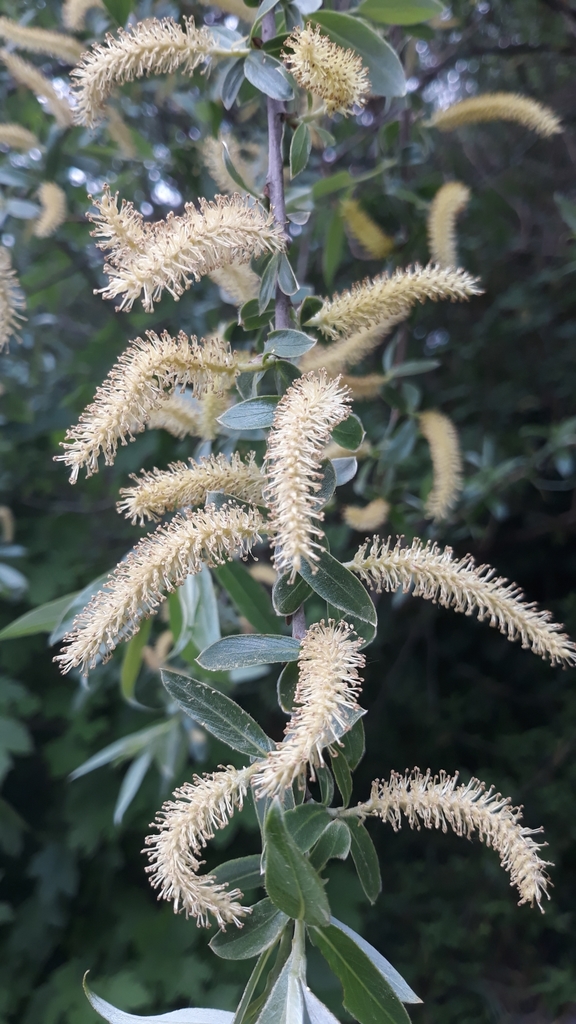
A tall riverside tree whose leaves flash silver in the wind and whose bark held the salicylates that led chemists to aspirin. Its catkins are among the first spring food for bees.
Salix alba, the white willow, is a species of willow native to Europe and western and Central Asia. The name derives from the white tone to the undersides of the leaves. Wikipedia
What it can do
- iBark contains salicin, which the body converts to salicylic acid, a pain-relieving and anti-inflammatory compound
- iiRoots readily from cut stems; a branch pushed into wet ground can become a tree
- iiiBinds riverbanks with dense roots and tolerates long floods
- ivCatkins, opening with the leaves in spring, give early pollen and nectar to bees
At the table
Bark is used as a medicinal tea or extract, not as food. People allergic to aspirin should avoid it.
In the medicine cabinet
| Tradition | Use |
|---|---|
| European folk medicine | Bark decoction for fevers ('agues'), rheumatism and pain |
| Unani | Leaves and bark of bed used for fevers, inflammation and as a cooling astringent |
| Modern phytotherapy | Standardised bark extracts for low back pain and osteoarthritis |
Weight of evidence
Moderate. Some clinical trials with promising but limited or mixed results.
Active compounds
salicin, salicortin, tremulacin, flavonoids, tannins
Fruit & seed


Fruit
Capsule
Ripens: Spring
Small capsules on female catkins, splitting to release cottony seeds.
Seed
<1 mm
Tiny seeds wrapped in silky white hairs
- Dispersal
- Wind and water
- Germination
- Short-lived (days); must land on wet bare mud to germinate within 24–48 h
Photographs from Wikimedia Commons under open licences; hover for the photographer, click for the file.
How to grow it
Hardiness (USDA zones)
USDA 4–9. Survives winters down to about -34 °C.
- Light
- Full sun
- Water
- High
- Soil
- Moist to wet; any texture
- Propagation
- Hardwood cuttings (easiest) or fresh seed
- To harvest
- Bark from 2–3-year-old branches in spring
- Climates
- Temperate, Continental
- 1Push 30–50 cm dormant cuttings into moist soil in late winter
- 2Keep well watered the first summer
- 3Plant at least 15 m from drains and buildings, as the roots are aggressive
- 4Coppice or pollard every few years for bark and withies
Can it grow where you are?
Where it lives
Recorded sightings
—
geo-referenced records in GBIF, from museums, herbaria and field observers.
Native range
Europe, North Africa and Western & Central Asia; widely planted and naturalised elsewhere
Drag the globe to turn it. Dots are where records exist, not a range map; darker means more records.
In the old herbals & bestiaries
Woodcuts and engravings matched from the Source Library’s scanned books by name. Plates marked “relative” show a close kin rather than this exact species. Click a plate to read the page it came from, with translation.

De medicinali materia libri sex
Dioscorides · 1552 · p.151

Rariorum Plantarum Historia (with Fungorum Historia)
Carolus Clusius · 1601 · p.103

Latin Herbal
1484 · p.283

Latin Herbal with German Synonyms
1484 · p.311

Herbarius
1485 · p.284

Herbarius latinus (with French synonyms)
1486 · p.285

Herbarius latinus (with Dutch synonyms)
1486 · p.281

Latin Herbal with German Synonyms
1486 · p.284

Ortus sanitatis
1491 · p.379

Herbal of Virtues
1499 · p.283
In the stacks
Searching the stacks…
Every page naming Salix alba in the Biodiversity Heritage Library →
Marginalia
In 1763 the Rev. Edward Stone reported to the Royal Society that powdered willow bark cured agues in 50 patients. Salicylic acid chemistry later led Felix Hoffmann at Bayer to acetylsalicylic acid, sold as Aspirin from 1899.
Curiosity
Cricket bats are made from a variety of this tree, the cricket-bat willow, Salix alba var. caerulea.
Kinship



Fact-checked: 1 correction made to this sheet. Photographs: iNaturalist contributors under the licences shown. Records: GBIF.org. Historical plates: Source Library (CC BY-SA 4.0; originals public domain). Summary text: Nature Library editors and Wikipedia (CC BY-SA). Medicinal and edibility notes are historical and educational, not advice. iNaturalist taxon 54841.