 NL·0589
Herbarium of the Nature Library
- Name
- Ornithoptera priamus
- Family
- Papilionidae
- Native to
- Moluccas, New Guinea, the Bismarck Archipelago, Solomon Islands and Cape York Peninsula, Australia
- Habitat
- Tropical rainforest, Rainforest edge, Gardens
Common green birdwing
Ornithoptera priamus
Also calledPriam's birdwing (English) · Cape York birdwing (Australian English, for the local form)
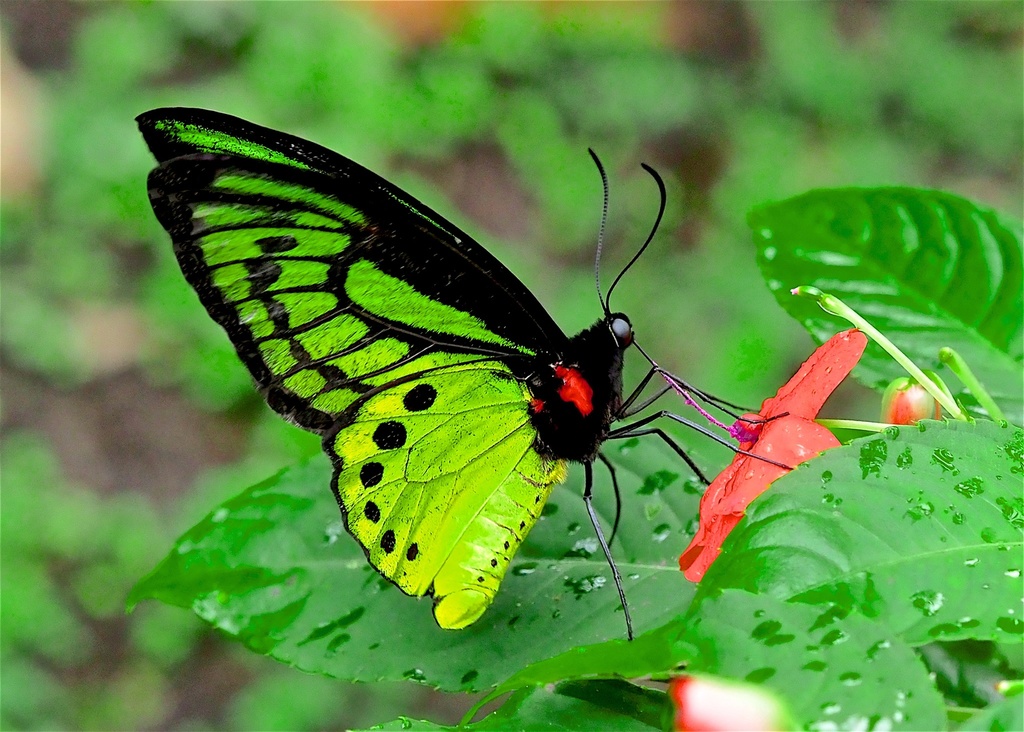
A huge swallowtail of the New Guinea region whose males flash velvety black and iridescent emerald green across the rainforest canopy. Described by Linnaeus in 1758, it is the type species of the birdwing genus Ornithoptera, 'bird-wing'.
Ornithoptera priamus, the common green birdwing, Cape York birdwing, Priam's birdwing, northern birdwing or New Guinea birdwing is a widespread species of birdwing butterfly found in the central and south Moluccas, New Guinea, Bismarck Archipelago, Solomon Islands, and north-east Australia. Wikipedia
What it can do
- iOne of the largest butterflies in the world, with females far bigger than males
- iiCaterpillars feed on Aristolochia vines and store their aristolochic acids, making larvae and adults distasteful to predators
- iiiMales patrol and soar high around flowering trees in the canopy
In the field
Field marks
- aMale: velvet-black forewings with a broad iridescent green band; hindwings green with black spots
- bMale abdomen yellow
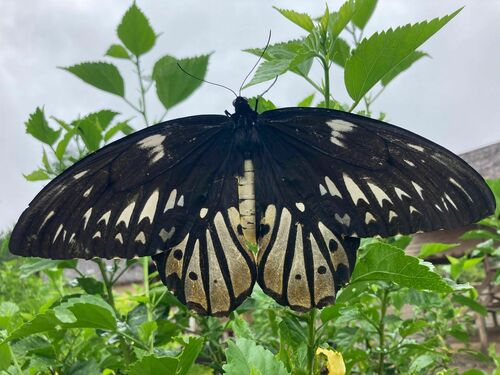
- cFemale: much larger, dark brown with rows of white or cream patches and a yellow-spotted hindwing
- dVery large size and soaring flight high in the canopy
- Not to be confused with
- Several close relatives (Ornithoptera euphorion of north Queensland, O. richmondia further south, and other green birdwings of the region) differ in the shape and extent of the male's green bands; location is the most practical guide. Queen Alexandra's birdwing males have much narrower, more pointed forewings tinted blue-green.
- Where to see it
- Rainforest edges and gardens in Papua New Guinea and the Solomon Islands; in Australia, the Iron Range and northern Cape York.
Listen
Looking for field recordings…
Life & habits
- Diet
- Adults take nectar from rainforest flowers such as Hibiscus and Lantana; caterpillars eat Aristolochia and Pararistolochia vines
- Habitat
- Lowland and hill rainforest, forest edges and village gardens where the host vines grow
- Size
- Wingspan roughly 11–20 cm; females the larger sex
Males guard stands of flowering trees and court females by hovering above them; the female's broad, slow wingbeats give her an almost bird-like flight.
Where it lives
Recorded sightings
—
geo-referenced records in GBIF, from museums, herbaria and field observers.
Native range
Moluccas, New Guinea, the Bismarck Archipelago, Solomon Islands and Cape York Peninsula, Australia
Drag the globe to turn it. Dots are where records exist, not a range map; darker means more records.
In the stacks
Searching the stacks…
Every page naming Ornithoptera priamus in the Biodiversity Heritage Library →
Marginalia
Linnaeus named it Papilio priamus in 1758 after Priam, king of Troy, in his scheme of naming swallowtails after Trojan and Greek heroes. Like all Ornithoptera birdwings it is listed on CITES Appendix II, so trade in wild specimens is regulated.
Curiosity
Butterfly farms in Papua New Guinea rear birdwings on planted host vines and sell them to collectors, giving villagers an income from keeping forest standing.
Kinship



Fact-checked: 3 corrections made to this sheet. Photographs: iNaturalist contributors under the licences shown. Records: GBIF.org. Historical plates: Source Library (CC BY-SA 4.0; originals public domain). Summary text: Nature Library editors and Wikipedia (CC BY-SA). Medicinal and edibility notes are historical and educational, not advice. iNaturalist taxon 82287.