 NL·0265
Herbarium of the Nature Library
- Name
- Apis mellifera
- Family
- Apidae
- Native to
- Africa, Europe and Western Asia; introduced worldwide by beekeepers
- Habitat
- Temperate grassland, Savanna, Woodland, Farmland
Western honey bee
Apis mellifera
Also calledShahad ki makkhi (Urdu/Hindi) · Nahl (Arabic) · Abeja melífera (Spanish) · Mìfēng (Chinese) · Nyuki (Swahili)
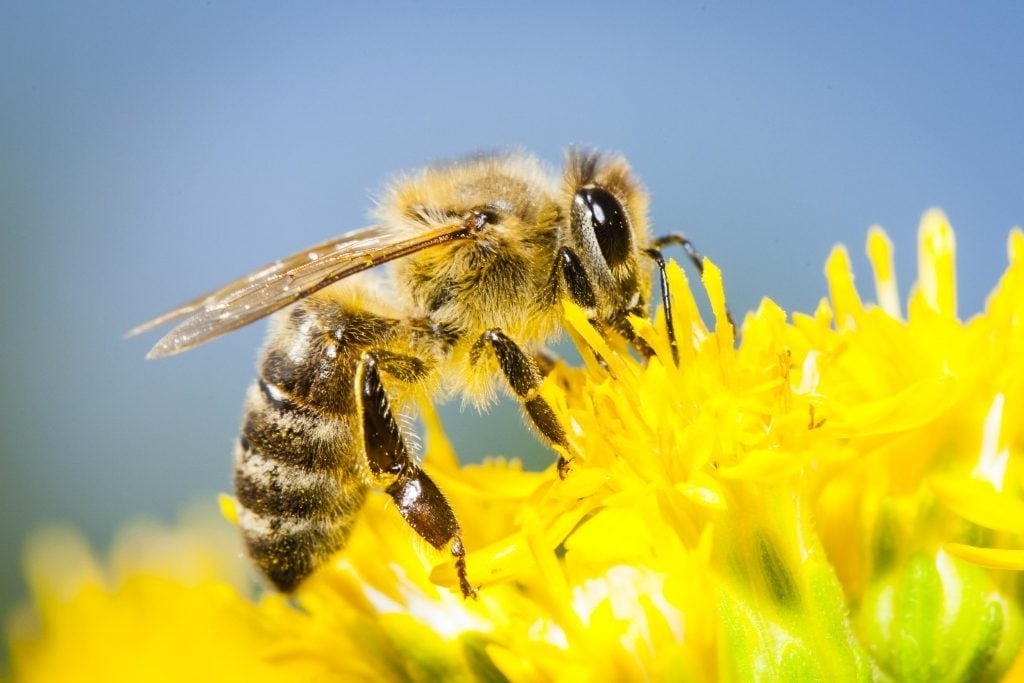
A social bee living in colonies of tens of thousands, run by a single egg-laying queen and sterile worker daughters. Its foragers tell nestmates where food lies through a coded dance, and its stored nectar became honey, one of humanity's oldest sweeteners.
The western honey bee is the most common of the 7–12 species of honey bees worldwide. The genus name Apis is Latin for 'bee', and mellifera is the Latin for 'honey-bearing' or 'honey-carrying', referring to the species' production of honey. Wikipedia
What it can do
- iWaggle dance encodes the direction and distance of food relative to the sun
- iiWorkers fan wings and evaporate water to turn nectar into honey of about 18% moisture
- iiiColonies hold brood near 35 °C by shivering flight muscles in winter and evaporative cooling in summer
- ivSwarms choose a new home through a quorum-based scout 'debate'
- vCan perceive polarised and ultraviolet light to navigate under cloud
- viProduces honey, beeswax, propolis and royal jelly
In the field
Field marks
- aSlim, hairy worker about 12–15 mm, amber-brown to dark with paler abdominal bands
- bTwo pairs of wings; hind legs carry flattened pollen baskets, often loaded with coloured pollen
- cElbowed antennae; flies straight between flowers and hive
- dWorkers from one colony visit one flower type per trip
- Voice
- A steady hum from the wingbeats; a disturbed colony rises to a higher, sharper buzz
- Not to be confused with
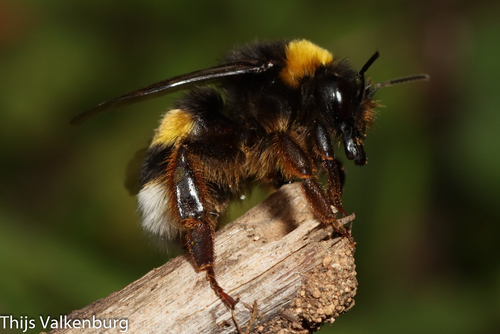
- Hoverflies mimic bees but have only one pair of wings, very short antennae, large eyes and hover in place. Wasps (Vespula) are glossy, nearly hairless and bright yellow-and-black. Bumblebees are larger, rounder and much furrier.
- Where to see it
- Flowering orchards, gardens and meadows almost anywhere people keep bees; colonies also nest wild in tree hollows
- When
- Temperate regions: foraging from early spring to autumn on warm days, clustered in the hive over winter; active all year in the tropics
Listen
Looking for field recordings…
Life & habits
- Diet
- Nectar and pollen; larvae fed brood food and royal jelly
- Habitat
- Tree cavities, rock crevices and managed hives near flowering vegetation
- Size
- Workers ~12–15 mm; queens ~18–20 mm
- Lifespan
- Workers 5–7 weeks in summer, up to 5 months in winter; queens 2–5 years
A forager returning from a rich patch performs a figure-eight dance on the vertical comb; the angle of its waggle run from vertical equals the angle of the food from the sun.
In the medicine cabinet
| Tradition | Use |
|---|---|
| Modern wound care | Medical-grade honey (e.g. Leptospermum/manuka honey dressings) used on burns and wounds |
| Ancient Egyptian medicine | Honey listed as a wound salve in the Edwin Smith and Ebers papyri |
| Prophetic medicine (Islamic) | Honey described as 'healing for people' in the Qur'an (Surah An-Nahl 16:69) |
| Folk & apitherapy | Propolis as an antiseptic resin; bee venom therapy for joint pain |
Weight of evidence
Moderate. Some clinical trials with promising but limited or mixed results.
Active compounds
hydrogen peroxide (glucose oxidase), methylglyoxal, bee defensin-1, melittin (venom), caffeic acid phenethyl ester (propolis)
Where it lives
Recorded sightings
—
geo-referenced records in GBIF, from museums, herbaria and field observers.
Native range
Africa, Europe and Western Asia; introduced worldwide by beekeepers
Drag the globe to turn it. Dots are where records exist, not a range map; darker means more records.
In the stacks
Searching the stacks…
Every page naming Apis mellifera in the Biodiversity Heritage Library →
Marginalia
Honey hunting is painted on Mesolithic rock at the Cuevas de la Araña in Spain (~8,000 years ago), and Egyptian pharaohs used the bee as the hieroglyph for Lower Egypt. Karl von Frisch shared the 1973 Nobel Prize for decoding its dance.
Curiosity
To make one kilogram of honey, foragers collectively fly roughly the distance of several trips around the Earth and visit millions of flowers.
Kinship


Photographs: iNaturalist contributors under the licences shown. Records: GBIF.org. Historical plates: Source Library (CC BY-SA 4.0; originals public domain). Summary text: Nature Library editors and Wikipedia (CC BY-SA). Medicinal and edibility notes are historical and educational, not advice. iNaturalist taxon 47219.