 NL·0070
Herbarium of the Nature Library
- Name
- Vicia lens
- Family
- Fabaceae
- Native to
- Fertile Crescent (Turkey, Syria, Iraq, Israel); domesticated from wild Vicia orientalis; grown widely in South Asia, the Middle East, Canada and Australia
- Habitat
- Semi-arid Mediterranean farmland, Steppe
Lentil
Vicia lens
Also calledLens culinaris (synonym) · Masoor (Hindi/Urdu) · 'Adas (Arabic) · Adas (Persian/Hebrew) · Mercimek (Turkish) · Lenteja (Spanish) · Bīndòu (Chinese) · Misir (Amharic)
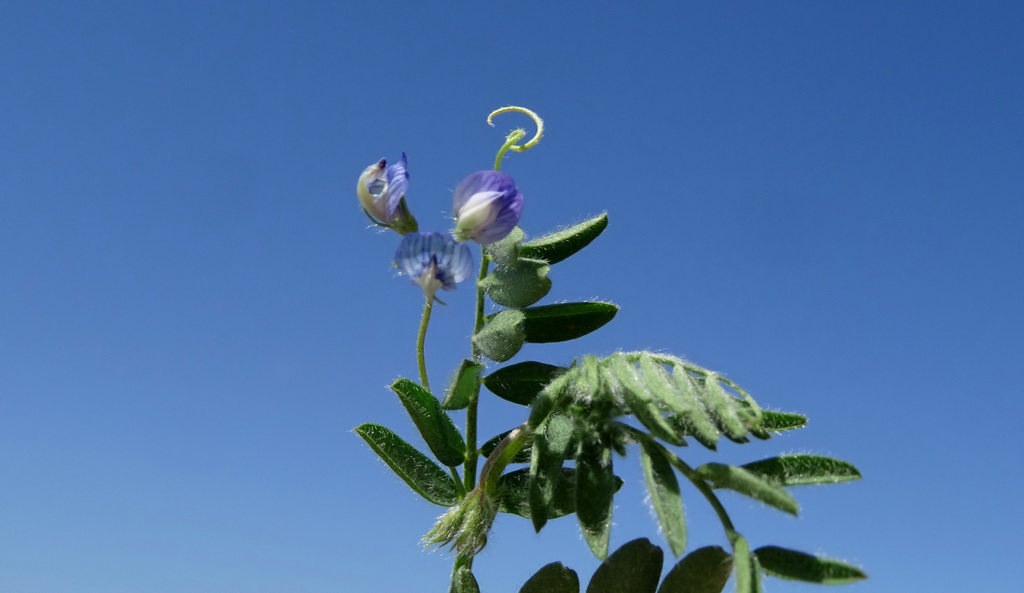
One of the Neolithic 'founder crops' of the Fertile Crescent, gathered and grown for over 9,000 years. Its flat, lens-shaped seed literally gave its name to the optical lens. iNaturalist now places it in Vicia.
The lentil is an annual legume grown for its lens-shaped edible seeds or pulses, also called lentils. It is about 40 cm (16 in) tall, and the seeds grow in pods, usually with two seeds in each. Wikipedia
What it can do
- iFixes nitrogen through root nodules with Rhizobium leguminosarum
- iiGrows on minimal water in cool seasons
- iiiCooks quickly without soaking, unlike most dry pulses
- ivSeeds contain about 25% protein
At the table
Eatenseeds (cooked whole or split as dal, soups) · sprouts · young leaves (cooked)
Seeds are eaten cooked. Raw lentils contain lectins; always cook.
In the medicine cabinet
| Tradition | Use |
|---|---|
| Unani / Hippocratic medicine | Lentil decoctions and poultices for skin sores and digestive complaints |
| Modern nutrition science | Pulses including lentils lower post-meal blood sugar and LDL cholesterol in trials |
Weight of evidence
Moderate. Some clinical trials with promising but limited or mixed results.
Active compounds
protein, resistant starch, folate, iron, proanthocyanidins
Fruit & seed
Fruit
Legume (pod)
Ripens: Late spring to summer
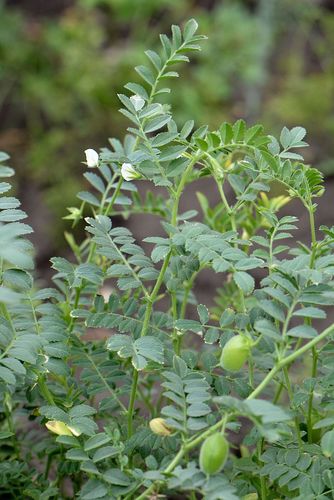
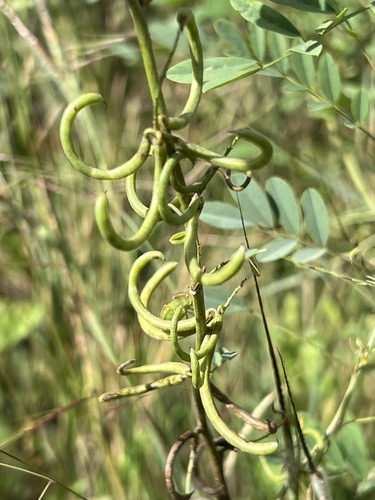
Short, flat, oblong pods 1–2 cm, holding 1–2 seeds, on a slender bushy plant 30–50 cm tall.
Seed
3–8 mm
Flat, round, biconvex, lens-shaped seeds 3–8 mm across; seed coat green, brown, grey, tan, black or speckled, with orange, red, yellow or green interior when split
- Dispersal
- Humans (pods of domesticated forms do not split readily)
- Germination
- Sow 2–5 cm deep into cool soil (from 5 °C); emerges in 7–10 days
How to grow it
Hardiness (USDA zones)
Annual cool-season crop; spring sowing in cold regions, winter crop in subtropics (e.g. India's rabi season)
- Light
- Full sun
- Water
- Low
- Soil
- Well-drained loam, pH 6–8; dislikes waterlogging
- Propagation
- Seed
- To harvest
- 80–110 days
- Climates
- Mediterranean, Semi-arid, Temperate (spring), Subtropical (winter)
- 1Sow in early spring (or autumn in mild regions) 2–4 cm deep, about 2–5 cm apart in rows 20–30 cm apart; inoculate seed if lentils are new to the soil.
- 2Keep weeds down early, as lentil seedlings compete poorly.
- 3Water only if very dry; too much water encourages disease.
- 4Harvest when lower pods turn brown and rattle; pull whole plants and dry them on a sheet.
- 5Thresh by trampling or beating, winnow, and store dried seeds in airtight jars.
Where it lives
Recorded sightings
—
geo-referenced records in GBIF, from museums, herbaria and field observers.
Native range
Fertile Crescent (Turkey, Syria, Iraq, Israel); domesticated from wild Vicia orientalis; grown widely in South Asia, the Middle East, Canada and Australia
Drag the globe to turn it. Dots are where records exist, not a range map; darker means more records.
In the old herbals & bestiaries
Woodcuts and engravings matched from the Source Library’s scanned books by name. Plates marked “relative” show a close kin rather than this exact species. Click a plate to read the page it came from, with translation.

Commentaries on the Six Books of Pedanius Dioscorides on Medical Matter
Pietro Andrea Mattioli · 1565 · p.596

Introductio Generalis in Rem Herbariam
Augustus Quirinus Rivinus · 1690 · p.278

Illustrated Investigation of the Names and Realities of Plants, Volume 17
吳其濬 · 1848 · p.67

Ortus sanitatis
1491 · p.236

The Great Herbary with all the figures of the herbs
1532 · p.196

Notable Commentaries on the History of Plants
Leonhart Fuchs · 1542 · p.893

Notable Commentaries on the History of Plants
Leonhart Fuchs · 1549 · p.891

On Medical Materials in Six Books
Dioscorides · 1550 · p.261

De medicinali materia libri sex
Dioscorides · 1552 · p.269

On the Names of Plants
Hieronymus Bock (Tragus) · 1552 · p.700
In the stacks
Searching the stacks…
Every page naming Vicia lens in the Biodiversity Heritage Library →
Marginalia
In Genesis, Esau sold his birthright to Jacob for a bowl of red lentil stew. Lentils have been found in Egyptian tombs, and in Italy they are eaten on New Year's Eve for prosperity, their shape recalling coins.
Curiosity
The word 'lens' comes from the Latin for lentil, because early convex glass lenses were the same shape as the seed.
Kinship

Photographs: iNaturalist contributors under the licences shown. Records: GBIF.org. Historical plates: Source Library (CC BY-SA 4.0; originals public domain). Summary text: Nature Library editors and Wikipedia (CC BY-SA). Medicinal and edibility notes are historical and educational, not advice. iNaturalist taxon 1375470.