 NL·0063
Herbarium of the Nature Library
- Name
- Glycine max
- Family
- Fabaceae
- Native to
- North-east and central China; grown worldwide, especially in Brazil, the United States, Argentina and India
- Habitat
- Temperate and subtropical farmland
Soybean
Glycine max
Also calledDàdòu / Huángdòu (Chinese) · Daizu (Japanese) · Kong (Korean) · Kedelai (Indonesian) · Soyabean / Bhat (Hindi) · Soja (Spanish/Portuguese) · Edamame (Japanese, green pods)
Domesticated in north-east China from wild Glycine soja around 9,000–5,000 years ago, soybean is now one of the world's most important protein and oil crops, mostly fed to livestock. Its seeds are about 36–40% protein and 18–20% oil.
The soybean, soy bean, or soya bean is a species of legume native to East Asia, widely grown for its edible bean. Soy is a staple crop, the world's most grown legume, and an important animal feed. Wikipedia
What it can do
- iRoot nodules host Bradyrhizobium bacteria that fix nitrogen from the air
- iiFlowering is triggered by shortening day length (photoperiod sensitive)
- iiiSeeds contain isoflavones that mimic oestrogen weakly
- ivRaw beans contain trypsin inhibitors that block protein digestion until cooked
At the table
Eatenseeds (cooked, as tofu, soy milk, miso, tempeh, natto, soy sauce) · green pods (edamame, boiled) · sprouts · oil
Beans must be cooked or fermented; raw soybeans contain trypsin inhibitors and lectins that cause digestive upset. Soy is one of the major food allergens.
In the medicine cabinet
| Tradition | Use |
|---|---|
| Traditional Chinese Medicine | Fermented black soybean (dàn dòu chǐ) for colds and restlessness |
| Modern nutrition science | Soy protein modestly lowers LDL cholesterol; isoflavones studied for menopausal hot flushes |
Weight of evidence
Moderate. Some clinical trials with promising but limited or mixed results.
Active compounds
genistein, daidzein, lecithin, saponins, trypsin inhibitors (raw)
Fruit & seed
Fruit
Legume (pod)
Ripens: Late summer to autumn
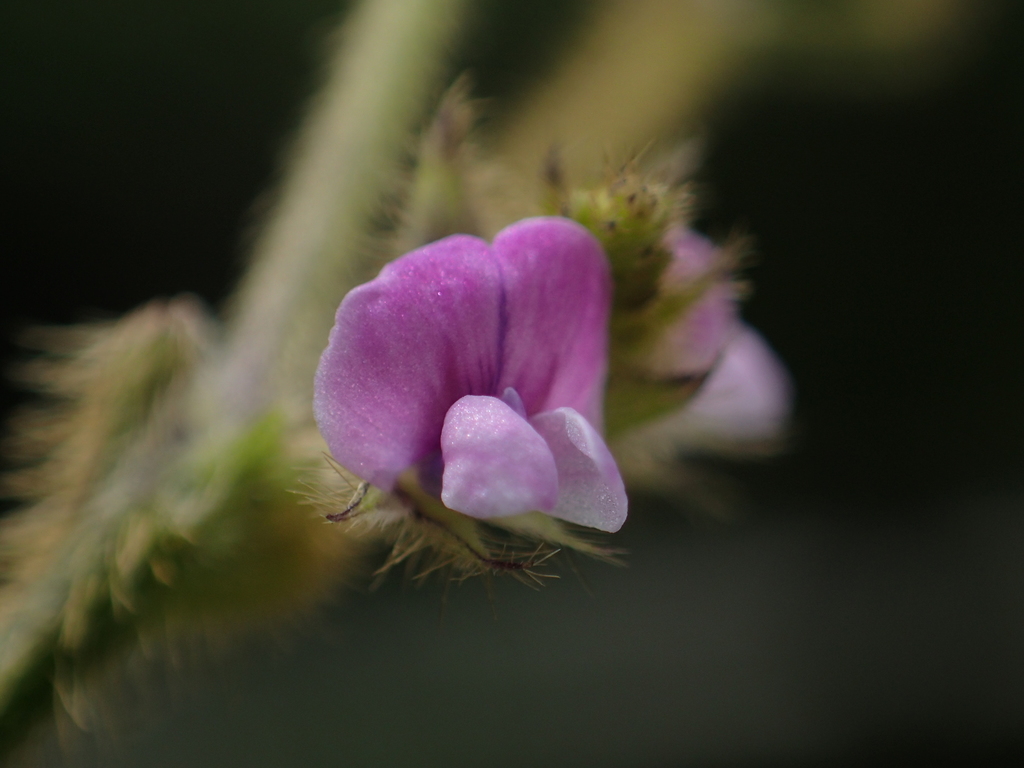
Hairy, slightly curved pods 3–8 cm in clusters, green maturing to tan or brown, each with 2–4 seeds.

Seed
5–11 mm
Round to oval beans 5–11 mm, smooth, most commonly pale yellow-cream with a small dark or light hilum (scar), but also green, brown, black or mottled
- Dispersal
- Pods split on drying (wild forms more strongly)
- Germination
- Sow 2.5–4 cm deep in warm soil (above 15 °C); emerges in 5–10 days. Inoculate seed with Bradyrhizobium where soy is new
Photographs from Wikimedia Commons under open licences; hover for the photographer, click for the file.
How to grow it
Hardiness (USDA zones)
Annual warm-season crop; choose maturity group for your latitude
- Light
- Full sun
- Water
- Moderate; most critical at flowering and pod fill
- Soil
- Well-drained loam, pH 6–7
- Propagation
- Seed
- To harvest
- Edamame 75–90 days; dry beans 100–150 days
- Climates
- Temperate (summer), Humid subtropical, Tropical
- 1After the last frost, when soil is warm, dust seed with soybean inoculant and sow 3 cm deep, 5–8 cm apart, in rows 40–75 cm apart.
- 2Keep weed-free for the first 6 weeks; no nitrogen fertiliser is needed once nodules form.
- 3Water during flowering and pod fill if dry.
- 4For edamame, pick when pods are plump and bright green; boil in salted water.
- 5For dry beans, harvest when pods are brown and rattle, before they split; thresh and dry to below 13% moisture.
Where it lives
Recorded sightings
—
geo-referenced records in GBIF, from museums, herbaria and field observers.
Native range
North-east and central China; grown worldwide, especially in Brazil, the United States, Argentina and India
Drag the globe to turn it. Dots are where records exist, not a range map; darker means more records.
In the old herbals & bestiaries
Woodcuts and engravings matched from the Source Library’s scanned books by name. Plates marked “relative” show a close kin rather than this exact species. Click a plate to read the page it came from, with translation.

Zhiwu Mingshi Tukao (Vol. 1)
吳其濬 · 1848 · p.38

Zhiwu Mingshi Tukao (Vol. 1)
吳其濬 · 1848 · p.35

農業全書 11巻. [2]
Miyazaki Yasusada · 1697 · p.36

Compendium of Materia Medica: Illustrated Volume Middle of Middle
李時珍 · 1596 · p.51

Illustrated Herbal Primer
Chen Jiamo (陳嘉謨) · 1628 · p.225

農業全書 11巻. [2]
Miyazaki Yasusada · 1697 · p.41

Exotic Pleasures (Persia and Asia observations)
Engelbert Kaempfer · 1712 · p.928

Complete Treatise on Agricultural Administration
Xu Guangqi · 1909 · p.811
In the stacks
Searching the stacks…
Every page naming Glycine max in the Biodiversity Heritage Library →
Marginalia
Chinese tradition counts soy among the 'five sacred grains', and tofu is credited (doubtfully) to Liu An, prince of Huainan, in the 2nd century BCE. Benjamin Franklin sent soybeans from London to America in 1770.
Curiosity
Henry Ford had a car body built from soybean-based plastic in 1941 and wore a suit made of soy fibre.
Kinship


Photographs: iNaturalist contributors under the licences shown. Records: GBIF.org. Historical plates: Source Library (CC BY-SA 4.0; originals public domain). Summary text: Nature Library editors and Wikipedia (CC BY-SA). Medicinal and edibility notes are historical and educational, not advice. iNaturalist taxon 122902.